Bridging Housing and Health with Jeff Smythe
Housing has become a silent crisis that's reshaping lives across America, with each rising rent bill and rejected application chipping away at people's sense of stability and hope.
In this episode, I'm sitting down with Jeffrey Smythe, executive director of the Atlanta Regional Collaborative for Health Improvement (ARCHI), to explore a different approach to rental assistance.
Jeff explains his innovative technology solution that's changing how people access housing support, the critical connection between housing and health, and how nonprofits can build strong partnerships to tackle this challenge.
Getting housing right is fundamental to improving health outcomes and supporting community well-being.
Skip Ahead:
(02:35) How housing instability traps families in cycles of poverty and hardship
(05:30) What is unique about housing instability in the Atlanta metro area
(08:39) What is ARCHI and how it supports rent, mortgage, and utility relief
(13:05) What was the process like for creating ARCHI, and what did it take to build the necessary partnerships across organizations to share data
(16:59) How ARCHI tracks whether someone has been served after a referral is made
(18:36) What led 18 members to say ‘yes’ to joining ARCHI
(21:43) How housing instability and homelessness are connected to negative health outcomes
(25:20) Some examples in Atlanta where the conversation around housing is integrated into the client-provider relationship, using terms like a “prescription” for housing assistance
Key Takeaways
Tenants face significant barriers, including Georgia’s landlord-friendly policies and financial hurdles like the requirement to earn three times the rent to qualify for housing.
Recognizing housing insecurity as a major driver of poor health outcomes, health systems are increasingly addressing social determinants of health through screenings and interventions.
In Atlanta, ARCHI fosters cross-sector collaboration—uniting health systems, universities, nonprofits, and government agencies—to advance health equity. A cornerstone of this work is their rental assistance portal, which simplifies access to aid by reducing the complexity of navigating multiple organizations.
Resources Mentioned
-
Drew Reynolds: Hello and welcome to the Common Good Data Podcast. My name is Drew Reynolds. Housing has gotten a lot of attention recently. It was a big theme in our most recent national elections and is becoming an increasing challenge and burden for individuals. We know that the cost for homeownership and buying a home has really skyrocketed in the last couple of years.
The ability to find a stable place to live that's affordable and that works for your household or your family is becoming increasingly difficult. Housing is a huge challenge, not just because it affects people's sense of identity, their sense of dignity it also impacts their health and their well being.
And to do that, we've invited Jeffrey Smythe, who's the executive director of the Atlanta Regional Collaborative for Health Improvement, or ARCHI. I wanted to talk with Jeff really about a fascinating initiative that he's been undertaking at ARCHI that uses technology to streamline the way people seek rental assistance here in Atlanta.
It's a really great conversation, especially for non profit leaders [00:01:00] looking to build strong partnerships and integrate data and systems across different organizations. Knowing that's a huge challenge, I think that Jeff's wisdom can be really helpful as you're thinking through some of those challenges in the organizations in which you work.
Jeff was also great cause he's just a wonderful nonprofit leader. He's been in leadership in some capacity for some 30 years, working in housing, homelessness, hunger alleviation, aging services, international development, refugee and foster care support so I think he's going to be a great person to help us think about this conversation around the connections between housing and health.
Now, before we begin with the interview, I do want to ask you a favor. Please do head over to Apple Podcasts and post a review of the Common Good Data podcast that goes a long way in helping us to continue to build our podcast and reach new audiences. If you're listening on YouTube, please do like and subscribe so you can follow along with us as well.
Now, let's go ahead and dive into the interview with Jeff Smythe.
Drew Reynolds: [00:02:00] Jeff Smythe, welcome to the Common Good Data podcast.
Jeff Smythe: Great to be with you.
Drew Reynolds: So I'm so thrilled to have you on to talk about housing and health and everything in between. I love Matthew Desmond's book, Evicted, which highlights how housing and instability, eviction, kind of, Traps Families in Cycles of Poverty and Hardship.
And that book had me thinking differently about the experiences that individuals and families have today around housing and homelessness. Can you talk about from your perspective, what are some of those key challenges that families in this cycle, are facing?
Jeff Smythe: Yeah, thank you, Drew. And thank you for shedding light on this. We had a discussion last week with folks who have experienced or are experiencing evictions recently to get a perspective on where their heads at, right?
And what's going on for them. And for them, what we heard is what you also see in this book is georgia has a lot of, protections for landlords and so something like [00:03:00] asking tenants to come up with three times the amount of rent, to get into a place can be really difficult.
In fact, impossible for many folks who, have poor credit now, or they're trying to dig out. Maybe they've experienced homelessness and are now back on their feet, but find it really hard to just get into a place initially. So that three times the rent was a reminder to me last week in discussions of how many folks that we've made it really difficult, not only to find housing, but then to get in it and stay in it.
I think that what we see in terms of cycles, from my experience, particularly working with people experiencing homelessness now, working on kind of systems change and kind of homelessness, housing, health care. In my experience listening to our case managers and those working with large groups of people experiencing homelessness or on the verge of, I think that we, like being able to kind of build wealth, being able to, what they say is it's expensive to be homeless, right?
It's expensive to be poor. [00:04:00] The deposits that are needed, co signing, to get your utilities turned back on if they've been turned off, to get into housing, to manage, childcare costs. Even if I'm looking for a job, how do I get some of these costs covered so that I can truly do a good job of looking for a job?
That's really challenging, for families. And so we see some of these cycles repeating themselves because there's not been changes to the way we do things in Georgia it still puts the burden on the seeker of housing, on the seeker of rental assistance, et cetera.
Drew Reynolds: I love that phrase you used, it's expensive to be poor. And I think for those in the helping professions, they might be familiar with the term or maybe have not heard before, but it highlights how these systemic inequalities and financial barriers, like you mentioned, the three times the rent you need to get into a place, really makes life disproportionately costly for folks who are on the lower incomes.
You know, when you kind of have your systems in place, you can save money on different things. You're not having overdraft fees on your checking account. So [00:05:00] those different ways that systems put pressures on, I think you highlighted that really well.
So let's bring it here to Atlanta. I know we talked a little bit about, Georgia and different laws that we have around, systems that maybe will protect and do a little bit more to protect landlords, maybe than tenants or those who are seeking places to live. But can you talk a little bit about, does it look like to be in that kind of circumstance?
Like what are the people that you interact with and the organizations you work with? What does it look like, to be in that situation?
Jeff Smythe: When we study the numbers and data we can pull, there's a lot of data we'd like to be able to pull whether it's census data or eviction data, it's not necessarily set up to be able to kind of slice and dice.
But what we do know, particularly from, what's called the point in time, count, which is kind of the annual HUDs way of getting at least some sense of a homeless count and each county or geography per year. What we know from that is that we have seen an increase.
What we also know is that we continue to see very high numbers [00:06:00] of, homeless people. Black and brown population, particularly black population in Atlanta. When we look at eviction rates, particularly, when we compare it to other rates like healthcare rates, higher blood pressure rates, higher diabetes, premature death.
We see the same heat maps. So those communities that are having poor health outcomes are also seeing greater housing insecurity, more challenges around evictions, et cetera. We also see larger families are many times harder to serve, when it comes to evictions, folks who have had repeated issues with evictions are harder to serve, and it makes sense, when we think about funders, government entities, local philanthropy, oftentimes our grantors for good reason, don't want to see,
Drew Reynolds: Yeah.
Jeff Smythe: Interestingly, for the portal that ARCHI has worked on, which has seen more than 30, 000 [00:07:00] folks, apply for rental assistance over the last, 20 months. What we actually see is the vast majority of folks seeking rental assistance did not have repeated evictions.
It was actually more than 70 percent had had, this was the first time they were, they were facing an eviction or or housing insecurity. So that's promising, except for the fact that then when we look at those who are actually served, right, more than 30, 000 had applied for assistance.
It leads to the portal that we operate, which matches folks when seeking services to those nonprofits that are able to serve them, tries to cut back on all of that burden of going from organization to organization. What we saw from that is that roughly less than 10 percent of those who are seeking assistance were able to find it anywhere, right?
Even when they were matched, there was just far more need in the system than there are resources.
Drew Reynolds: speaks to the incredible challenge and also the large amount, 30, 000. Individuals seeking assistance through the system is a huge number. We [00:08:00] have in our culture an assumption around what homelessness looks like, and it often involves somebody who has significant mental health challenges, somebody who is unhoused and living on the street outside of other places where they might be seeking shelter.
It's often someone who's individual and male, right? But when you talk about housing and homelessness, and especially when you're thinking about families experiencing eviction for the first time, the profile of what someone might think, is
much more broad and much more, expansive and representative of, the large challenge that this represents across our community. But I want to talk , ARCHI. So let's talk about what ARCHI does and how it is able to connect folks.
Can you talk about that more?
Jeff Smythe: Why is a health collaborative thinking so much about evictions? ARCHI the Atlanta Regional Collaborative for Health Improvement. And this was a, a group of health systems, Georgia State University, United Way, Kaiser Permanente, USA, a lot of groups that came together.
Atlanta Regional Commission, et cetera, that came together about 12 years ago and said, how do we [00:09:00] move the needle? Like, we're seeing that our health disparities are getting worse in Atlanta, our health outcomes are getting worse in Atlanta, and yet we're pouring more and more money into health care.
Something today around 13 billion a year, in the metro area in health care. And yet, We have some of the poorest health outcomes in the country. What ARCHI has been, designed to do is to try to make that collective impact, right? To try to take all of those organizations that are interested in working together and to collaboratively move the needle, like find our best levers, our best pressure points, and how can we move the needle together.
And of course, what we have found is that we can do a ton of work around prevention, but when we think about those social determinants of health, those things that contribute to either making us get healthier, faster, or get sicker, or, stay with our chronic conditions longer and not get healthier.
Those social determinants are really important, right? Where do we live? What kind of air are we breathing? Access to water, access to sidewalks, access to health care, access to, child care, etc. [00:10:00] So those social determinants, are where we've been leaning in. We, of course, leaned in on evictions and found that there was a lot of, Families that were having to spend a lot of their time just going from organization to organization, we tested and found if you're facing eviction, you're spending about 20 hours of your time to try to go from organization to organization, kind of retell your story, resubmit all your paperwork, oftentimes to find out that you weren't in the right zip code, they didn't have funding right now, they were only serving veterans.
They were only serving families with small children, whatever. So what we try to do is just say like, Hey, nonprofits, are you open to collaborating together, working on technology together and, setting up this portal. And so that's been very effective, more than 30, 000 folks have now come through the portal to seek assistance, from one of these now 18 different organizations that have come together.
It's not perfect because, of course, what we found is that, even though it's dramatically lessening the burden for those who are able to be served and get matched quickly, there's a lot of folks that never get matched because there's just [00:11:00] not enough, resource in the system. It's not that they're not being matched because, they've had too many evictions in the past or they don't meet the profile of a non profit.
What we're learning from the non profits is they have, for every three folks they can serve, there's, roughly, 30 or more at that moment in time that they can't serve just because they don't have resources. Meaning people will qualify, they just don't have enough funding, enough grant, Philanthropic Government Subsidy to distribute.
So, that's what ARCHI's been up to is can we coordinate systems better? Can we collaborate better? Can we leverage technology in a way that limits the burden to the seeker, but also limits the burden to the, Organizations providing assistance because we know they don't have much capacity.
I came from one that was doing this work and we didn't have any capacity. If we can shift some of that burden from all of that intake and eligibility process to be able to do better case management and [00:12:00] just support clients in their time of need we think that's a better way to go.
So it's proving successful. We're able to see, good progress. But what we're also able to see now is that there's dramatically not enough subsidy in the system altogether. So that's the next phase. What do we do about that?
Drew Reynolds: But it's so important to be able to use that information to reveal those challenges. We might not have had that information when you have to go. Not only did the seeker of assistance need to go through a bunch of assistance, but if you wanted to find out. Across a region, across the Atlanta metro area, do we have enough resources for this problem?
It would have probably been hard to answer that question prior to the development of this tool.
Jeff Smythe: You're right.
Drew Reynolds: You've developed this tool and a key component of it is data sharing. I'd love to talk about How you've approached that because there can be some reticence sometimes and some concern among non profit leaders when it comes up to data sharing around issues of privacy and confidentiality and then also making things just work for their staff so they don't feel like they're in seven different systems filling out forms all the time.
Can you talk about what did you learn in the [00:13:00] process of developing ARCHI and how that's benefited the organizations who are participating in it? Mm
Jeff Smythe: Our vision is that we'd have. an interoperable way to share data across nonprofits serving folks in their time of need, the same system would be able to talk to the health systems, right? Because we know that a health care system is going to be able to provide better care if they know the person in their emergency department has been seen recently by, let's say open hand.
And so they're eligible for meals, or maybe they were served recently by Star C. And so they've been able to work on a housing plan. So. We think that that kind of interconnectedness, that interoperability is gonna be super important. We're not there yet.
But what we did learn in getting these 18 organizations to the table to collaborate together is that we had to keep it simple, We had to make sure that the technology, we use Salesforce, was able to talk back and forth to their systems.
So in some cases we had to do APIs. In other cases, we've [00:14:00] had to do upload download, which of course is not ideal. But at least it is an option for some nonprofits that are saying, I'm already loving this software. I don't want to reinvent the wheel. I just want to receive your referral and then I'm going to take it from there and get it embedded into my system.
So it tries to give nonprofit enough to say this person is a good match for you, but not so much that they're going to have to do a bunch of additional data entry. Does that make sense?
Drew Reynolds: Absolutely.
Jeff Smythe: And we've tried to really hone that if there's a, there's continual process improvement meetings about twice a month, with different cohorts of these 18 organizations, sometimes with a small group, sometimes with a large group.
We work with TechBridge, who is our technology provider, to really hone in on what's not working well, if you're not adopting it, why? Because what we don't want is for it to be one of those systems where it just becomes useless, right?
I'm either having to do double data entry, or it's so complicated, I can't get what I need out of it. [00:15:00] And so I'm not even going to use your system, ARCHI. I'm just going to do my own thing. So that's what it's kind of required all these organizations to continue to think out loud together, to continue to hone, how do we do this better?
They were helping us reword the communication that goes to the seeker of services, that's how micro we've gotten. Also, it requires the nonprofits to once week to say, yes, I can take how many slots and no, I can't. Rather than it being just this, this kind of open. At one point in time, this nonprofit could take people, but three weeks later, they couldn't because their funding changed. This requires them every week to update their eligibility, like how many people they can take and are they in or out. That way, we're eliminating a bunch of referrals that don't go anywhere.
So those are the things we had to do. The other thing is continuing to ask the advice of those who are using it every day. We've also had the, seekers of rental assistance, seekers of utility assistance to make sure that they're continuing [00:16:00] to advise on, yeah, don't forget, this was a total dead end to me, like this was, this made it worse for me, you know, like, We just want to make sure we're continuing to get their experience.
And so what we've had to do is also fundraising for our own time to get consulting help, technology help and try to make sure that burden is not on all these awesome nonprofits doing the hard work. We see that as part of ARCHI's responsibility, if we want them to collaborate, we want to make sure it's as easy as possible and that it's as responsive of a system as possible.
Drew Reynolds: One challenge that comes up a lot with data sharing too, particularly when sharing information between organizations for the purpose of, connecting somebody, making a referral, delivering some type of service, is finding out a really efficient way to find out what was the person served.
And so you mentioned at the beginning that you knew you had a ton of people applying for rental assistance, but only 10% received assistance. So how did you go about finding that out? And when someone goes in and an referral was made, how does it, how does the system able to tell whether or not that person's been served?
Jeff Smythe: That's a good [00:17:00] question. We're actually trying to refine that to be honest with you, Drew. What we can track in the system is when a case manager, for instance, says, I'm accepting this match that the portal's giving me. And then when the case manager also says, and this person has now received assistance, there's a gap there and we're trying to figure out why sometimes the case manager will say, I've accepted this person.
They meet our criteria. We meet theirs. But then we don't get that closed loop of like this person would serve. We're trying to figure out why, is it just case manager is so busy and they forgot to go back in and click and say, yes, the person got it? Is it that something happened with the person seeking services that they were non responsive or didn't follow up or ended up having additional.
Eligibility criteria that didn't work. So we're trying to figure out what's this gap between kind of matched and served. We, we think that more folks have been served. Then we're actually [00:18:00] getting that closed loop, confirmation on, but we were trying to figure out Hey, case managers, why are we saying it this way?
The technology is built to have that and to, ask the case managers to make sure they are updating that. What we're learning though, is that there's still perhaps some gaps in terms of just making that happen. And checking all the boxes.
Drew Reynolds: When you first pitched this and I want to get back to some health questions in a minute. What was it that got the 18 members to say, yeah, I want to do this. Cause one of their interests and their motivation for being able to, outside of the fact that it would be benefit to everybody, but it could also, weighing their burdens and their abilities and the capacity to take it on.
Jeff Smythe: I would point to some tremendous leadership, right? Like there was three organizations in particular that kind of early on said, yeah, we're in. And even within those organizations, there was a case manager or case manager supervisor or two that basically said, This is completely not making sense. I'm tired of this kind of referral carousel.
And I am going to personally get involved to make sure that [00:19:00] this is better. Right? So it really took some leadership. It took their leaders, their executive directors and CEOs saying, yeah, we want you to take the time to do this because the reward they're getting is just knowing that they're making the system better and serving families better.
Oftentimes for many other organizations, that wasn't in the cards at the moment, they just couldn't put that together. So some early adopters who would really lean in, really help us perfect things. And then as, as that took, as it got momentum, being able to share with other nonprofits, yes, it's working.
Yes, it's working. I will say a big game changer for us, is the city of Atlanta, the mayor's office took note of this work. The mayor had been kind of tracking, you know, really ridiculous, eviction rates, but also was aware that at one point previous to this administration that we in Atlanta had to give back money to the federal government for unused rental assistance.
No one wanted that again. That's part of why ARCHI did what it did because we said, this is ridiculous. Same thing with the mayor's [00:20:00] office. The mayor's office said, Hey, our new housing help center, we want to make sure that all of this work leverages the ARCHI portal as much as possible.
That helped because when you get government friends involved, they will say to the nonprofits they work with, Hey, you got to do your work with ARCHI. You got to do your work collaboratively. Having some government partners to say, we think this is the right way to go, helped as well.
So that led to more and more organizations. We would like to double that. When you think about Metro Atlanta, about all the, Wonderful organizations that are doing this kind of work, utility or rent assistance, even mortgage assistance, we've identified additional organizations that we're continuing to work on, to say, what are the obstacles to you leveraging this portal?
What we found is some organizations, don't have a good CRM. They need the portal to be able to do some just kind of basic client management pieces as well. So we have built that in as well and that was also thanks to the city of Atlanta housing center.
Like, How do we build in some basic CRM, capabilities so that small non profits that are doing great work [00:21:00] can leverage this technology to also do their basic client management.
Drew Reynolds: What a great example. I love that, between having early adopters and a couple of champions early on, along with having that governmental support that adds a little bit more of a, Hey, this is how we as a community want to move forward is so critical in being able to bring a bunch of different organizations and groups on board.
Let's take a step back, to a conversation we're having previously on the connection between housing and health. We know that evictions, that, housing instability and homelessness, is related to a whole suite of negative health outcomes from chronic stress to increased risk for illness and whatnot.
Can you talk about what you're seeing at ARCHI and how that connection is, coming out and being, displayed in your work?
Jeff Smythe: We know there's mountains of evidence now in terms of the impact of becoming unhoused on health. As you said, the chronic stress, how it impacts being able to think about any kind of health needs. If I'm diabetic and I need my insulin [00:22:00] I'm going to be having major issues with my diabetes, right?
There's just no way to get better health outcomes if we are not thinking about housing along the way. If not, that housing is actually got to be like at the center and a primary thought.
Drew Reynolds: right?
Jeff Smythe: We know that not all social determinants are created equal, but it appears there's, growing evidence that housing really is one of those that you've got to get right if you want to see better health outcomes.
And so, as we've studied unhoused, um, health outcomes. We can see much better health outcomes if you're stably housed, if you're not experiencing any housing insecurity. And that's obvious, right?
But ARCHI continues to work with health systems and say, how do we make sure that housing is part of what you're thinking about? There's a wonderful group, that Dr. Mark Holtzberg has stood up in town that has been really looking at, is there a way for health systems to actually be pooling together to [00:23:00] actually support some housing?
As they're seeing some folks that are cycling in and out of their emergency departments over and over again, who are also fragilely housed, Is there an incentive for health systems to be actually thinking about is there housing they could stand up? Great examples of health systems across hospitals and health systems across the country who have done that, right?
Mass General in Massachusetts. There's a group in Utah that's done great work in Baltimore and Chicago. So we're starting to see health systems say like, what should we be doing in housing? In Georgia, in Atlanta, what we've seen is Mercy Care, interestingly enough, a federally qualified health center, not a big hospital system, but a smaller federally qualified health center.
They've just stood up some housing, in Old Fourth Ward, Atlanta, and that is designed specifically, again, to add capacity to primarily unhoused or fragilely housed population who also have chronic conditions, right? So, so we're seeing some opportunity [00:24:00] there, for health systems.
Can ARCHI or any other entity help the health systems think about their strategies? Kaiser Permanente has done some great work on this. CareSource has done some great work on this. So we're seeing some great local examples that it's starting to catch fire.
There's some interest that we're going to see lower ER utilization and better patient outcomes, if we can also just be thinking about housing, we get that, It's not that a health system can spend all of their resources on housing. We get that they've got to do healthcare really well and that's harder to do now than before COVID, particularly with workforce challenges.
But we also are seeing tremendous results. Hospitals and health systems are seeing better health outcomes when they're able to add a housing strategy to their portfolio.
Drew Reynolds: I think that's really interesting. And when you were alluding to some of the other cities, I had read some research and examples of states or healthcare organizations who would even go to the extent to use Cochlear language, [00:25:00] writing a prescription to go get housing assistance. Just that phrase changes public perception about what housing, could be involved with.
As you're seeing this happen in healthcare in Atlanta. Have there been examples, you gave the example of Mercy Care. What does that look like? Is the conversation around housing come up in the client and provider relationship? What does that look like?
Jeff Smythe: All of the health systems are now, Doing what's called social determinant screenings. So they're, they're asking about housing. They're asking about food. They're asking, when's the last time you had a healthy meal? Like, do you have access to fresh vegetables? Do you have access to transportation?
Do you have access to childcare? They're asking those questions. Now with their patients, not just emergency room patients who may appear to be unhoused. That's part of a requirement from Centers for Medicare and Medicaid. Through that screening, they find out about housing.
Are you housing insecure? Have you had trouble paying rent in the last, year? If you have a mortgage, have you had trouble paying a mortgage, et cetera? So what we're seeing is that there's more [00:26:00] of an opening up for health systems and primary care providers, any kind of providers, to just make sure that they're adding those questions in.
We recently had a convening called State of Metro Atlanta Health, one of our steering committee members, a physician, talked about her experience treating a patient and how she continued to be puzzled by, some of the, patient's health outcomes not improving.
And finally, I believe it was a nurse that said like, have you asked her about her housing? It opened up this physician's eyes to like, I didn't even ask, I just assumed that it was non-compliance or that something was going on that she wasn't telling us it turned out she was housing insecure and that was a huge obstacle for, her health needs.
So, we just continue to make sure that health systems, federally qualified health centers, local clinics, primary care physicians, specialists, you name it, to be thinking about those social determinants that often impact health much more than others.
Thank [00:27:00] you. Compliance or medication or what beds are located in what parts of the city. That's important too. But what we know that is vitally important is these social determinants.
Drew Reynolds: Thank you so much for sharing that. And helping to understand the whole complex array of things that interact and affect a person's health can be so important, for folks, not just who are doing direct service work but I think for the general public to be aware and to see the connections between our health and so many other aspects of our lives.
I want to be respectful of your time so I think this is a good place to conclude. Jeff. For folks who want to learn more about ARCHI's work, for an organization who wants to get connected with the portal that you guys have built, where can they find more information?
Jeff Smythe: Our website is ARCHICollaborative. org. When you go to resources, folks can find the Rental Assistance Portal. You can also see the list of more than 120 organizations that make up ARCHI.
We are an organization of organizations. We work very hard to try to carry the collective, movement of the group to try to get better health outcomes, better health equity [00:28:00] across Atlanta. And so if, if folks are interested in joining as a partner, it's free. If folks are interested in the rent mortgage utility, we also have something we call, community resource hubs that leans in with different health systems to help them focus on populations outside of opportunity for good health and usually cycling in and out of the emergency room.
We've got a hypertension initiative. We've got regular quarterly convenings open to the public. So lots of ways to plug in, learn more and be a part of this movement toward better health outcomes in Atlanta.
Drew Reynolds: Jeff, thank you so much for joining us today.
Our Guest
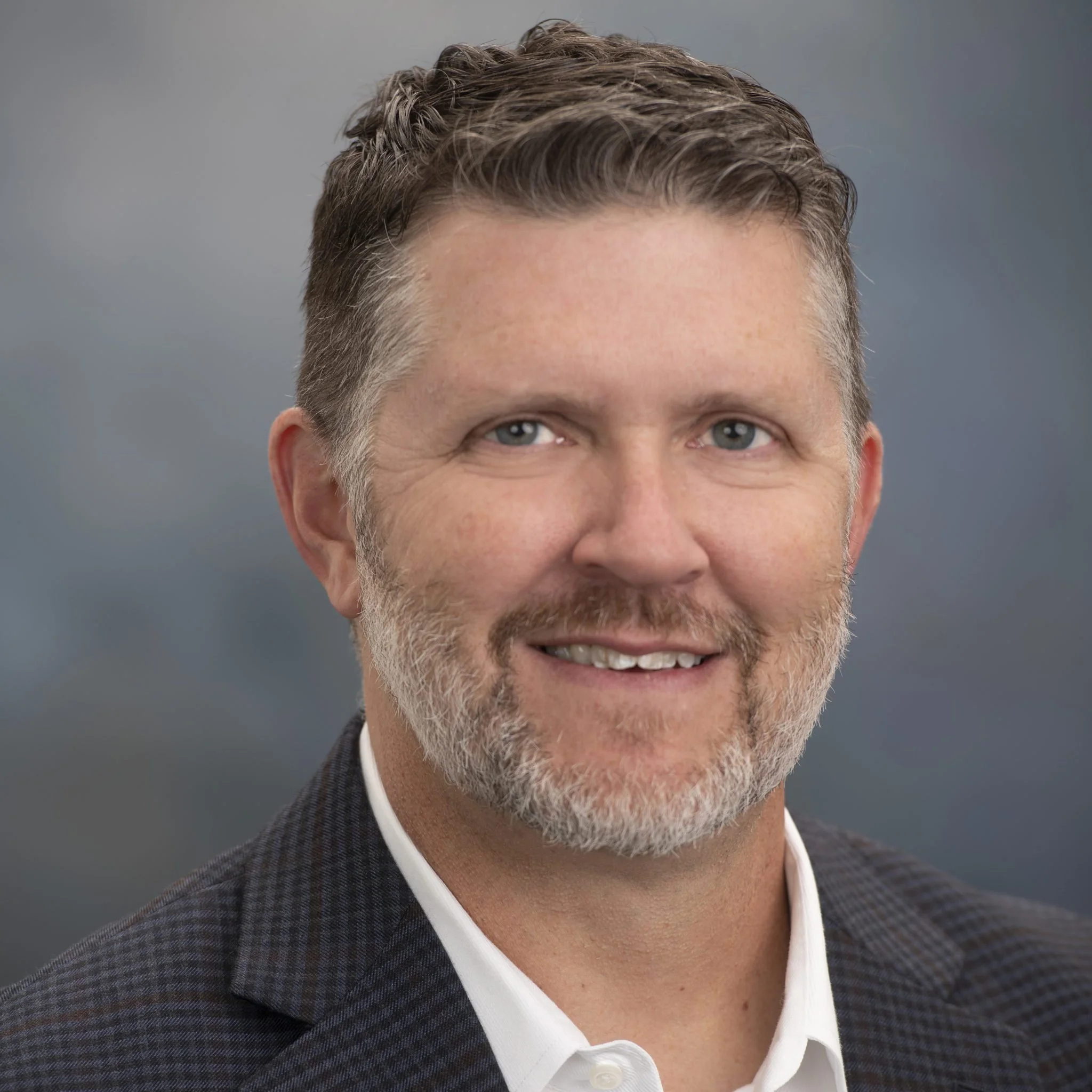
Jeffrey M. Smythe is the executive director for the Atlanta Regional Collaborative for Health Improvement (ARCHI), with nearly 30 years of experience in nonprofit leadership. His career has focused on alleviating human suffering, poverty, isolation, and inequities through roles in housing, hunger, homelessness, aging services, HIV services, refugee support, youth development, and mental health.
Jeff’s leadership spans teams from 5 to 140 employees and budgets from $750,000 to $17,000,000, with a diverse geographic focus. A hallmark of his leadership is his commitment to stakeholder feedback and engagement, particularly in strategic planning, diversity, equity, and inclusion. At HOPE Atlanta, Jeff led a successful initiative that permanently housed over 500 individuals during the COVID-19 pandemic, securing a $2.5M grant from the Bezos Day One Fund in recognition of the organization’s impact and innovative approach to family homelessness solutions.