Capacity Building in Mental Health with Ebony Rao
The rise in mental health challenges among youth has reached alarming levels. Recent statistics show that 11% of North Carolina children aged 3 to 17 have been diagnosed with depression or anxiety. This marks a significant increase from previous years.
The situation is worsened by the pandemic's aftermath and escalating community violence. Both factors have intensified feelings of isolation and insecurity among adolescents.
We’re joined by Ebony Rao, Senior Health Program Manager for the ReCAST II program at Mecklenburg County Public Health. We discuss how the program is approaching these issues and helping communities build their mental health capacity.
You’ll Hear:
(03:15) What strategies can be implemented to address and prevent community violence
(09:22) How rising youth mental health challenges are being addressed post-pandemic
(16:30) Why capacity building through initiatives like ReCAST is essential in the workforce, and how ReCAST approaches this issue
(35:09) How ReCAST tracks the progress and success of its mental health and violence prevention initiatives through data and community feedback
Key Takeaways
Prioritize trauma-informed care for addressing youth mental health challenges — Understanding the impact of trauma and integrating supportive resources within communities can significantly help children cope with their mental health issues and build resilience.
Engage youth in conversations about mental health — Actively involving young people in these discussions allows communities to better support their emotional health and equip them with the tools they need to navigate their mental health challenges effectively.
Capacity building provides communities with sustainable strategies for mental health and violence prevention — Training professionals and community leaders in trauma-informed care creates long-lasting change in mental health and violence prevention. Capacity building strengthens the ability of communities to respond to these challenges by equipping individuals with the tools and knowledge necessary for proactive interventions. This approach fosters stronger support networks and enables communities to address mental health and violence issues effectively and sustainably.
Resources Mentioned
-
Drew Reynolds: Hello, everyone. Drew Reynolds here with the Common Good Data Podcast. In North Carolina in 2022, 11 percent of children ages 3 to 17 reported having a diagnosis of depression or anxiety, and that's up from 7. 6 percent just a few years earlier in 2016. In 2021, only 49 percent of high school students felt good about themselves, down from 80 percent in 2011.
Now, we know that this is not just an issue in North Carolina, but is a challenge for the nation as a whole. So much so that Surgeon General Vivek Murthy has described it as a national epidemic of loneliness and isolation. So to discuss this challenge, we've invited an expert in mental health and in resiliency, and that's Ebony Rao.
Ebony is the Senior Health Program Manager for the SAMHSA funded ReCAST 2 program, that stands for Resiliency in Communities After Stress and Trauma, at Mecklenburg County Public Health. She's currently a PhD student in public health sciences at [00:01:00] UNC Charlotte and also a licensed clinical mental health counselor.
She provides trainings and presentations. throughout the community and participates on multiple committees and boards addressing gaps in service for those with mental illness and also on issues related to childhood trauma. On this episode, we're going to talk a little bit at the beginning about the importance of prevention when it comes to curbing community violence and ensuring public safety.
We'll talk a little bit too about youth mental health and well being as alluded to at the top of this episode. We'll talk also specifically about how recast to use. Uh, program, uh, the ReCAST 2 program really works to build community resilience through system change, through capacity building, through workforce training, and really trying to think about mental health, uh, as a whole system and how to address mental health challenges at a population level.
Certainly, we'll also talk a little bit about evaluation and how programs that try to bring change at a systemic level, at a population level, might think a little bit about data and evaluation challenges. We'll also discuss the exciting event [00:02:00] coming up in Charlotte called This Is My Brave, which is a wonderful event that talks a little bit about, um, or demonstrates stories of resiliency.
So we'll have more details for that in the episode.
Also, before we start our interview, our hearts go out to everyone affected by the devastation of Hurricanes Helene and Milton, especially in Florida and in North Carolina, where communities are facing immense challenges. We stand in solidarity with those impacted by these hurricanes and encourage everyone to find ways to help communities recover and rebuild.
Keeping this in mind, we'll head straight into our interview with Ebony Rao.
Drew Reynolds: Ebony Rao, welcome to the show.
Ebony Rao: Thank you so much for
having me.
Drew Reynolds: So we have had some recent high profile cases of violence in communities. In Charlotte this past April, there was an incident that led to the shooting and killing of four law enforcement officers. Um, U. S. Marshals and CMPD included. And then recently here in Georgia, um,
earlier this year, we had
a shooting that took the [00:03:00] lives of four Appalachia high school students.
So the violence continues to be a, uh, an enduring problem in our communities. What do you see as strategies that can be effective to help address and prevent violence in communities?
Ebony Rao: Yeah. I mean, first, I'd
just like to again express, you know, the sadness that so many of
us feel, um, not only for those who were impacted by the violence here in Charlotte, but also, um, those in Georgia and across the country. Um, it's one of those complex topics that really doesn't have one size fits all.
answer. Um, but I can tell you something that we are doing here to work on addressing violence that impacts our community. Um, first, we really began looking at our communities and asking what are the needs and what are people seeing and what do they feel are some solutions, um, that could really begin [00:04:00] addressing the issues of gun violence.
And we recognize that this can be a very polarizing topic, but it really doesn't need to be, right? If we can just take a moment to really look at some of the facts and some of the statistics around gun violence, we know that this is one of the things that are Taking more lives of our youth than, um, than anything else.
And we really want to be able to recognize that, validate it, and then understand what some things are that we
can incorporate in our communities. and I think the first thing of
course, is having some real open and honest dialogue about. The impact of gun violence across our
communities. um, the second thing which, um, I, I'd love to bring this up is one of the things we did here.
We, um, met with a number of youth from across our community to
ask them, um, questions about their needs and what they
believe would
be helpful from a mental health [00:05:00] standpoint, from a community violence
standpoint. And although this wasn't an official study, I just like
to share some of the answers that our youth gave, right?
And so,
with those youth, many of them expressed
the desire to learn more about how they can resolve conflict without violence. I was really excited to see that our youth were requesting that, Um, many times
as adults. We don't understand that that's something we're being
asked
for. Additionally, um, many of our youth requested additional information on safe
gun storage.
Things
that they should be doing or that their parents and their loved ones should be doing to ensure that those guns
are kept safe and locked away so that they're not easily
accessible. And of course, many of those youth asked for, um, options related to mental health
so that when they are
feeling desperate and in need, that they have others near them that they can go to for additional support.[00:06:00]
And although these are things that our youth are requesting, I believe from a policy standpoint, from a loving, caring adult standpoint, these are easy things that we can begin implementing across our communities to really help give our
youth, the things that they need to succeed and help us in reducing some of the violence that we're seeing taking place.
Roger Suclupe: This is great. I really love, thank you so much for sharing that, by the way, um, Ebony, I really love how y'all,
as students, as individuals who are a big part of our community, but yet often They don't have a voice, so y'all ask them what are, what are things that can, what do they want? What do they see?
What do they think? What do they need? And the resolving conflict without violence is key. There are, there are definitely ways that we as adults can support our youth in how to, how to, how to have healthy conflict resolution. Right. And, and at times we end up being the ones who [00:07:00] model what to do and what not to do.
And perhaps we need to, we need to take a look at ourselves and say, and see what are we doing? What are we doing here? What, what aren't we doing for our youth in the community? Additional information regarding safe gun storage. That's proactive.
Ebony Rao: Yeah,
Roger Suclupe: These are our leaders here. These are, these are young minds who we are hoping to become leaders in our community.
And the fact that they're thinking in this capacity is incredible. And then options related to mental health. To me, that, that saying, help, we need help. We need to know other avenues that we can connect with in order to become healthy minded. These are, these are, these are beautiful things that our, our youth are telling us.
I hope that we, as adults. Not only listen, not only are listening, but we are hearing. What they're saying, because there's a huge difference in listening and hearing to folks, right? [00:08:00] So thank you for sharing that. This segues into this, uh, question about mental health. So let's talk about youth mental health, right?
I'm going to throw out some statistics here in 2022. 11 percent of North Carolina children ages 3 to 17 received diagnoses of depression or anxiety from a healthcare provider. Now this is up from 7. 6 percent in 2016. So this is like a 48. 7 percent increase. Additionally, In 2021, only 49 percent of North Carolina high school students said that they felt good about themselves.
This figure is, this figure was about 80 percent in 2011, so there is things that we need to know and do about Knowing the challenges that our youth are currently experiencing, but now you add different layers, right? The challenges [00:09:00] following the pandemic, for example,
right? Let's talk about that.
What do you think are strategies
that would be most effective? To improve mental health and wellbeing, especially after something as big as the pandemic or something as big as what we just experienced recently here in Western North Carolina.
Ebony Rao: absolutely. Thank you so much for bringing that up. We're seeing more and
more that youth are experiencing a lot of distress. Um, even here within our own community, we're seeing, um, larger
rates of youth reporting that they feel, um, isolated, that they feel depressed and that on more days than not, um, they feel hopeless.
Um, we're also seeing increased rates of youth, um, going to the emergency department because of suicidal thoughts and behaviors. And I think it's really important for us to begin really looking at this and addressing those needs. Um, many [00:10:00] times our youth are, um, not stating these facts to us directly, but they're showing us in their behaviors that they're experiencing a lot of distress.
And so first and foremost, I think it's important for us as adults to validate how they're feeling. Um, far too often, we are stuck in our own, um, our own stuff, and we begin a sentence with our youth by saying, when I was your age, right? And, and I think sometimes that can be dismissive, even if it's not meant to be.
Our youth need to know that we recognize that the things they are living with and experiencing, um, are, are not as similar to the things that we dealt with because they're happening so much faster. Um, they're happening on such a greater scale. For our youth to experience a once in a century pandemic, um, shortly followed by the destruction that we saw, for example, with, um, this most [00:11:00] recent hurricane is devastating, um, but additionally Lockdown drills in school for active shooter versus us when we were younger.
We did tornado drills. Um, and so it's, it's very important for us to really begin to understand that the things our youth are experiencing today are a little bit different than what we experienced. Additionally, with, um, the insertion of, you know, social media, And, um, the way that it can impact the lives of our youth for the good and also some of those negative things that we see, um, we need to be able to help our youth in moderating some of those really challenging experiences that they're having.
And many of them are outside of our control. However, we do have the ability to meet with our youth and talk with our youth and help them to build resilience and coping [00:12:00] skills that can really help fortify them for some of these challenges that they are experiencing. And as I mentioned earlier, our youth are asking for those things.
You know, far too often, youth are saying that they would like to have, um, mental health services, but aren't able to get it because their parents don't approve. Um, far too often, youth are asking for ways to engage with other youth, um, that are safe, um, both physically and emotionally, but we don't have policies in place or, um, locations in place for youth to be able to meet up with their peers anymore.
When we were younger, we were able to go and hang out at the mall, um, right on Saturdays. But, um, but many of our youth today don't have that safe space because of some of these other things that are happening, such as community violence. And so for many of our youth, they look for opportunities to spend time with friends, to be creative, to [00:13:00] have space where they can talk openly about some of the challenges they face.
But some of the policies that we've put in place, um, Especially those that are created to help them stay safe are sometimes creating barriers. And so we have to be able to answer the call and look at opportunities to help our youth engage with one another, be open with one another, and receive support that they need.
And lastly, we have to make sure that those in our community, whether they are mental health clinicians, Or they are individuals who work with youth and families, have the capacity to be able to provide support. Because we know that many of our therapists are overwhelmed and far too often don't have the space even in their caseload to see youth.
But we also know that many people don't receive, um, mental health treatment, but they do look for others who can be supportive, such as, um, athletic coaches [00:14:00] or teachers at school. Or even, you know, community members who can be mentors. And so
it's, it's our responsibility to help support those individuals so that they can also be supportive to those youth.
Roger Suclupe: Thanks for sharing that real quick. I wanted to highlight
a number that I,
um, had, uh, mentioned, um, before you responded the number was that in 2021, 49 percent of North Carolina high school students said they felt good about themselves. And in 2011, that number was 80%. So that's a reduction of almost half, right, of high school students who are saying that they do not feel good about themselves.
What, you know, what is going on in that 10, 10 year period of time that has happened? where the youth of our future are not feeling, are not feeling well. And, uh, everything that you highlighted is, is really key and important. [00:15:00] Um, community involvement, uh, social media being a factor, community violence, uh, lack of community spaces that are safe.
Uh, and then obviously with the pandemic that occurred several years back, that, that really threw in a big wrench in all our lives, but specifically our youth. who had access to things at school because it was a social environment, sports, clubs, activities, all of that was rearranged. And we had to all learn how to re, we had to learn how to relearn all that in a new
environment.
Drew Reynolds: Hey, real quick, before we continue our discussion today, I wanted to share an opportunity with you. So if you're interested in building your capacity for evaluation and demonstrating the impact of your organization's programs and services, you can actually work directly with Common Good Data. Go to www.
commongooddata. com slash impact to book a no pressure, no cost consultation session. I'd love to meet you and learn more about the great work that you're doing. And help you figure out [00:16:00] how best to show the impact of your work and that you and your team is doing day in and day out. So again, that's www.
commongooddata. com slash impact. Now back to the show.
So,
Ebony, you have been working with the ReCAST
initiative at Mecklenburg County, which focuses on capacity building, awareness, training. Uh, can you talk a little bit about why the
ReCAST initiative is so
needed in the workforce? And how Recast is working to address some of those issues.
Ebony Rao: Yes, absolutely. So, RECAST stands for Resiliency in Communities After Stress and Trauma. That's kind of a mouthful, but it really is, um, an impactful program, um, funded by SAMHSA to help us really look at ways we can build capacity across our communities to address, issues of community violence, to increase trauma informed care, and increase access to to um, quality mental health [00:17:00] services.
So we really look at this as an opportunity to build um, build upon, I should say, safer and more supportive environments for youth and families across our community. And what we really wanted to do was not only support what is happening um, that additional trauma informed care available to youth and to families, but also support those who are The supporters, right, to help the helpers.
Um, after the pandemic, we noticed that quite a few individuals, um, in different, uh, spaces in different roles reported feeling incredible burnout from nurses to teachers, to those working in childcare facilities. Um, and so we wanted to look at ways that we could support them. So that they could then support those across our community.
We also engaged our community [00:18:00] in asking, what are the needs that we see? And what are some opportunities for growth that we could use this program to address? And what we learned from that was There are a lot of people who want to know how to support youth experiencing mental health related issues, in particular mental health crises, but also how to prevent those things.
And so we wanted to be able to help them to be able to do that. So that meant that we needed to build capacity for those in our community who could Um, do mental health first aid trainings for folks, um, build capacity for those who could, um, talk about resilience and, um, prevent suicide. And so what we decided to do in particular was, um, Provide more training for trainers.
Ensure that there were people in our communities who were able to deliver those trainings to those who were within their circles. Maybe it means that [00:19:00] the PTA president is able to become a trainer for mental health first aid and help to train others in the PTA. Maybe it means the grandmother that picks up all the kids off the bus, um, um, on the corner after school is able to train everyone in her HOA or in her community space.
That grandmother or that PTA leader will know those individuals and already have more buy in. They will be able to have those, um, deep conversations with people about what it means to support a youth who is experiencing mental health needs. Additionally, individuals who are school nurses or who are teachers, um, those who are clinicians or faith leaders, we wanted to be able to bring people together and provide them with the tools they need to support those who need it the most.
Um, we also wanted to provide additional spaces so that we could expand on trauma informed care and what does that [00:20:00] mean? It really means that we're looking at trauma that people have experienced and recognizing that it is a part of who they are, but not what makes them who they are. And so now people have the ability to understand that this may be impactful for how they view the world, but we can also provide them with the support they need to address that trauma issue.
Additionally, providing education, of course, to everyone across our community of what resources are available and how they can access them. We learned a lot from meeting with people that, although there are sometimes not enough resources, the resources that are there are sometimes so complicated to access that people give up because they're tired of calling one place and then having to call another and waiting on hold and not getting calls back.
So we wanted to make sure that we took a collaborative approach, [00:21:00] that we created an advisory group to address some of the gaps in services across our community, and that we also looked at ways that we could increase access to care, that we could increase
education and awareness opportunities, and help talk more about mental health and community violence in a way that allows people to recognize it's something that impacts us all.
But it's also something that we can all work together to heal from.
Drew Reynolds: I love the examples you gave
there. And just so that some of our
listeners can, um, kind of understand a little bit more
in in detail, all the work that you're doing, can you give us some examples of some of the names
and types
of trainings that you're offering at Recast in case they're interested or wanted to sign up or
be involved?
Ebony Rao: Sure, so I mentioned mental health first aid, but we also have QPR, which is Question, Persuade, Refer. That is a suicide prevention course that helps people to better identify individuals struggling with suicidal thoughts and behaviors. We [00:22:00] also have something called Resilience and Thriving, which really helps individuals understand how stress is impacting them and also how their own trauma may impact them and prevent them sometimes from being able to help others.
So, um, we teach this course to help people learn more healthy coping skills so that they can then address their own stuff before helping others with, with impactful in particular for those in the workforce. We've partnered with our school districts to do training for trainers for something called, um, Sources of Strength, which is a fantastic program that helps youth become peer leaders in their schools and talk about mental health and community violence in a way that supports other youth in learning how to cope with challenges.
as well as a program called Familia Adelante, Family Forward, which works specifically with our Latino youth and families to address issues of mental health, um, substance use and [00:23:00] acculturation gaps that happen between, um, youth and their parents. Oftentimes when youth are becoming, um, very Americanized and dealing with some different, um, related stressors than maybe what their parents are dealing with, um, which can also be incredibly difficult.
Um, we also have some workshops that we've been doing with youth and with parents. Um, the youth workshops, um, are run by a local trauma prevention advocate who has written a fantastic interactive journal with, for youth to talk about how they can learn to cope with really difficult feelings. Um, she has been doing phenomenal work with youth across our community to help teach them how how to cope with some of those difficulties.
And so whether we're seeing youth who've been impacted by gun violence or we're seeing youth, for example, impacted by natural disasters, like what we recently had, um, many of them are needing to learn how they can talk to their [00:24:00] parents about the support that they need or verbalize that they're feeling very scared because of some of the scary things that they've experienced.
She also talks about intergenerational trauma, which many of our parents experience, but don't even recognize it as something that is impacting them and continues to impact them as they now raise their children. So to be able to not only open up those discussions, talk about those things, and help parents learn how to cope with those stressful events in their own lives, they can then support their youth in addressing those things as well.
Again, of course, we have lots of other things that we're doing, but one thing in particular I'd like to mention is that we're doing a lot of training with our therapists across the community because we know that therapists often, um, are there on the front lines providing support to youth and to families, but many times, um, for therapists, especially those who are newer in the field, [00:25:00] they don't have the.
funding available to get this really in depth evidence based training. So our program is also providing specific training to address trauma within the youth population
and within families so that those clinicians can now provide additional support to youth and
families across our community.
Roger Suclupe: Ebony, as a seasoned therapist, I appreciate the efforts to help support up and coming Uh, newly minted clinicians and existing, you know, even seasoned clinicians as well, but it sounds like the needle is moving to provide more support for individuals who are providing support to the community, and I think that's crucial because it does help with the prevention of burnout and, uh, and also addresses vicarious trauma that providers feel when they are engaging in these high level acuity cases, whether [00:26:00] it's, uh, community violence or whether it's natural disasters, as you had mentioned with what happened in, uh, the western part of the state in Florida, in Tennessee and Georgia.
So, um, thank you for that, sharing that information, and also, I appreciate the approach, the community identified, layered approach that you talked about, I just made that up, I think, just, it came to my mind, when you talked about identifying the grandmother in the community that everybody goes to because she has, you know, lollipops.
And so having that individual trained in, you know, whether it's mental health first aid or suicide prevention or just even awareness of resources, having those folks in the community who are embedded, who are trusted by the community, um, lifting those folks up is key. You know, identifying those folks is key.
So this is beautiful. This is all
great. So, Ebony, we know that there's an event coming up called This Is My Brave, and we would love for you to share
[00:27:00] information about that with our listeners. Can you talk a little bit about that? a little bit more about
this
Ebony Rao: Yes. So This Is My Brave is a national organization that really works to shed light on mental health and the challenges that people face, but also what it looks like to thrive in the midst of a diagnosis. And we're so excited that, um, National this
is My Brave is partnering with us to bring this wonderful event here to our community.
Um, the dates are October 19th and the 20th. We have three shows and, um, these shows are essentially, um, shows that highlight the stories of individuals living with mental health related issues. who have experienced trauma or who have lived through substance use issues. We have a fantastic, amazing cast who will be sharing their stories, um, via poetry and art and music [00:28:00] and dance and their stories are really, um, a way for them to express what they have experienced maybe at one point in time in their life or as a lifelong journey.
Experiencing mental health related issues. Individuals will share their stories about coping with postpartum depression and anxiety or living through community violence related incidents or Coping with significant loss of a loved one. Um, people will share their stories of wearing a mask of happiness when inside they're feeling incredibly depressed or alone.
But in the midst of those stories, they will also talk about, um, the light of hope in their lives. The story's changing for the better and the support that they were able to receive or looking to, um, different things in their life such as faith [00:29:00] or to community or to loved ones to buoy them up in the midst of that struggle.
And they talk about the importance of recognizing that we all have different struggles throughout our lives and it's okay to acknowledge that, And to move beyond that, because if we're able to acknowledge it, then we can reduce the stigma associated with living with these experiences, and then help others to move into a new place of hope and healing.
So, our three shows will focus on mental health and substance use. We'll focus on community violence and healing. And we'll also be from the perspective of youth and young adults who have had their own stories of, um, moving into a better emotional
space after overcoming some really difficult challenges.
We're really excited for the show and we can't wait to bring it to our
community.
Roger Suclupe: This sounds incredible. We can't wait to, to hear, to see [00:30:00] this. Um, and we, you
know, we definitely encourage our
listeners, um, to
check it out. I'm sure, I know that Drew will
probably have information at the end of the podcast and
also, um, on the link. So thank you
Drew Reynolds: Yeah, we'll definitely have them in the podcast show notes, but in case the folks can't get to it, is there anything that you can point them to, Ebony, just in case they want to sign up to attend the event?
Ebony Rao: Absolutely. If they're interested in coming to the event, they can go to the CPCC website, that's Central Piedmont Community College. It will be held at the New Theater. I know, that's the name. It's held at the New Theater, and that will be on October the 19th. The youth show will take place on Saturday the 19th at, I believe, Central 1 p.
m. for the youth show and then the community violence healing show will take place that evening at 7 p. m. Our mental health and substance use show will take place on Sunday the 20th at 4 p. m. and before each of those shows there will be a resource fair so that [00:31:00] individuals can come and meet with providers and advocates across the
community and learn more about what is available here in Mecklenburg County to support mental health and wellness.
Roger Suclupe: That's excellent. I know, before we get to
Drew's data question, I did want to, um, just acknowledge something real quick. I mean, you had mentioned, um, trauma, generational trauma, layers of trauma, how trauma is impacting youth in our community. Um, also trauma informed care. I teach a mental health assessment course here at UNC Charlotte, and, um, one of the, one of the things that I like to talk to students about is trauma informed care, and I direct them to a website that, um, That is by Dr.
Nadine Harris Burke, who is an incredible advocate in the community, well, nationwide, but she [00:32:00] addresses adverse childhood experiences and the impact that trauma has. On, on us in the lifespan. So we're, we're, we're, we're looking at how these experiences impact children, but then also how it impacts them as they, as they're as a journey through life.
Right. And so, um, here's a quote from the, the Burke Foundation, that it's a quote from Dr. Nadine Bur Harris. She's the founder of Center for Youth Wellness and currently the Surgeon General of California. And the quote is this, childhood trauma increases the risk for seven out of ten of the leading causes of death in the United States.
In high doses, it affects brain development, the immune system, hormonal systems, and even the way our DNA is read and transcribed. Folks who are exposed in very high doses have tripled the lifetime risk of heart [00:33:00] disease and lung cancer and a 20 year difference in life expectancy. And so that's, I mean, that's wild, right?
To think about how an individual's life expectancy ZIP Code matters, and individuals exposure to trauma and traumatic events matter, and if nothing is done about it, it decreases their life expectancy and increases their
risk of health diseases. So um, I appreciate everything y'all are doing, y'all are, y'all are trying to make sure that we have healthy children in our community who can become productive.
and developed adults and leaders in our community.
Ebony Rao: Absolutely. I mean, just thinking about the cumulative trauma over the last five
years. that many of our youth have
experienced, what that has been like and what,
what [00:34:00] the ramifications of that can be. And the great thing is that it's not a lost cause, right? That we have the ability to intervene and provide supportive, loving environments for our
youth to be able to thrive, even in the midst of that
difficulty.
So that
we can stop some of
those long term effects of childhood trauma and provide a path forward for our youth.
Drew Reynolds: So as you know, this is the Common Good Data podcast, so we have to ask questions around data and evaluation for the work that you're doing. And so, Ebony, I wonder if you could just share with our organ,
um, you know, sorry, not our
organization, but our listeners here, um, who are wondering how can I measure the impact of this work?
Cause I know it's important. You know, to be giving training, to be doing advocacy work in the community, to be doing events that, you know, uh, de stigmatize mental health or some of these, you know, things that I think a lot of people are engaged in [00:35:00] in some capacity or can identify with. So how are you thinking about evaluation for those efforts and kind of what have you been able to find through that work?
Ebony Rao: Yes, that is such a great question. I will say that many people who are in a role like mine, you know, where I'm a therapist, and so for me, measuring success is usually through the lens of a client that I'm seeing. But on a program level where these interventions are so large scale, sometimes it can be really difficult to figure out, well, how do I see this program as successful?
And it really does come down to looking at those bare bones. How many people are you able to train in these different modalities? How many people are able to then Receive a training for trainers and then go out into the community and train other people and help educate them about mental health. What does it look like if we're [00:36:00] having a mental health awareness event and people are able to come and learn and grow or implement trauma informed care practices within their own agency so that they can then provide better care to those that they're serving.
How many, um, youth and families are able to receive care because of the training that you provided to mental health clinicians that allow for these, um, clients to receive evidence based services that we know in the long term can support mental wellness. Um, by, by being able to look at these different things and really look at specific goals that we have, that we know have this potential to grow and build capacity across the community, we're able to then measure how that is working.
I will tell you from my own perspective that when I first began looking at how to measure these [00:37:00] things, I thought we just measure everything. Um, Because that's what you do, and that's how it works. Um, but I quickly realized that that is impractical, and, um, and that it's really important to ask the community also what they believe will make this program be successful, right?
So from our community's perspective, how will this program be successful? four years from now or five years from now. Part of that work also included the Way Forward Strategic Plan, which was done by the Office of Violence Prevention here in Mecklenburg County, and they utilized some of those same concepts to really create specific goals and then specific measures they would use to ensure that those goals were being met.
And we have an advisory group that also meets together to discuss all of the things that come through from our program evaluations. And [00:38:00] lastly, I would say for those who are struggling with knowing how to evaluate their programs, it is okay to ask for help. Because there are people in the world who are specific to evaluations.
As you can see, we've got some folks right here, and it is their job to be able to help those programs to better understand how to evaluate them and understand success. So if you are struggling with knowing how to evaluate your programs or understanding and developing metrics to see if
things are
improving or where things need to be adjusted.
you can also rely on a team of evaluators to support that work.
Roger Suclupe: I, would say Drew is the guru of program evaluation. So I would feel safe to say that. laughter laughter
Drew Reynolds: you know, it becomes hard in some of these conversations to kind of. You
mentioned something, Ebony, that I think [00:39:00] is so
important that you don't, it's impractical to try and measure everything. And there's a certain, um, you know, relief that comes with acknowledging that statement because then you don't feel the pressure to do all and so much.
Um, I know in conversations I've had with clients, sometimes the best thing is to say, well, let's actually not, let's actually not do a survey for that one. Let's actually, we actually don't need to gather information there. What we're going to do is going to be a lot of work, but it's not going to yield what we're hoping
for. Um, but then to really
get focused and, and, and honed in on the things that really do matter and doing those things well. and I think that that's true, not just in evaluation, but in
all areas of practice.
Ebony Rao: Absolutely.
Roger Suclupe: So Ebony, no episode of the Common Good Data podcast would be complete if we did not have a pop cultural type question that I love to ask at the end. So I don't, I don't think Drew or Jessica warned you about that, but every episode ends with some form of pop culture question in response. [00:40:00] And so, um, hearing our conversation today, I was inspired, uh, because you had mentioned the, the words light of hope, uh, and, and that just stuck with me for some reason.
And I started thinking about what could I, what, how could I craft my question here, my pop culture question to be something related to a light of hope. And then I gravitated to songs of hope. And so I'll start us off, right? Just kind of give y'all some time to think about it. So. I guess my question is, what are some songs of hope that you can share with us?
That whenever you may have a moment where you're experiencing a challenge or where things just seem hopeless, right? What are some songs that you gravitate to or you listen to that maybe it doesn't fix anything or everything, but it lifts you, it brings you to a different space than you were before? [00:41:00] So, I'll start us off.
I am going to choose, I mean, I'm going to choose an artist, and this artist has a number of songs, and then I'll choose this song. You know, you can, you can choose a song. I'm going to choose an artist and then the song. Um, for me it's Bob Marley. So, I don't know what it is. Well, actually, I do know what it is, it's, there's no bad Bob Marley song, um, they, they're all, for me, for Roger,
they are all uplifting, and whenever I'm feeling a certain way, all I gotta do is pop in a Bob Marley song, or, or a rotation of songs, and my mood shifts and changes, and I'm gonna pick Three Little Birds, that's my song,
Drew Reynolds: Oh, that's a good one. A good choice.
Roger Suclupe: and that's it. Yep,
Drew Reynolds: Oh man. Like there, there's so many different directions
you can take
a song, like, or, um, You know, a
question
[00:42:00] like this, but I think I'm going to include
not just lyrics, but also just like general beat and rhythm. Uh, so I'm going to go with, uh, Michael Jackson's Man in the Mirror.
Also, Ebony, we do do a lot of like 80s and 90s in here, which Roger did not mention, which is why I'm choosing this decade in particular. Um, but yeah, so I think I'm going to go with Man in the Mirror because that song just always makes me feel like You know, like acknowledges that there's like growth needed in myself or something and others or whatever, but that, that also, that as you do that work of
introspection, I think what I'll say, as you do that work of introspection and reflection, that there is an opportunity for that growth.
And there's a certain hope in that, that I really appreciate.
Roger Suclupe: solid, solid,
Ebony Rao: Wow. So, I would have selected both of those songs, uh, and actually have on multiple occasions when asked, uh, a question such as this. So, um, in fact, I love Bob Marley [00:43:00] so much I considered naming my daughter after him, but then I realized,
um, she would have sounded like a shellfish, uh, in her name, so I decided not to go with that.
So, um, I would have to say, um, my song would be Rise Up by Audra Day. Um, I know it's more recent than my beautiful, um, 80s and 90s, but, um, it is definitely one of those motivational songs that I think about when I feel down and out and like I just can't give any more. I think about that song
and I realize that, um, I have the capacity to do great things, and it's okay to take a break, but then we gotta rise
up again.
Roger Suclupe: Beautiful selection. Excellent choices to this group. Everybody gets 100 points.
Drew Reynolds: Well, thank you, Ebony, so much for joining us today to talk about mental health, about resilience, [00:44:00] about the work of ReCAST, and it's just been such a joy to have you on today. So for those who are
interested in learning more
about the work of ReCAST and also how they can connect with you, what are ways that they can do that?
Ebony Rao: Absolutely. You can visit our website. I'd give you the address, but it's quite long. However, um, you can find it on mecknc. gov, and you would go to ReCAST, and, um, you'd learn more about our program as well as some of those evaluations that we've done so far of our fantastic program. And you can learn about taking some of those fantastic courses, whether it's here in our area or in some other areas across the country, um, where you might
be able to access some of that information.
You can also learn more about This Is My Brave and, um, we hope that you'll be able to come to
our show.
Roger Suclupe: And Drew, I'd like to give a shout out to students, uh, social work students in the western part of the state. I know that there are multiple [00:45:00] communities, uh, and schools that have been impacted. Um, but as you, as some of y'all may see, I have an App State hat on right now. Um, I am alum of Appalachian State University.
And so, um, our School of Social Work here at UNC Charlotte is sending support and love to social work students at App State University, Western Carolina University, Warren Wilson College. And Mars Hill College as well. They have social work programs there and social work students who have been impacted.
And so we definitely want to give a shout out to them, but also everyone in the western part of the state, UNC Asheville, all the communities out there. We're thinking of y'all. Um, and, and I know a lot of people who are volunteering, uh, through organizations to provide support and relief. So, um, just want, want y'all to know that.
And if our listeners are interested in finding out more, I'm sure there's tons out there that y'all can, um, Google, but definitely the American Red Cross is a huge source that folks are gravitating [00:46:00] towards for donations or even donating their time. And also I know Samaritan's Purse is another organization as well.
That's doing a lot of heavy work up in those areas.
Drew Reynolds: Oh, I appreciate that, Roger. And I know, um, our hearts go out to everyone who's been affected by Hurricane Helene, uh, in Western North Carolina and elsewhere as well, but I know that it's been, um, really reassuring to see a lot of folks step up. I know in my network, I've heard a lot about people responding, not just to physical needs, um, that are very obvious with the destruction in the wake of the storm.
but also attending to people's mental health needs and the experiences of trauma that can come as a result of natural disasters. I saw recently that Governor Cooper of North Carolina recently issued an executive order that would allow for mental health professionals who are not licensed in North Carolina to be able to provide services, at least in this temporary time in the wake of the storm.
So it's things like that that are really grateful to see, given the nature of our work.
Ebony, thanks again so much for joining us. Um, and for those of you, uh, who are listening this week, [00:47:00] come check out the This is My Brave event. Um, I know we'll have some links for it in the podcast episode. It's a great opportunity to learn more, um, about mental health and about resilience.
Drew Reynolds: And we hope to see you at that show. So thank you all so much and we hope you have a good week.
Our Guest
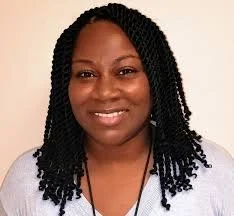
Ebony Rao is the Senior Health Program Manager for the ReCAST II initiative at Mecklenburg County Public Health. She specializes in mental health crisis continuum work, community resilience, and partnerships with mental health advocates and law enforcement.
As a Ph.D. student in Public Health and psychotherapist at UNC Charlotte, Ebony has expertise in trauma care, perinatal mood disorders, and social determinants of health, focusing on fostering healing and resilience in adolescents and adults.
Learn more about the ReCAST II initiative.