How to Close Gaps in Healthcare Access
Every day, millions of people in our communities face an impossible situation. They’re stuck in a gap—unable to afford health insurance but also not qualifying for federal assistance. It’s a harsh reality, leaving many with nowhere to turn when they need care the most.
In Cabarrus County, North Carolina, the Community Free Clinic is stepping up to fill that gap. Led by Laura Lyerly, the clinic provides not only vital healthcare services but also a data-driven approach to understanding and meeting client needs.
In today’s episode, Laura shares how her team supports those who fall through the cracks, tracks their impact with data, and builds meaningful partnerships to amplify their work.
Skip Ahead:
(00:37) What is a typical patient at the Community Free Clinic and how do the barriers they face reflect larger systemic issues in healthcare.
(03:35) What are the less visible challenges—beyond cost—that prevent people from seeking care.
(10:14) How does the Community Free Clinic use data to understand the health care needs of their community.
(13:24) How does the clinic evaluate its success.
(19:28) What successes has Laura found in building partnerships that create a continuum of care across all healthcare services.
(21:50) What policy changes would Laura like to see to better support their patients.
Key Takeaways
Many patients at the Community Free Clinic face challenges beyond just the cost of healthcare, including language barriers, lack of transportation, and difficulty navigating the complex healthcare system, which reflect larger systemic issues like health literacy and accessibility in the broader healthcare landscape.
The clinic uses data to identify key health needs within the community, tracking patient demographics, service utilization, and health outcomes to tailor their services effectively and address specific gaps in care.
Strong partnerships with other healthcare providers, social services, and community organizations allows the clinic to create a seamless continuum of care, enhancing patient support and improving overall health outcomes by addressing both medical and social determinants of health.
-
Drew Reynolds: [00:00:00] Millions of people in our communities face a heartbreaking gap. They can't afford health insurance, but they also don't qualify for federal programs. This leaves many without access to essential healthcare. In today's episode, Roger and I sit down with Laura Lyerly, the executive director of the Community Free Clinic of Cabarrus County, to discuss how she's tackling this challenge head on.
We explore how the free clinic supports clients who don't have access to health insurance, how they use data to understand client needs, how they track services provided and how they build partnerships to magnify the impact of their work.
Laura Lyerly: Stanley, is a good story to tell in that he moved down to North Carolina and he moved from New Jersey where he had Medicaid. And at the time, we did not have Medicaid expansion. So, while I applaud that we now have it in Cabarrus, well in, North Carolina, it's not as robust as it needs to be, [00:01:00] and that's a, one of the problems.
but B, he came here and he couldn't get a job because he had uncontrolled blood pressure and diabetes, actually. But his diabetes was keeping him from getting a CDL, so he couldn't drive commercially. So he couldn't afford insurance, which, is a major financial strain on so many families.
So he was able to come to us here at the free clinic. We offer free health care. for any Cabarrus County resident at 300 percent of federal poverty guidelines. So he was able to come in, get free medication. He was then able to get his CDL and then he was able to afford his insurance and was able to leave us.
So a great story of how we were a stopgap. For someone who needed us just in that period of time, then we have other patients that will [00:02:00] always be with us because they will never get Medicaid. And, we have lots of great success stories of how they started with us. 20 years ago, one in particular, we found, her breast cancer.
We were able to navigate her through our local hospital system that participates in the HealthNet Cabarrus program, so they recognize our community free clinic, program, and they offer charity care for her. So, we were able to help her through the stages of referrals, the medical, navigation of teaching her, because the literacy level was somewhat low, and educate her about her cancer.
She had surgery. She went through radiation and then was able to come out on the other side. She is still with us as a patient over 20 years later. So, we have one side of, of the continuum and then the [00:03:00] other, but either way, we're happy to be here and serve our patients.
Roger Suclupe: Laura, thanks for sharing that. That's those two, examples you provided are excellent perspectives of the wide range of services that an individual can receive through your organization. Right. We know that cost is often the first barrier that individuals think about when it comes to healthcare, right? So beyond cost, if you can share with us, what are some of the less visible challenges that prevent people from seeking care?
Laura Lyerly: Inequalities in healthcare access, systemic drivers beyond just those of traditional healthcare, would be, social and behavioral. factors. it could just be something as easy as transportation to get here. It could be, you know, just in a inability to get, in with other, [00:04:00] providers here in the area.
you don't think of Cabarrus County as being a place where it's hard to get care. Unfortunately, we are in an area that, we don't have enough providers for the amount of people we have now living in the area. We have not been able to keep up with that growth, and then, for that matter, obviously, it also goes back to, financial reasons.
Uh, we are Cabarrus County's only free clinic, so, if they're looking for care and they can't afford it otherwise, Mecklenburg County has several clinics. We're it for Cabarrus County. Now, don't get me wrong, we're happy to serve, um, but again, we have plenty of capacity, but if we were at capacity, then that would be a struggle as well.
So, so many different, barriers. Uh, we made sure that we have increased our, times that we're here and, and able to, serve. Pre COVID, we [00:05:00] were, Only two and a half days per week. We're now, four nine hour days. And we also offer a night clinic once a month, to try and get, you know, those people that work during the day, make sure that we can see them, at night.
We've also brought in some specialty clinics over weekends to be able to better Patients because we know we have both people without income and that are working poor. So they are working one, sometimes two jobs and still can't afford health insurance. That's an awful place to be in in America.
Roger Suclupe: Yeah, very much so. Uh,aside from costs, it sounds like there's a lot of different layers involved, in healthcare. With an individual not seeking care, whether it's, transportation, like you had mentioned, Cabarrus County is, it's a rural county.
it's not like Mecklenburg County, which, although there are certain spots of Mecklenburg that are rural, there are different methods of transportation, whereas Cabarrus [00:06:00] County is a little bit more different. So, transportation is a challenge, probably also access to accurate information.
Right. That's another issue. And then the other one I could think of real quick is language. Language barriers prevent individuals from seeking services. Mm-hmm
Laura Lyerly: maybe someone's had a previous negative experience. So many times we have people coming to us that haven't been seen by a physician in years or if they have, it's been at the emergency room when something was really bad and the negative experiences there from waiting five, six hours just to be seen.
Obviously, yes, language barrier, a huge one. Language barriers, are something that we're really happy to be able to say our primary provider is bilingual. So she's from Columbia. So she's able to speak to 99 percent of our patient population in their native tongue. unfortunately that other percent we typically have translators for, [00:07:00] and, sometimes I have to use Google translate, but, language barrier is a huge one.
Roger Suclupe: Yes. of course. I know that as an an, as an executive director of an organization, there's so many things that you have to be, you know, prepared for it. And so of course there's just an abundance of things, to think about. the one piece I did wanna mention before Drew, asked.
the next question is the appreciation of recognizing that in Cabarrus County, there has been an increase in the Spanish speaking population and community. And so what, the, um, Community Free Clinic has done is they have, y'all have built a bridge and, and able to provide the, some really crucial services in Spanish.
Not only that though, you had mentioned earlier that y'all are. A freestanding, no cost clinic, right? I think that's how you phrase it. nobody who comes in to utilize services pays a dime. it is free for them. And, there are other clinics around the [00:08:00] community.
whether it's in Mecklenburg or Cabarrus or the neighboring counties where there is a cost connected to it, so it's not fully free, whereas y'all are a fully free standing community clinic. That's excellent.
Laura Lyerly: Thank you so much for tuning into today's episode. Now, Before we dive back in, I wanted to quickly share a resource that I think you'll find incredibly valuable. Now, as a social sector leader, you know how important it is to have reliable data to demonstrate your impact and to win grants and funding opportunities.
Drew Reynolds: But finding and using the right information can often feel overwhelming, especially when you've got so many things going on and you're juggling so many responsibilities. Now, that's why I created the Data and Evaluation Made Simple Toolkit. This toolkit offers clear and practical steps to help you get the data you need for community assessments, program evaluation, and strategic planning.
It will show you how to stand out with U. S. Census and Social Explorer data, how to design surveys and focus groups to really find out how your programs are making an impact, and give you the strategic guidance you need to help you design a data driven strategic [00:09:00] plan. And while anyone can benefit from it, it's tailored specifically to professionals in mental health and substance use prevention. Ready to simplify your data? Download your free toolkit today at www. commongooddata. com slash simple. And again, that's www. commongooddata.
com slash simple.
you know, We talked about language barrier being an issue, and I know that, that's an issue dear to Roger and my heart is the barriers that language can be and access to care and all types of varieties.
I remember seeing some data recently that it was as many as a third of Latino households. And I'm not sure if it was Mecklenburg County or North Carolina as a whole, who didn't have access to insurance. And that's just kind of one example that I, it really opened my eyes with the more insurance kind of getting out there between the Affordable Care Act and expansion of Medicaid, I have this idea that more people are getting insurance, but it's really not always the case for people who are especially caught in those eligibility brackets where they just don't fit into an existing program or opportunity.
So I'm wondering, how does the [00:10:00] community free clinic think about or use data, to kind of understand or talk about healthcare needs in the community. What's going on? What are you seeing in Cabarrus County and are there specific metrics or trends that kind of guide your services or highlight gaps in access?
Laura Lyerly: So we use data in a myriad of different ways. we want to make sure that we represent, our community. So making sure that we are doing targeted outreach, to make sure that we are increasing, our patient services, as Our community, but also our patient population, needs those.
So, you know, seeing a need in, earlier labs, making sure that we are able to put in those earlier labs. So then, in turn, our own metrics where we assess ourself, our patient count, our number of appointments that we have. All of those making sure that we're hitting improvements or seeing improvements with those year over year, positive [00:11:00] trends.
all of those are good ways for us to make sure that we are, doing our job to serve our community and, best serve our patients. we've had 120 percent increase in our patient population over the last two years. like Roger said, we've seen the increase in the Latinx population.
We've moved from 37 percent Latinx to now about 48 percent Latinx in the last two years. So, we also use that to target our outreach, to neighborhoods that we know, are more, uh, Latinx. and we listen to our patients for that, you know, tell us what's going on.
Where do you go? What do you do? You know, uh, we work with, El Puente, which is, a Latinx, advocacy and service organization here in Cabarrus County that Roger's involved with. Sondra is on our board and, just making sure that we are [00:12:00] getting the word out where patients need us.
You know, there, there's no reason for us to go to the Cabarrus County Country Club because that's not where our patients are.
Roger Suclupe: Yeah, nice shout out there to El Puente Hispano and Sandra Torres, who is a part of a great organization, but, um, a lot of the collaborations that, the community free clinic has with community, organizations and leaders who know the community is really crucial and important.
Drew and I recently, did a podcast with someone who talked about the importance of community bridge building and how to, utilize leaders in the community to have access and trust with certain communities. So, yeah, I love that there's that initiative with El Puente Hispano, and with Sandra Torres, and how that's a bridge builder.
Cause that way you can get access, you can give access to the community that's accurate about health and healthcare and access to healthcare. So, [00:13:00] Laura, I'm going to ask you a little bit about, how you evaluate your success at the clinic. So, you know, what are certain ways that y'all Know that you're doing the job that needs to be done right.
How, and then how are you taking that information and, making the changes that need to be done in order to improve quality of care?
Laura Lyerly: great question, so obviously as a medical center, we have an EMR, so electronic medical record. from that, we're able to pull our diabetic patients and check their A1Cs, you know, where are they, in comparison with, what is medically acceptable as, Medical norms, unfortunately, free clinics tend to run higher.
obviously, we have all those other barriers that our patients are having to work through, the social determinants of health, all the other barriers that we've already talked about. So, typically, we tend to run a little higher, but still considered [00:14:00] normal. so we take those records and we compare those against other free clinics.
So North Carolina has, 71 free clinics in the North Carolina Association of Free and Charitable Clinics. So we're able to see where we stand with our H1Cs, with our, blood pressure. What percentage of our patient population has controlled blood pressure? same for smoking cessation. You know, where do we rank compared to other free clinics and, not even just here in North Carolina, but also nationally, we have a national association of free and charitable clinics.
So from there, we're able to see that, Hey, our smoking cessation is way down. You know, we're only 20%, but national. Average is about 35%. so, you know, that's a victory. obviously, looking at appointments, you know, how, what's our no show cancellation? What are our percentages of late cancellations?
Because we want to make sure that we're able to put [00:15:00] people in those Because, they're not unlimited. We don't have, you know, 10 doctors here at any time. We typically have one, sometimes, 1. 5. So one full time provider and then a half day specialty provider. that will come in, so we want to make sure those are booked up so that we're able to see as many patients as we can.
we've talked about, our enrollment, so obviously growing our patient population, is important. That's one of the ways that we determine, you know, how are we a success. in our own book, but then also working with the community for specialty clinics. You know, how many people did we vaccinate this year?
We have a partnership with Walgreens where they come in and they're able to give flu vaccines for our patients. Last year we did 68. This year we had over 110, I believe. So a [00:16:00] huge improvement. Um, How are we able to work with other nonprofit organizations to make sure that we are not only providing health care here for our patients, but also addressing those other social determinants of health, because we know that plays such a huge part in their health care.
So, we work with CCM, which I'm pointing down the street because they're literally about two blocks from us. Through their help, we were able to become a Second Harvest Food Bank location. and we're able to help some of our, the social determinants, obviously food insecurity of our patients. So working with them, we work with so many of the non profits, here in Cabarrus County, we're at a great place where non profits don't compete with each other.
We actually work together well to make sure that we're best serving our community. So when we have someone that [00:17:00] has, you know, food insecurities, while we're able to address a portion of that, we're able to, to get them, you know, connected with CCM for, more truly what they do. and also for housing, you know, we have lots of patients with housing concerns.
So, you know, getting them set up with WeBuild or CCM or Habitat for Humanity are all of those other groups here that fulfill that need that we do not.
Roger Suclupe: Sounds like y'all understand the importance of collaboration and that, it is a key factor in addressing some of these complex challenges, like healthcare access, food access or like economic mobility, and that y'all are Partnering up with folks and sharing that type of data with them so y'all can address these needs from a more comprehensive approach.
and in fact, meeting the needs of the community. So that's, not living in silos, but you're collectively working together.
Laura Lyerly: we know we can't do it [00:18:00] all, and while we can help, You know, their diabetes, if they don't have healthy food to eat long term, you know, we can teach them about it, but if they can't afford it, and it's not readily available, that's something they're just not going to see those same improvements. So, truly trying to address the whole person.
Drew Reynolds: You know, one of the things I've noticed with organizations who are doing this collaborative work or one challenge that they often have is that they want to be able to work with each other and Maybe it's through a referral process where, you know, they meet with somebody, they provide this service, but they know they need healthcare, so they refer them to you.
or maybe it's about, accessing some resource that they might not have inside their own place, so they collaborate with somebody else. But one of the challenges that a lot of nonprofits run into in this is finding ways to really make those collaborations be kind of seamless. And sometimes the challenges come around, especially with [00:19:00] data and privacy issues, referrals and HIPAA and all that kind of stuff that can sometimes be a barrier, for those organizations.
And I know you're, you're smiling because you're like, you're sure you've experienced this in so many different ways. you know, there's not always a perfect solution to these challenges, but what have you found success in? as you've been trying to work through some of these partnerships that really help make the sort of continuum of care across all of health care services and related services that you provide, work well for your patients.
Laura Lyerly: well, Patience. You need lots of patience sometimes. unfortunately, in the medical world, there's no such thing as we can do everything quick. that's just not the reality, especially when we have such a shortage of providers, that are willing to do that free care. I wanted to give a shout out, to CHA, Cabarrus Health Alliance, and Atrium, as, they have been great long term partners of the clinic, as well as so many others, but they are a part of our safety [00:20:00] net here with our Health Net Cabarrus program.
through that, we offer 18 different primary care homes, and most of those are through Atrium. also shout out to Novant who will be joining our Health net. That has never been a part of it. So, we've had 24 great years of atrium support through the health net, and now we're excited now that Novant has such a large presence and then.
is growing their presence in Cabarrus County, but they'll be coming in, but that process is a slow process, you know, new to the area or new to us. And then, of course, every independent clinic does things differently. So just learning how. we're able to work with a large hospital system and, and even existing programs.
When Atrium, starts a new program, how do we work with the diabetic clinic there? Because, we're not a part of Atrium, so making sure that we have the MOUs in place to be able to share the [00:21:00] data. Be able to get the reports, of course cleaned up. so no HIPAA or other, important, information is shared that shouldn't otherwise.
it just takes time sometimes. So, it's worth it in the end to be able to best serve our patients.
Roger Suclupe: I think, again, the importance of collaboration is one of the key components of the success of community work, or at least initiatives that serve the community, like the Community Free Clinic. So, while the clinic provides critical support, Systemic change is often needed to address healthcare, access, at its root.
So, what policy changes or broader initiatives would you like to see to better support your patients, your clients, and others in similar situations?
Laura Lyerly: we would love to reduce poverty and improve economic abilities of our patients. So that they wouldn't need our services. [00:22:00] It'd be great for us to work our way out of our jobs. we know that's not going to happen anytime soon. so until then, whatever we can do to help those in poverty, insurance reform, you know, we said, like I said earlier, I applaud that Medicaid
Expansion happened in Cabarrus County. not just in Cabarrus County, all of North Carolina. but here in Cabarrus County, it didn't affect nearly as many patients as we thought it would. we lost less than 10 percent of our patient population to Medicaid expansion. so we still saw significant patient growth, despite that.
So, Increasing, Medicaid, would be great because we have patients that are right at that 139 percent of federal poverty level that they didn't get expansion. You know, they still need our services. insurance reform. I don't need to tell anyone that that needs to happen. That's such a major problem in the United [00:23:00] States.
Other systemic things would be improving health access. Making sure that people have culturally appropriate care, really important because, sometimes without knowing the backstory of someone, I'll use Lucia, um, from Columbia understands, you know, someone that came in from Columbia and they're able to, you know, share those, those stories.
Those shared life experiences she understands, and there's also that level of trust that comes along with. let's see, advancing racial equity is important because unfortunately, that's still a problem here in almost 2025. and then last but not least, we still, have patients that struggle with, substance use disorder, and Until those are dealt with and other behavioral health concerns, [00:24:00] they're going to continue to have negative cycles and not be able to get to a better place, so.
Roger Suclupe: Yeah, I think it's important for, community leaders, nonprofit community leaders to be at the forefront of policy change and advocacy and making sure that, you know, sustainability and accountability, is there from lawmakers, from, you know, policymakers, right? And then the leaders, the nonprofit leaders becoming the policymakers as well.
So there's this sharedness of improving the quality of life of all communities. So thanks for sharing that.
Laura Lyerly: Of course. Thank you.
Roger Suclupe: Well, Drew, I think it's time for my, Pop culture time,
Drew Reynolds: Go for it.
Roger Suclupe: so, I've been thinking about this a bit. And I'm gonna, go with the, you know, we're in the season of holiday now as we end the year. [00:25:00] And, I'm going to go ahead and go with 80s and 90s movies.
The holiday movies that you can, like, it takes you back. Like if you see it now, you immediately go back to that time. I have a, man, this is hard because the one I'm getting ready to say is very, it's controversial because some people do not consider it a Christmas movie. There's debates on
Drew Reynolds: Oh, I think I know which one you're talking
Roger Suclupe: I heard it on a podcast and they were the hosts were going back and forth.
Drew Reynolds: say the
Roger Suclupe: Whoo. I'm gonna say Die Hard. it's gotta be a movie that you pop in, even during this time like, oh, it's Die Hard, like Christmas. But there's debates on whether or not it is or isn't a Christmas movie or a holiday movie.
I'm gonna choose Die Hard. Die Hard's my movie. All right, Drew, what you got? Laura, you go last. Laura, we let our guests go last so they can think and marinate on it. So[00:26:00]
Drew Reynolds: 90s is definitely Home Alone. I feel like all those movies come back and bring me to that era. Just the house, the decor, all of it is so, but I think for this podcast, I do want to mention It's a Wonderful Life just because it's such a sweet movie and I love it so, so much. but it also has a lot of themes around, economic insecurity as well.
And there's a little healthcare in there too. so I think it kind of links back to this episode in a great way. And how these, financial pressures that people can be put on can cause this real hardship but also how a community can kind of come together and wrap around that. And I hope, I feel like that's a very similar theme to what you're doing at, the Community, Free Clinic.
Laura Lyerly: I love that, Drew. Thank you. so Roger, I am completely with you. 100 percent Die Hard is always my favorite Christmas movie. It is a fight I get into with my eldest son, Patrick. He is the home alone and actually home alone too. And I am die hard that it is a Christmas movie.
Roger Suclupe: now, Drew, we've [00:27:00] never had a, a guest pick one that's similar to one of the co hosts. So I might have to battle Laura and say, you can't have that heart cause that you have to have your own, but I, you know, I'll give grace.
Drew Reynolds: but you both agree that it's a Christmas movie.
Laura Lyerly: yeah.
Roger Suclupe: would, I would say, I would say it is.
Drew Reynolds: Yeah, because this is a debate that comes up, so I, I'm excited, you know, we got some listeners out there who disagree, you know, add something in the comments, let us know on social, we'd love to hear if you think Die Hard is also a Christmas movie, Laura, thank you so much for joining us today, and to kind of walk through, some of the ways in which you're able to serve those who are just caught in that space where they don't have access to insurance, It's such an important, area of work and to help, you know, others get to understand how your clinic works and serves those in Cabarrus County.
For those who want to learn more, how can they find out more about the Community Free Clinic?
Laura Lyerly: find us online, community free clinic.org. We are on, Facebook at [00:28:00] Cabarrus, free community, free clinic, Cabarrus County. and then also on Instagram and LinkedIn. So we would love to have any new supporters, volunteers, or patients. We are open for all. So thank you all for having me. I appreciate you
Drew Reynolds: Today's conversation with Laura highlighted three critical themes, the persistent barriers to healthcare access, the power of data to drive meaningful change, And the importance of building strong partnerships to serve those in need. If you'd like to hear more episodes like this or to learn how your organization can increase its capacity to use data effectively, search the Common Good Data Podcast on Spotify, apple Podcasts and YouTube, and visit our website@www.com good data.com/podcasts where we have tons of resources to help social sector leaders like you magnify your impact.
Thanks so much for listening
Our Guest
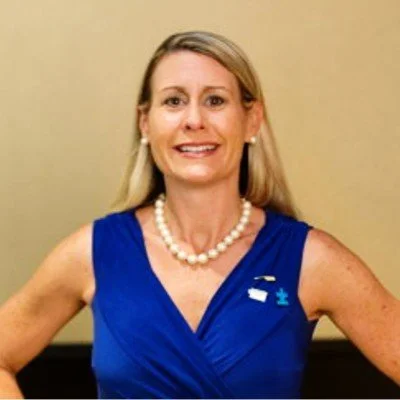
Laura Lyerly is the Executive Director of the Community Free Clinic of Cabarrus County, a non-profit organization dedicated to providing accessible healthcare.
Laura leads the clinic in offering essential medical services to individuals who cannot afford health insurance and do not qualify for federal assistance programs.
Learn more about the Community Free Clinic and connect on Facebook, Instagram, and LinkedIn.