Impactful Video Storytelling with Matt Pearl
Every nonprofit has a story to tell, but how they tell it can make all the difference.
In an attempt to build a social presence, organizations may present complex issues too simply or stage moments for quick soundbites.
This is where powerful, story-driven video can create a better narrative.
Matt Pearl, founder of Pearl Impact Media, has years of experience in journalism. He now helps nonprofits amplify their impact through compelling video storytelling.
While storytelling can be complex, Matt shares his simple approach that emphasizes clarity, authenticity, and empathy.
You’ll Hear:
(04:15) Three key components that make a video story truly compelling
(11:08) The challenges nonprofits face when trying to embrace video
(14:29) An example of a successful nonprofit video campaign
(18:45) Matt’s advice for nonprofits who are just starting to explore video production
(22:51) What emerging trends in video production and digital storytelling nonprofits should pay attention to
(26:46) How to weave both data and personal storytelling into video content
Key Takeaways
Telling a powerful video story starts with how you treat the people in front of the camera. If you're going to ask someone to share their story and be vulnerable, treat them with respect and dignity. Not as if they are defined by their situation. Build a connection with the individuals featured in your video, speak with them multiple times before filming, and ease any concerns they might have. This approach ensures that their stories are portrayed authentically, which resonates more deeply with the audience.
Express the nuance and complexity of what your organization does. Nonprofits often try to present a straightforward image—there’s a problem, and they are the solution. However, that’s rarely the case. Embracing the complexities and the stakes involved in their work, nonprofits can show potential donors why their support matters. For example, when a nonprofit acknowledges the limitations they face, it demonstrates transparency and a deeper understanding of the challenges at hand.
Nonprofits can weave data into personal storytelling. Data and emotional appeal are not separate elements in storytelling. Data contextualizes a story. Instead of stating research facts in interviews, nonprofits should seek ways to visualize data, such as using graphics or animations.
Resources Mentioned
-
Roger Suclupe: Welcome to the Common Good Data podcast. My name is Roger Suclupe.
Drew Reynolds: And I'm Drew Reynolds. Roger, how are you doing today?
Roger Suclupe: I am doing just fine. How are you?
Drew Reynolds: Doing great. Uh, excited to have you on for our intro today. We don't always get to record our intros together. And folks, we've got a great interview for you today. We're going to be interviewing Matt Pearl, who's does all kinds of great work in videography.
And Roger, I know that I just enjoyed the conversation we just had with Matt, um, to talk about storytelling. You know, what were some of the things that you remember from that, uh, from that interview?
Roger Suclupe: Such an inspiring interview, Drew. Um, I mean, the art of storytelling, uh, can be complicating, you know, it can be a very complicated process. And the way Matt describes the utilization of video, of narrative, of interviewing, uh, he was, uh, It just gave me a lot of perspective of how serious storytelling is, but also [00:01:00] how much of an impact it can have on the viewer or listener.
So yeah, there's a lot of takeaways. Definitely the importance of people. So the importance of making sure that if you are Interviewing somebody that you're present, right? So honoring that this individual has a story to tell. Um, second, there's purpose, right? So what, what is the purpose behind the storytelling?
So there's gotta be intentionality. I know we've talked about intentionality on this podcast many times, but here is where intentionality really matters as well. Um, and then perspective, you know, what, what kind of perspective, not only is the individual telling the story, uh, what they have, but also what is your perspective on it?
So all three of those tie in together, just people, person, and perspective.
Drew Reynolds: Yeah. And, and I really resonated with how Matt talked about, Really trust building with the individuals he was interviewing. And we see that as such. I say that all the time. So important in any kind of programmatic work you're doing or data [00:02:00] and evaluation work you're going to doing. No one wants to fill out a survey for somebody they don't know.
Nobody wants to participate in a focus group with someone they don't know. Um, and so how you build that trust and relationship with people is so important for gathering information around impact. And the truth, it's same thing is still. Absolutely true for video. So thrilled to have on Matt Pearl. Um, for those of you who do not know Matt Pearl, he is the founder of Pearl Impact Media, where he amplifies the important work of nonprofits and purpose driven efforts.
He works to produce videos that help organizations raise funds, build awareness. Captivate Clients, you know, Engage Donors, and all those wonderful things that nonprofits do. Matt has been a broadcast journalist for 20 years, and providing work on in depth stories and issues that, as he says, the media sometimes overlooks.
He was born in New Jersey, graduated from Northwestern, and has a great history in journalism, including working at stations in Sioux City. Iowa, um, as well as in Buffalo, New York. And then, um, I got to meet him actually when he worked at [00:03:00] WXIA TV or 11 Alive here in Atlanta, where he started in 2009, um, and served as the chief of storytelling and developments.
And then in 2021, he worked as a national correspondent for Scripps, telling stories on all kinds of things. And for our nonprofit audience, he focused on stories like housing, education, healthcare, and many other topics that, uh, resonate with nonprofits and listeners of this podcast. I also should mention that Matt has received, uh, 40 regional Emmy awards and 16 Edward Murrow awards, um, in his work as a video journalist and also authored the solo video journalist, which is a storytellers, um, and received his MFA from University of Georgia.
So certainly a very accomplished videographer that we get to bring on the show today, so folks, without further ado, we're going to dive into our interview with Matt Pearl. Matt Pearl, welcome to the podcast. We appreciate you being
Roger Suclupe: here.
Matt Pearl: Hey guys. Happy to be here. Thanks for having me.
Roger Suclupe: So we're going to go ahead and [00:04:00] jump into the first question here, Matt. If you can share with our listeners, and us as well, You know, we're going to talk about storytelling, so if you can tell us what makes a good story or what do you see as the key components of a good story?
Matt Pearl: Yeah. I think that's a great question, and it's a broad question, so I'll narrow it to video since that's typically what I,
And I think that's typically when people think of storytelling. A lot of time, that's what their mind goes to. And for nonprofits, really for anybody, but particularly for nonprofits, I think that starts with the clarity of purpose. So if you're with a nonprofit, think of how much time you spend on that one line description of what you do, right?
I'm on the board of a non profit, and we go through so many iterations of that one line mission statement, whittling down the magnitude of what we do, you know, into one sentence. Well, you need that same approach for video. It's not about doing video just to do video, just [00:05:00] to be in that space. If you're honoring someone at a gala, you might want to show a three minute video that spotlights that person and their journey and their achievements.
But if you're presenting to a major donor for a grant, you wouldn't show that video, you'd want a video that Explains who you are and what your mission is. So when I meet with prospective clients, I spend the first half of our time really working to better understand them, who they are, where they need help, and where a video actually fits with what they're trying to do.
So it's that clarity of purpose that I think often goes overlooked, but is critically important. And then I think beyond that, maybe the most. Obvious thing that people think about when it comes to storytelling is people, right? Data and research, you guys know, so critical, provides the substance, but people provide that emotional connection.
I also think, though, this is where a lot of, uh, video makers and non profits Make a pretty important mistake because they think, okay, just having the people [00:06:00] and having that quick description of who they are and why they matter is enough, right? I've watched so many videos where you'll hear a person say, you know, here's what I'm going through.
Here's how this nonprofit helps me. And, you know, maybe you see a couple of clips of them, but that doesn't really tell your viewers something that, They don't already know or might not have already assumed, right? So my philosophy is let's spend time with the people in your story, right? Let's spend time with them at home.
Let's see their life outside of the nonprofit to really understand their experience in their situation. But then also let's sit in with them as they receive the services of the nonprofit. Let's tell a story that contextualizes. That experience for the viewer. I think that's how a viewer will both connect emotionally with a video, but also gain a fuller understanding of what a non profit does.
So, it's clarity of mission, it's people, it's authenticity, right? The most powerful moments, I've learned this in 20 years as a journalist, and now a storyteller in this context, [00:07:00] the most powerful realest ones. You can't fake it. You can't stage it. You can try, but people can almost always tell. And I also think a hard part for nonprofits is often being willing to lean into the complexity of what they do, right?
That can be difficult because I think it's easy to try to present an image as, there's a problem. And we're the solution. It's always deeper than that. It's never that clear cut. You know, I think one thing that nonprofits can really do a much better job of is expressing the nuance and the complexity and the stakes of what they do.
I'm on the board of Lecatec of Georgia. It's a tremendous, This is a non profit that provides adaptive play for children with special needs and really helps them integrate with their families in play. And so, a while back, we made a video fundraising for the purchase of a new eye gaze machine. And this machine is tremendous.
It basically, enables people who cannot communicate in traditional ways [00:08:00] with their voice, with their arms, with their legs, you know, maybe because of paralysis. It enables them to communicate or use a computer through eye software that tracks the movement of their eyes. So really, really important. We had one and we were fundraising for another one and part of that fundraising was admitting in our video that Without this machine, we are limited in how we can serve people, right?
And that's not an easy thing to admit, that you might not have everything at your disposal. But I think making that admission and showing the complexity and the stakes of what you are dealing with really goes a long way. in showing potential donors why their money matters. So, you know, that's another factor, right?
So clarity of purpose, people, authenticity. And then the final thing I would say, but what I would also say is the most important thing is humanity and empathy and dignity. And these are the first things that I mentioned when I talk to clients, because at the end of the day, telling a powerful video story [00:09:00] is remembering that no matter how talented the person might be behind the camera, um, What matters most is how you treat the people in front of the camera.
And that's always served me well as a journalist. I've always been so intentional about getting to know the people that I've covered through the years, speaking with them multiple times before I show up with a camera, answering their questions, easing their concerns. And I think this applies to non profits too.
If you're going to ask someone to share their story, To put themselves out there and be vulnerable, you owe that person your respect, and you also owe that person their dignity, right? They're not broken, they're not defined by their situation, they're three dimensional, and it's important that any story you tell portrays them as such,
Roger Suclupe: I love that. Um, I heard purpose, people, and perspective, and, you know, those three P's are really important in the work of storytelling and videography, so I appreciate you sharing that with us.
Matt Pearl: of course.
Drew Reynolds: Yeah. I love that notion of authenticity and kind [00:10:00] of thinking through What the perspective is like from the person who's telling the story and building that trust and relationship with them. I think, you know, I've been sat in video sittings before where I haven't met the videographer and it can be a little intimidating at times.
So I really love the way you talked about building that relationship with those who are participating in the storytelling process, um, before and then during the process of videography. So you, you talked about some of these challenges that people are thinking or that nonprofits specifically run into a little bit, but I want to dive deeper into that a little bit.
And since you talked about those challenges from the actual creation and thinking through what goes into a video, let's maybe, um, kind of add a little nuance to that. Can you talk a little bit about challenges that nonprofits experience maybe organizationally or from a capacity perspective? Um, you know, I'm thinking of nonprofit executive directors or development directors who feel like they want to do video, but they don't know how to do it.
Do they staff it? Do they, how do they fund it? Or, you know, what are the things that they should be focusing on? What is their broader strategy [00:11:00] when it comes to communication and storytelling? So can you talk a little bit from your perspective, what are some of those capacity challenges that nonprofits are running into?
Matt Pearl: Yeah, and I think this goes beyond video, right? I think it's the general challenge of telling and owning your story, because let's face it, I think at so many non profits, there's just a general feeling of overwhelm, right? So there's time. 99 percent of nonprofits simply don't have the time to devote to constantly posting on social media, let's say, right?
And then let's say you are able to make that a part of your strategy. Well, what does social media mean? That can mean Six different things. That could mean Facebook, Instagram, LinkedIn, uh, YouTube, X, your website, and what makes a great post on Facebook isn't necessarily what makes a great post on LinkedIn.
So you've got to satisfy all of these platforms. And then there's the question of expertise. You know, again, I know this, but both from the outside and the inside of a nonprofit, most people who work in nonprofits, they are passionate about [00:12:00] and trained in the mission of their work. And that's how it should be, right?
But they're not trained to be influencers on TikTok. And social media, it can be powerful, but it can also be demoralizing. You know, I've had this experience, you know, in, in journalism, where we would have so many sessions and workshops on how to build your social media following, and we would be so fired up.
And then you'd go out and you'd find some great video clip or photo that you would post, and you'd be really excited. And then it would get two likes. And it's so easy when that happens to feel unsure of yourself and to feel unsure of the process, to feel unsure that what you're doing will pay off. And a lot of times that's when people give up because especially if you're in a non profit and you're doing life changing work that's in front of you on a daily basis, posting on Instagram suddenly feels insignificant, especially if you're not seeing the traction that you were hoping to see.
So I would say [00:13:00] that's probably the overarching situation there, right? You've got a lack of time, a multitude of platforms, and then a lack of confidence when it comes to knowing that the energy and the time you're going to put into this will pay off. And that's before you even get into video, which we can Go into separately, but I think storytelling in general.
I mean, that is a big, big challenge if you're not, if you're not devoting budget towards marketing people and comms people to shoulder that load.
Roger Suclupe: That's a good point. That's, um, with social media platforms, there's, there's so many nuances that, uh, you have to think about when crafting and creating a story that each platform may require a different vantage point of that story. And so it can be very, um, cumbersome at times. And then, as you mentioned, you're working really hard on something and only getting two likes.
How demoralizing that can, that can feel. Um, [00:14:00] but it's sort of the world we live in now with social media and trying to grab for those likes or trying to grab those reshares. And so, uh, yeah, there are challenges. But we want to talk about Successes as well. So we would love for you to share with us. Give us an example of a nonprofit video campaign that successfully resonated with its targeted audience.
What made it stand out? What made it successful?
Matt Pearl: Yeah. So there are two that come to mind locally here in Atlanta, who I think are doing Really interesting work and they've gone about it in different ways. So, one that I really like is the Kyle Pease Foundation. So this is uh, uh, two brothers, Brent and Kyle Pease. Kyle has cerebral palsy, he's in a wheelchair.
And for years, Brent and Kyle have competed in races. So they compete in triathlons, ultramarathons, you know, you name the race, they've done it. And Brent will, you know, [00:15:00] he's got Kyle attached and, and pushes and leads him and Kyle is enduring all of it. Uh, you know, very bumpy and, and, you know, could be swimming, could be through a bike, could be through a run.
It's, you know, it's incredibly grueling and they do it and they've launched a foundation that lets others do it too and enables others to do it too. So this year, I believe they've been around about 10 years and this year they're preparing to compete at, uh, The, I think it's the Ironman World Championship in Kona.
It's the big, big championship in Kona every year. So, they made a deal with Hyundai to produce an episodic series documenting their journey. And, uh, I've seen the first episode. It's really captivating. And the reason that ex that, that exists is because Brent and Kyle have spent years Documenting their own journey, telling their own story, and then getting folks in the media to tell it too.
In fact, that's how we met. I told their story, uh, before they were even a foundation, when they were just getting started with this. And they have [00:16:00] just been so good at being their own advocates, and when they do a race like this, They let the world know, and they let their donors know, and they let their social media followers know.
So they know that they have these big signature events, and then they make sure that they show the proof of performance. Because it's not just the two of them, right? It's so many people now that they have helped. Uh, live these experiences. It's really, really great. So, that's one campaign that I've been really impressed with, but it's one that required years and years of just effort and build up.
On the other end of that, on a, you might say a smaller end, but that's probably not the word that I would use. Use because I think it's equally as effective. There's a non profit also here in Atlanta called Giving Kitchen. They provide emergency assistance to food service workers. And they've been instrumental for years in this work.
And they just do a great job of posting consistent video content on social media. So, a lot of it is quick hits, right? [00:17:00] Here's what we've got coming up. Uh, here's a quick hello from someone. But then, because they've built that up, then they roll out these profiles of people that they've helped, and those are really moving and have that larger, uh, impact.
So they have the consistency. That helps sustain an audience, but then they really connect with those more storytelling, storytelling, heavy productions. And, uh, what they do is really impressive as well. So I think two different approaches, but what threads them together is that consistent An intentional effort towards putting the word out about what they
Drew Reynolds: I love how you talk about consistency as, as one of those key aspects and engaging in any types of communications campaign. I kind of. I've learned this a little bit too as a person who runs a small business about the importance of continuing to share information about your mission, what you do, um, providing information that people want to listen to or to hear or to see or something that's helpful, that teaches them something.
And, [00:18:00] um, and that, and that consistency is so critical, even when that maybe at first you're running into some. Challenges with, you know, feeling like you're getting the traction you need on social, whatever platform you're working on. But, uh, yeah, I, I want to talk a little bit too about nonprofits who are just getting started.
You know, imagine that they have not necessarily done a lot of video production before, and they're kind of intimidated by the process. So what advice would you have for nonprofits who are just starting to explore video production? And they're not really sure how to handle the technical costs or the, uh, the various, you know, uh, different challenges that come up with video production.
Maybe they don't feel like they have the skillset to take it on. You know, what can they can, what can they take on themselves in house, you know, with an iPhone or something? And then when might, when might they need to bring in some professional support?
Matt Pearl: Yeah. Um, and you know, it's, it's interesting. We've been talking and kind of focusing on social media, but storytelling. can be distributed in many forms, right? So there's thank you notes to donors. There's, um, you know, email blasts. There's so many ways that you can. [00:19:00] You know, get media out to people. It's not just social media.
So again, I think it really comes back to what I said in that first question. Clarity of mission, right? What are you trying to accomplish with video? Is it about having a consistent social media presence? Is it about reminding your donors what you do and the impact of what you do? So it's figuring that out.
But then once you have that, I think when it comes to in house, you know, It's all about keeping it simple. So consistent photos or videos that show snippets of your work. Um, a montage, an iMovie can work really, really well. At Lecatec of Georgia, we, uh, specialize in that. So we'll have all of these great events with the children that we help and their families and they come out and the Lecatec leaders will take photos and videos.
And then one of our staff members, Jacqueline, is incredible at this. She'll combine them all together and just make a iMovie production, minute long recaps the event, you know, no frills, and [00:20:00] it's great. And sometimes I think that's all you need and it doesn't need to be much more complicated with that. I think when it's Time to think bigger and when you need that video that really tells a story, that's when you bring in the professional.
And I think there's some things you want to look for when you do that, right? So you want somebody who's actually going to tell a story, not just a glorified montage, right? Because again, That's something that you can probably get away with with your iPhone. But if you bring in a video production house or a video storyteller, you want that person to be able to really tell your story, to be able to weave a narrative and thread your mission into that narrative.
You want that person to be able to tell a story that connects with people. You want somebody who's going to walk you through that process. So I mentioned before the importance of doing pre interviews with People that I would interview as a journalist. Well, I have that same process now. And I also try to treat nonprofits with that same amount of [00:21:00] respect my clients, right?
Because it is intimidating and it can feel very technical, but it doesn't always have to. And I think the right videographer will feel like a partner in that journey as opposed to a contractor for hire. And then finally, I think when you're thinking about video in a large scale, I think you want to look for Video and a videographer who is thinking beyond the one off job, right?
So video as a one off clip can be very powerful and potent, but video done consistently and consistently well, that can transform and expand your image. So I think those are the things to keep an eye out, but you know, you're absolutely right about the costs and the technology. I can confidently say, uh, that I am on the lower end price wise.
of video production for the quality of video that you get, but it's still an investment. And I think as a nonprofit, you do have to see it that [00:22:00] way. It will be an expense, but it is one that will ideally enable you to raise so much more money and to reach so many more people. That it more than pays off at the end of the
Roger Suclupe: think you're right. It is an investment now that nonprofits are factoring into their budgets when they're creating them as they're going for grants or they're expanding what funding looks like. Um, and that's, that's this evolution of, of being a nonprofit because of the evolution of storytelling, because of the evolution of video, video production, for example.
So. My next question segues into that a bit. What are some trends in video production and digital storytelling that you think nonprofits should really be paying attention to in the coming years?
Matt Pearl: That's a great question because I could probably spend about an hour answering it. There are so many different trends and sometimes as someone who's been on the [00:23:00] news side and now on, on the client base side, it feels like it's hard to keep track of where video is going. But I think there is probably one trend that I see happening pretty consistently and it's this, um, It's kind of polarization of attention span.
So it's always amusing to me that in the news world, the typical story on a local TV newscast is like 80 to 90 seconds. So you know, around a minute, 15 minute and a half, maybe. But in the world of everything else, the stories that people are clicking on and the stories that people are engaged with are so far removed from that on both ends of the spectrum, right?
So we all know how short the typical video on Instagram is or on TikTok, right? And those can be. Really effective. And we all, all, we all understand how the ability to produce those videos has been democratized in this beautiful way, right? I was just saying, anyone can do it. And if you're at a non profit, it's [00:24:00] so easy to take that photo or, you know, nab that 10 second moment.
That you can then turn into a video post in one way or another, right? So that's one end, but then on the other hand, on the other end, you've got videos like what I do, right? You've got these much more large scale, luxurious, upscale videos. So if you're hosting a gala and you want that video, right, that tells everyone in the room who you are and why they should donate money, You're not going to show a clip from TikTok and you're not going to limit your video to 60 seconds or 80 seconds.
You've got people in a room. You've got their attention. You want to go big. Think about when people go to a movie theater, right? That's the epitome of having people at attention. And a movie can be an hour and a half, two hours, even longer because people have paid money for a ticket, they're sitting in the seat, and the odds of them walking out are tiny.
So, there's that other end of the spectrum, and it's so, I always marvel, [00:25:00] even as someone who does this work, at how easily impactful those videos can be. I was just at an event the other day, here in uh, Metro Atlanta, it was for the Atlanta Press Club, and they were honoring, uh, Immigrant success stories in one of our largest counties, Gwinnett County.
There were four honorees, and for each honoree, there would be, you know, the emcee would give a quick description of why they were being honored, and then the honoree would come up and give a speech. And they were all great, but before the third honoree, There was also a video. It was a two minute video telling this person's story and this company that they had built up that provides food and it was just incredible and it was so interesting to me the instant effect that that video had.
Because suddenly it wasn't just a person's words at a microphone. Suddenly that person's story was being told in this beautiful, moving, three dimensional way. And it captivated the room. So, you can't do that in ten [00:26:00] seconds. You can do it in three minutes. And maybe five minutes if you're lucky. But that's where you see this polarization.
They're the clips. And the photos that are built for this short form social media. And then there are these luxurious videos that when you have people's attention, can make the biggest
Drew Reynolds: So this is a data podcast, as you know. So we always ask questions about data and impact. So can you share maybe an example of an organization that's found ways to integrate? Maybe some quiet data or other ways that they've demonstrated impact, um, kind of through measurement of success and weave that into personal storytelling in the format of video.
Can you share an example like that?
Matt Pearl: Yeah, actually, what, you know, I, as I think about that question, I actually think probably the most constructive way to answer it would be to go into my work as a journalist, because for the last three years, what you described has been my [00:27:00] job. So, as a national correspondent for Scripps, I would go around the country and our stories would spotlight important issues through personal storytelling.
So, education, food insecurity, housing, health care, mental health care, climate, you name it, I covered it. And the key element of writing those stories, and often the hardest part, was weaving in data in a way that didn't bring the emotional momentum of that story to a halt. Because here's the thing. Data is critical, and it's not the opposite of storytelling.
I think, you know, and you guys, I don't have to sell you on this, and I don't have to, you know, I know I'm preaching to the choir here, but I think a lot of times people view them in these silos, right? There's the numbers over here, and then there's the more emotional appeals over here. When you meld them together the right way, the numbers amplify a personal story.
They contextualize [00:28:00] They broaden out the personal into the universal. So how I always tried to do it, and I think the way that nonprofits do this very well, is by not siloing the two, but by weaving them together. So I would drop research, you know, I would find places in my script where numbers and research made the most sense contextually and narratively, and I would just try to pair it with sound bites that echoed it or led into it.
And What I try to avoid is having people on camera saying the research and saying the numbers, right? So I think oftentimes when we watch non profit videos, you'll hear someone within the organization say something like, you know, We know that X number of people or X percentage of people spend X number of days without this service, right?
It's, it's a canned one line statement that's clearly been memorized. to get into a soundbite [00:29:00] form. And I think not only does that look canned and memorized, but I think that can actually be hard to picture. And the other thing that I think is, is often worthwhile for a nonprofit or, you know, for me as a journalist, I always invested in this personally was finding ways to visualize data.
Uh, animation can be a very, very powerful tool. That's one thing where, again, there are people like myself and, uh, tremendous motion graphics, uh, you know, animators who can do Amazing, sumptuous designs, but I think there's also, uh, an easy entry point into software like After Effects or Canva, where you can actually create pretty intuitive data representations visually, um, rather than, again, having someone say it on camera where you're hearing a sound bite and it's tough to digest the numbers and then try to even contextualize that with the The [00:30:00] story that you're trying to tell.
So absolutely. I think the, the more analytical components absolutely have to be married to the more emotional components or else you're not telling the full
Roger Suclupe: Well, Matt, this has been great, incredible, uh, an incredible interview. We appreciate you sharing everything, but I'm going to shift gears here a little bit. So Drew and I, we love pop culture. And at the end of our episodes, we try to, we try to factor in a pop culture type question. Usually. It centers around 80s or 90s topics, whether it's music, movies, uh, stories, et cetera.
So I was thinking about what question I wanted to ask today. And, you know, Matt, you have been a journalist for 20 years, so you have seen a lot. You have done a lot. You have been part of a lot. Everything from attending or reporting from the Democratic National Convention to being part of [00:31:00] presidential inaugurations, uh, But you've also been part of, or at least have been reported on some very major sports, sporting events.
And so I love sports. So my pop culture question is going to be centered around sports and I'll start us off, right? So what is one of the most memorable sporting events that you have been a part of or witnessed? And it doesn't have to be 80s, 90s, although we centered around that, but mine is going to be 90s really.
Okay, and so Matt Drew knows that I am an avid Duke basketball fan, um, been a Duke basketball fan forever. And so I remember where I was when Christian Laettner hit the shot, the shot of all shots against Kentucky. I was with friends. I was being, um, pretty much taunted because, uh, Duke was going to go down and, um, everybody left the basement, [00:32:00] went upstairs to celebrate this Duke loss.
They weren't even Kentucky fans, they were just Duke haters. And I was by myself in the basement watching this game. And then that happened. The Grant Hill 90 foot pass to Christian Leitner seconds hits the game when he shot. And I was by myself celebrating. So that is my memorable sports, sports, pop culture, 80s, 90s, uh, memory.
Drew, you can go since we always let our guests go last. So you can, you can think about it a little bit.
Drew Reynolds: Oh man, um, this is, this is a challenge. Last time I gave an example of, well, the two teams that I follow the most in sports are, um, Notre Dame football, and then when I was back in the 80s and 90s, Cincinnati Reds baseball. And both of those teams had great moments right in the middle of those two [00:33:00] decades when the Cincinnati Reds lost one World Series, which is 1990.
With pitcher Jose Riho and sweeping the athletics in four. That was kind of like a big central moment. The Reds were really good. Um, and just a couple of years before, um, Notre Dame had won the national championship in 1988. But I have been since living with both of those teams being historically unsuccessful since those moments.
And so I guess my memory is going to be of these like great experiences of my team being successful as a child. And now as an adult being like. When in my lifetime will those days come back? So I don't have a specific moment, but just those are the things that come to mind.
Matt Pearl: Well, uh, you, you've posed this question to the wrong guy, and it's not because I, I, it's not because I don't like sports, it's actually the exact opposite. I, you know, grew up in the 80s and 90s, and sports made up about like 90 percent of my life. In fact, the [00:34:00] reason, part of what got me on this journey to what has led me here is, initially, I wanted to be a play by play athlete.
Uh, announcer for the NFL. And
my first job in TV was actually as a one man sports department in Sioux City, Iowa. So I would, every five days a week, I would produce, shoot, write, edit, and anchor, uh, the 6 and 10 p. m. sportscasts at our station in Iowa. So, uh, so yeah, I have seen and, and covered so much in the sports world.
Um, as far as, I'll, I'll answer, The question in two ways, one in terms of something I've covered, and then one in terms of something I've seen. Covering, uh, I've been to three Olympic Games, and I've been there the entire time and seen some amazing things, but I think being at the 2016 Games in Rio, I was fortunate to get to watch Michael Phelps and Usain Bolt, uh, in what I believe were their last Olympic Games, I have to fact check that, but, certainly towards the end of their careers, but they are just [00:35:00] so magnificent, and to watch them, um, both in person was, Um, so there's that.
And then on a personal level, um, I am a huge hockey fan, uh, which has been difficult here in Atlanta, but I grew up in New Jersey where I was, uh, just a huge New Jersey Devils fan. I had posters on my wall and I would go to autograph signings. And, um. I was very, very fortunate in 2003 to be able to attend Game 7 of the Stanley Cup finals where, uh, where they defeated Anaheim.
And, uh, partly because in New Jersey you could still get tickets to Stanley Cup Game 7, uh, like three days before the actual game. Uh, so that worked in our favor and they weren't too pricey for our family. But, yeah, that was one of the coolest moments. Uh, they After the final buzzer went off and it was official that they were champions, they played Bon Jovi's It's My Life, which can [00:36:00] give you an idea as to where we were in time at that moment.
But yeah, super, super cool experience. And yeah, sports are I have a lifetime of wonderful sports experiences. As a journalist and more importantly as a fan. So thanks for asking that question, brings back some memories.
Roger Suclupe: That's awesome. So, uh, New Jersey Red Devil fan, were you a face painter? And I'm making reference to a Seinfeld episode where Elaine's boyfriend painted his face red. And, uh, that was, uh, that was, uh, that was
funny.
Matt Pearl: That was my, when that episode came out, I probably went around with my friends in junior high or high school, I forget where I was at that point, but we probably quoted David Putty, is who you're talking about, and we probably quoted him for weeks. I never face painted myself, but I will tell you that his depiction is not off the mark what you might find at a New [00:37:00] Jersey Devils game and that in the best possible way.
Roger Suclupe: Oh man. Thanks for sharing.
Drew Reynolds: this has been a great conversation. You know, I realized afterwards that I need to sometimes just think about sports in general instead of my own teams, because sometimes that just becomes devastating. So I want to change my answer to the 1998 men's basketball tournament when Valparaiso seeded 13th at the time.
Uh, hit a last minute buzzer beater. I think it was Bryce Drew to upset Ole Miss. And I think that was one of those moments where it was kind of like, ah, this is the, this is the great Cinderella story of what NCAA tournament basketball is all about. Um, anyways, as we finish up this conversation on sports and video, Matt, thank you so much for joining us.
Can you share a little bit, if people want to get to know you, learn more about you, how can they find out
about you?
Matt Pearl: Absolutely. So I am the founder and owner of Pearl Impact Media, and you can find me on Facebook and Instagram and LinkedIn at Pearl Impact Media. You can also check out my website, pearlimpactmedia. com. And, and essentially. [00:38:00] I produce meaningful, memorable, documentary level video storytelling for non profits.
I work with non profits of all sizes, from small to large, and I have tiered pricing, so a smaller non profit with a smaller budget will pay less for the same product. Um, this is work that I have I've been so excited to finally start up and get to do it. It's been a part of my career as a journalist for so long, and I know Drew, that's how you and I met initially, uh, through a piece I did back in 2019, I want to say, on Child Spring International.
It's the kind of storytelling that I love the most. You know, I, I, as you mentioned, I've covered all those different things and I've been at the Olympics three times and cover them. And those are monumental experiences, but what has made my career most fulfilling has always been the ability to be in people's homes and people's lives and share the three dimensional version of their story.
So now I get to do that with Pearl Impact Media. And I think it's such an [00:39:00] essential service for all the reasons that we've been talking about all day. are all episode for nonprofits. So it's, uh, it's really, really exciting to get to provide that. And yeah, PearlImpactMedia. com has all sorts of info, some examples of my work and, uh, really answers any question that you might have.
Drew Reynolds: Matt Pearl, thanks so much for joining
us today.
Matt Pearl: Thanks for having me guys.
Our Guest
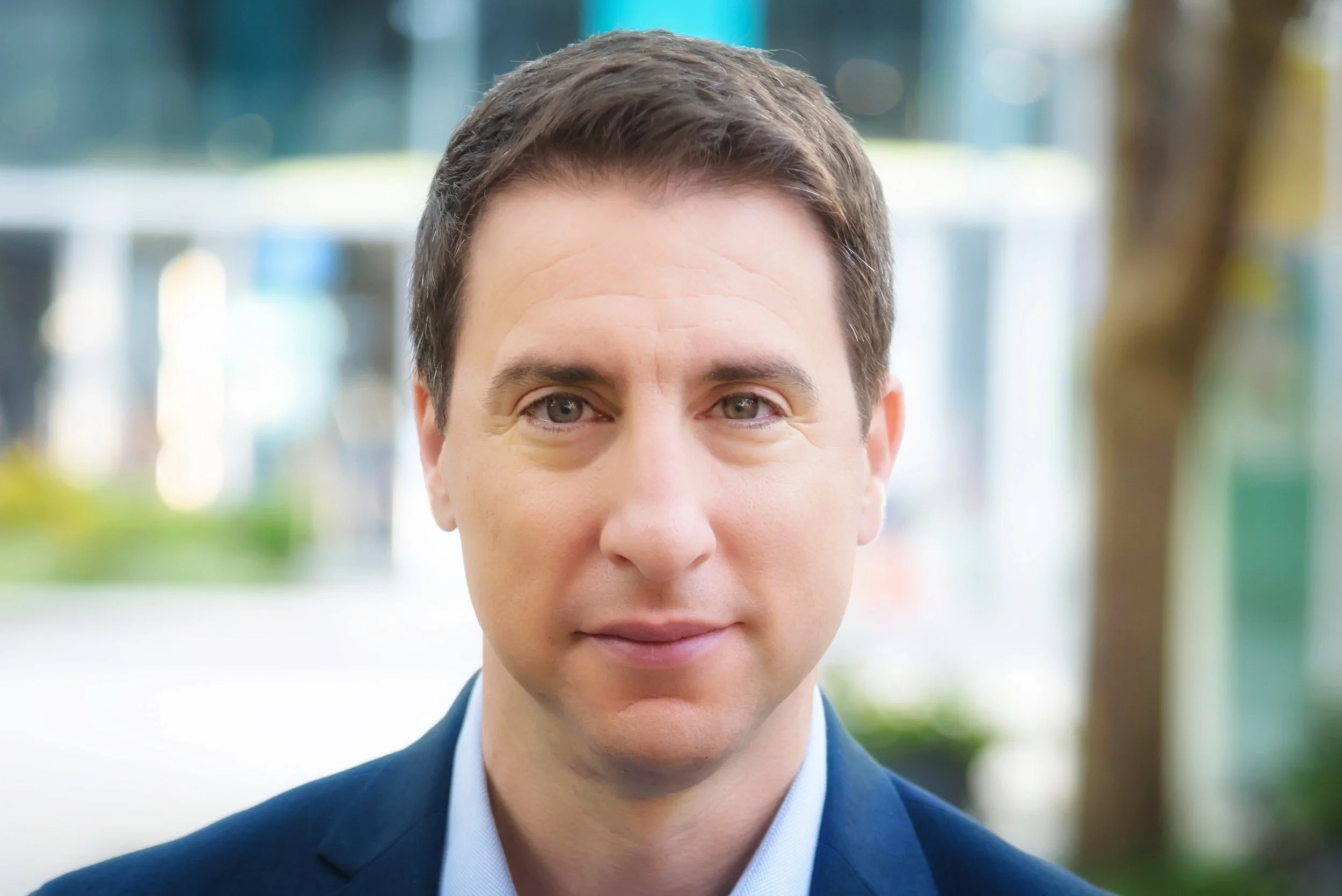
Matt Pearl is the founder of Pearl Impact Media, where he amplifies the work of nonprofits through impactful video storytelling. With over 20 years of experience as a broadcast journalist, Matt has reported on often-overlooked issues, both locally and nationally.
He graduated from Northwestern University’s Medill School of Journalism and has worked at various stations, including WXIA-TV in Atlanta and E.W. Scripps, where he focused on long-form stories that emphasize solutions and human dignity.
His work has earned him 40 Regional Emmy Awards and 16 Regional Edward R. Murrow Awards. Additionally, he authored “The Solo Video Journalist,” a guide for aspiring storytellers, and holds an MFA in Narrative Media from the University of Georgia. Matt’s journalistic background informs his mission to help nonprofits raise funds and build awareness through compelling video content.
Learn more about Pearl Impact Media.