Making University-Community Partnerships Work

Building strong university-community partnerships isn’t easy.
Power imbalances, competing goals, and trust issues can get in the way, turning good intentions into missed opportunities.
So how can nonprofits and universities work together more effectively?
In this episode, Roger and I sit down with Toye Watson, Director of Community Impact at UNC Charlotte, to unpack the common challenges and share how to create partnerships that truly work.
Skip Ahead:
(00:52) Why communities are looking beyond government solutions and what that means for partnerships.
(05:10) What UNC Charlotte’s urbanCORE is trying to accomplish.
(11:23) The reason some collaboration efforts don’t work out.
(16:37) The first thing nonprofits should do if they want to build university partnerships
(24:32) What’s different about a partnership with local nonprofit versus a city government and how you might approach those differently
(29:01) How urbanCORE supported the Three Sisters Market, a food collaborative in West Charlotte
-
Drew Reynolds: University community partnerships have immense potential, but they're often difficult to get right. Power imbalances, mismatched goals, and a lack of trust can derail even the best of intentions. When these partnerships fail, both communities and universities miss out. On opportunities for meaningful impacts.
In today's episode, Roger and I speak with Toye Watson, the director of community impact at the university of North Carolina at Charlotte, to talk about how nonprofit leaders and university staff members can work together to navigate some of these challenges, whether you're a nonprofit or public sector leader looking to engage with the university, or maybe you're a university staff member or professor who's aiming to build trust with the community.
and work with a non profit. This conversation offers practical takeaways for creating partnerships that truly work.
Toye Watson: I think that as we move forward, especially in lieu of what has happened recently, Um, in our social [00:01:00] stratosphere, not political stratosphere, that communities are looking less and less towards people inside of our federal or state or local municipalities for the sole answers, they want to be collaborators inside of it, right?
They want things to be done with them, not for them, and they would love to have their voices heard and because people are tapped into that type of way. And I think it's just going to increase as we move forward. Um, they are going to demand it. And so if you want to do good business, you're looking for the communities that you want to do those businesses with to give you their input. So I think it's customer service. I think it's strategic thinking, but I also think that is holistic in the way that we operate, uh, as larger entities, whether that be a UNC Charlotte, or whether that be a state.
of the state or the federal government. We were supposed to be buy in for the people. So in order to create an ecosystem, we've got to have [00:02:00] those people's say so inside of it. Uh, what does not work, ignoring people, um, having, I'm going to do it anyway, kind of mentality. Right? Like we have the bond money or we have this particular scholarship or we have this grant and regardless of what the community would want, we have this push forward mentality.
And I think that, uh, we have to stop and have conversations with people and being OK with those conversations being uncomfortable. And the reason why I say the uncomfortability is because of the way things or those entities have interacted with us in the past. Um, we know, just from, um, You know, history is just a quick little research that universities or large institutions have not always held the community's opinions or their livelihood in great regard or in revere, especially if we have private invested investment for whatever we're trying to do.[00:03:00]
So we have that history that we have to overcome. We have a strong racial bias history as well as a cultural bias history that we have to overcome. And so having those communications at the very beginning allows you to establish trust. And the only way that you can establish trust is to be trustworthy.
And I think that atonement is the right way. I acknowledge that I come into this space and I'm representing an entity that might have done some harm. This is not my intention. And here are my intentions, and what do you think about those intentions? So, the wrong way is not listening. And the wrong way would be Uh, not being prepared for some uncomfortable conversations that could lead to something that was a fruitful connection.
If you would just have it,
Roger Suclupe: Toye, we have had the opportunity. Thank you so much for sharing all of that. By the way, I definitely appreciate your wisdom and, uh, and your perspective. Uh, on community work. Um, I've had the great pleasure and opportunity to [00:04:00] work, um, beside you over these past few years now, uh, particularly with the, uh, um, Quarters of Opportunities, uh, initiative at UNC Charlotte through Urban Core.
And, uh, I definitely have, um, I have an affinity for you. You are such an inspiration. All your work. You have worn many hats throughout your, uh, lifetime. Uh, not only are you a, one of the few, uh, native charlatans who we have, uh, on, on the pod, who we've had on the podcast, but just in general. But you have, I mean, my goodness, you have served in so many capacities as an educator, as a program director, a community organizer, a grant writer.
And I believe that back in 2017, you were the recipient of the Mecca Teacher of Excellence Award. So, uh, you know, you have had an you have an extensive CV, a resume. If you could tell us a little [00:05:00] bit, though, about your work right now, the work that you are engaging with through your work. Urban Core. So tell us a little bit about your work at Urban Core.
Toye Watson: Well, UNC Charlotte has always had, uh, an extensive, uh, relationship with the community. Uh, what we embarked on, and I, I'm using the royal we as though I am the entity. Apologies. Uh, what UNC Charlotte, uh, wanted to embark on is ways to deeply engage the community. Yeah. In a way or at a depth that perhaps, uh, would cause us to be a little bit more closer as the corridors of opportunities.
Uh, we're starting to begin. We thought about how can we take engaged scholarship to the next level? Well, the best way is to build an ecosystem. So, urban core, the core stands for community oriented research. An engagement. And so, uh, we hired my, um, my, my, um, assistant provost. His name is Dr [00:06:00] Byron White. He has worked extensively in that regard.
And so they brought him on board to help with the three sisters market. Uh, this was a initiative in the west side to help bring to the finish line. Um, our food solution in the place that had been a food desert for decades. Um, they used his, uh, his ability to kind of coalition build. And by that, I mean, take researchers, faculty who are experts in their field, but also.
Have them understand if they didn't already understand that you are brilliant in all the things that you do in engagement with that type of research, but these people in this community also have lived experiences that are on par with your masters and your PhD. Let's join forces and I'm going to age myself.
So I'm gonna try to do it for every generation. Let's join forces and form Voltron for my generation and for the younger ones, uh, they're going to [00:07:00] mighty morph into the, the, you know, when they mighty more for the hour range, you know, when they become that
Roger Suclupe: Voltron, man, we, we got a, we got a shout out throwback to the eighties, most incredible y'all most incredible cartoon ever made probably real quick.
I didn't mean to interrupt. I had to throw it in here. We're, we're, we're going to talk about Voltron for a quick second. They're actually trying to make a movie. Like a live action movie. Yes. That's what I heard. Henry Cavill, I think is his last name, who was Superman is supposed to, uh, be a big part of that.
So anyway, you heard it here on the common good data podcast, uh, breaking news. Continue.
Toye Watson: Listen, the kids nowadays would know Mighty Morphin Power Rangers. And basically what I'm bringing that up as a metaphor to say. That we're strong individually, right? But when we combine together, things are going to happen that are major.
We're going to win. And so, um, just like that, he, he helped to form a coalition with, uh, the West side, [00:08:00] a neighborhood association with Ricky, uh, and as well as a group of wonderful faculty that helped to bring that thing to the finish line. And so at the end of their collaboration, they came up with the report.
Use that report as a lure to get, and I always call it a lure, right? You already have the bait. We're just going to put a little extra lure on there to get the city and the county right on board to say, hey, this is something that the community not only needs and deserves and there's a public health.
Criteria that we want to make sure that's minimal for our charlatans. So let's bring the support. They basically got um, A community owned, uh food solution. It's going to be called the three sisters market And so with that in mind, that's what we do at urban core We combine forces. We we go out and get educators and and faculty such as yourself, Roger, that are not only familiar with communities but love those communities and they want to facilitate a solution that the community says.
This is what we [00:09:00] need to get over the hump, basically for us to live our best lives. And so we just wrapped up Sugar Creek. There was a community wellness anchor and we're entering into the Central Avenue area, and we're trying to form about what that's going to be. But basically, that's what Urban Corps does.
We bridge the community along with what we do at the school with our faculty, our students, and our volunteer services, and we create a bubble where we're helping, and trusting, and loving each other, and we create a solution that can be sustainable for the community for the future.
Drew Reynolds: I love the Voltron example and that for me, I'll date myself here because I was thinking of Captain Planet, you know, like with my powers combined, the power of the planet, you know, this is great.
Hey, I got a quick question for you. Have you ever thought, I'm drowning in Excel sheets, or my boss needs a report and so does the funder, or are we actually making an impact? Well, if any of this sounds [00:10:00] familiar, you're not alone. Nonprofit professionals are under immense pressure, juggling data, outcomes, and reports.
It can be overwhelming. That's why I created The Strategist, The Analyst, and The Storyteller, a series of courses designed to help you use data to build sustainable programs and lead with confidence. You'll learn how to make data work for you and not against you. And with the data you need at your fingertips, you'll be able to gain clarity in your work, demonstrate your impact, and secure the long term funding that your organization needs to thrive.
These courses are perfect for executive directors, program staff, and anyone ready to build a data driven leadership skills in the social sector. Visit commongooddata.com/courses to get started.
our next question focuses on two to three things that you think make partnerships successful, but I want to dig into it because you mentioned. You know, themes of like, uh, of atonement of acknowledging that the power differential between universities and communities and, um, and focus on trust.
But can you maybe give, I feel like when I talk to universities, they will, you'll always hear that [00:11:00] language or at least something like it from university. And yet sometimes. Things still kind of break down a little bit. And so I'm curious about what have you noticed, or maybe you could share some specific examples of where either the community side or the university tried tried to make that happen, but something didn't work out and maybe why that happened.
Um,
Toye Watson: Okay, and I'll tell this for Byron. He gives this really good story when he first was meeting up with the West side for, uh, with that coalition with Ricky Hall, he said that he, you know, they first want to do some canvassing and they wanted to collect a lot of information, like a lot of background on what's going on.
A lot of qualitative data. And so as they were starting to embark on those, those first conversations to identify some of the solutions that they might partake on, um, a gentleman by the name of Reggie Singleton, he is [00:12:00] from, um, he also works for the county, but he is the CEO of a male's place was like, well, who's going to own this?
Who will own this information? And he said that he would, Byron and the faculty were taken aback by that. What do you mean, own? Who's going to own the data? Who's going to be able to report on it? Who's going to do the research? Where would this lie? And how can the community be a part of that? And they had never been asked that question before. And so, uh, before they made any other move, uh, they, they had to figure out how are we going to own, co own all of this information. How is the community going to have capacity built? So they can not only be a part of the publishing, but when it's going to be published, how is it going to be reported on?
They want to say so. So they created an MOU spelled out all those things that was was needed for them to move forward. And then after they got it, here comes Ricky Hall with the stack of all this qualitative measurements [00:13:00] that they had been collecting for for years on everything that they already needed to move it forward.
So they didn't even have to do that part, but he didn't. That trust had to be established in this trust that was established through the M. O. U. Give you another example with the Sugar Creek corridor. They wanted us to know that Hidden Valley, that community, is not what the media says that it is. It is full of people who are owners, renters, black, latin and others who love this community.
Who loved those kids and they want to see it prosper. And so in order for us to establish trust, we had, we did this little community assets mapping session where people talked about their memories, what they remember about this place, what they hope for the place. And we actually, with me driving, God bless everybody's souls.
Cause I drove. that van, bumping around, um, I 85 and actually laying our hands and getting out of the van and walking on these places that had [00:14:00] people's contexts and memories attached to them. Um, so that's some of the things. It's trust. Trust is usually the thing that people have to get over. And I think each community is going to have a different thing or way that you establish trust, but it's always that one thing that kind of grounds us and allows the loop to move forward.
Roger Suclupe: Really appreciate that perspective again that you keep bringing in regards to community, uh, collaboration and also honoring the knowledge and wisdom that community members have, that they've accumulated over the years. And as somebody who. Is a representative of the university. I know that I have to always keep that in mind when I go into community spaces.
Um, I'm being invited into somebody's home and when I mean home, not literal, and it could be literal, but their, their community is their home. They know the ins and outs of their community. They know [00:15:00] everything from the roots all the way up to what's grown. Right. So. Uh, just because I may have read an article, perhaps even published an article on a particular region or community doesn't mean that I'm, I fully know that community like that individual or those individuals who live in the community, how they know it.
So I definitely appreciate, I'm so appreciative that I've gotten the chance now twice, this is my second time to be part of the, uh, quarters of opportunities and working alongside you. To really be focal on the importance of, um, honoring the community and also recognizing that they are also researchers of their own community.
Uh, they've been, they've been researchers all their lives of their community. So they have more knowledge about their community than I would ever have. And so that's, takeaways. Um, So, at Urban Core, there are [00:16:00] many partnerships that, uh, link, that are linked to the university resources, including research and evaluation, um, for organizations to be able to, you know, learn more about what that process feels like and looks like.
For our non profit organizations out there who are looking to build partnerships with an institution, with a university. What could you tell them? Um, what can universities offer to help these organizations, uh, do work within the community?
Toye Watson: I think the first thing that they should do is really know the data of their community.
I think, I think we underestimate how powerful and how, um, how much, and I mean the cost, the cost of it both, uh, metaphorically and, and, and literally. The data [00:17:00] tells the story of your community. Um, where it's been, where it's going, where it has the potential to be when it comes to, uh, our government investors and then people who just are invested in it for the education or just for themselves.
Right? And so if I were a nonprofit, the first place that I would start is the data. Really knowing quantitatively this community, when did it bridge, when did it come about, how long ago at that? We found out through ours that it, you know, Hidden Valley started as a farm, like a group of farms, right, dating back to like the late 1800s.
Um, that would, and then knowing that Sugar Creek and what we know today is North trying were trading routes that people were on. So go back that far and understand it from the beginning to the end, uh, racial demographics, financial demographics, has it been kind of, you know, deserted, have the people in there been marginalized, know everything about it data wise, and then add flesh to those bones [00:18:00] with the qualitative data.
Now that I know the story, Now, let me put faces to that going to the schools. And, um, I would always tell them to volunteer places of faith, letting them know that you're willing to volunteer and you're willing to be around. And then I would also say when it comes to fleshing it. Having people there in your nonprofit that looks and has the same cultural representation of the people that you're trying to interact, interact with, um, because you're a cultural outsider.
I'm from Charlotte, but I didn't, I've been, I'm a third generation Charlottean, right? My grandmother was born in Charlotte, 1924, uh, but, right. I did not grow up in East Charlotte, where the current mall is, right? So, well, where Eastland Mall used to be. So there are some cultural aspects that I don't know about that area.
So I have to invite people who have that information to it. I would do [00:19:00] the same thing if I was a non profit. Invite people that look and know about that area to come along with me on my journey, and then add that qualitative data to it. Then, uh, once I know all my data, I would reach out to those communities to see what, hey, what's something that you've been trying to really wrap your mind around that could be something that could be helpful for your community.
Is it education? Is it health? What are those things? And then I would form programmatic elements with their assistance around it. Once I do that, I would then contact the university about some co publishing opportunities or opportunities to collaborate. Roger, I will contact you about social work. You know, I have these students who Are that just got here, their new arrivals there of Latin American descent, specifically Central America, they might have had some trauma or I do you have some information on how I could assist them.
I would do it that way. Just going on our great [00:20:00] website, Charlotte, big shouts and then typing in some professors name or typing in a topic to see if they have someone who has been published. Publishing that work on it because if they're publishing work on it, that's their research. That's their cornerstone.
They'll want to do more and they'll be actively working with you to see about some opportunities to fund some things if that's a possibility or to continue further research on it. That's what I would do. Learn it. quantitative, get the face to it, qualitative, and then, uh, build some programming around what the community says, and then reach out to, uh, professors or faculty directly.
And then if you can't get in contact with them, type in those staff members, because we're constantly wanting to collaborate with the community.
Roger Suclupe: Yeah. Thanks for sharing that. I think another big piece to keep in mind for nonprofit leaders is as much as the community members are experts, Of their own community.
You know, nonprofit leaders also have expertise right to bring to the table. [00:21:00] So just because there may be a possible collaboration with the university or a professor or researcher at the university doesn't make that individual quote unquote the lead. You know, there there is shared Quote unquote welfare, if that makes sense, and not to always default to academia to be the leader of a particular project, a particular it could definitely be the nonprofit leader.
It could be a community member, right? So just, uh, making sure that folks understand and acknowledge that
Toye Watson: I want to say something about the landscape of new nonprofit leaders. Uh, One of our alumnus, uh, Trenavia Montgomery, she's over carrying, she's a researcher herself. I think what we have to do in the university side is understand the level of sophistication that we're working with in regards to new non profit leaders as well as communities.
They're very wise. And they are understanding the value of what they bring to the table. Those lived [00:22:00] experiences as well. So we're in the predicament. And when I say we are, I mean, the university, we're in the predicament to ask rather than being requested upon. Right? And so, and then also understanding that when a lot of times when I'm talking to nonprofit leaders, I'm talking to researchers, their bread and butter, When they were in school or when they did, their work was in research, and so they know exactly what I'm talking about.
When I'm talking about a broader impact statement, they know exactly what's happening when it comes to funding and opportunities. So it would behoove us to make sure that we know that these are experts lived experience makes them experts as well as those who run nonprofits who probably are researchers themselves.
Roger Suclupe: Yes, I know that our professors here at UNC Charlotte and the School of Social Work will be very happy to hear that we are pushing that agenda of making sure that our non profit leaders who are graduates from our program are utilizing their research, evaluation, and advocacy, uh, for [00:23:00] betterment skills.
So
Toye Watson: most people keep you on your toes, right? Like, you know, people talk about running game, like you can't when someone is an expert, right? Um, and so Especially when they're an expert of their lived experiences. Some of our elders in our community, you can't, it would behoove you to understand that they are experts.
I'm just sending out a warning. Like if you don't know about them and know what they've done and know what the community is about, you will get a real quick history lesson.
Drew Reynolds: So great examples here. And I wanted to follow up on something that I've been curious about, but we didn't talk about prior to this episode.
You know, we were in this conversation. We're thinking a lot about kind of in the community and talking about nonprofits, but a key player in these conversations too is local government. And I think a lot of the times, uh, UNCC as positions itself as kind of a leading research institution in Charlotte.
And I know there's many organizations, many universities there as well, but kind of [00:24:00] positions itself that way. But even not just for UNCC, but for any university across the city, what is different about a community partnership with maybe a local nonprofit or a community organization versus a partnership with, for example, city government or county government where researchers are kind of working with public sector entities?
What are, what's different about those relationships and kind of how, how might that be? Uh, or how might you have to approach things a little bit differently in a context like that, whether you're coming from the public sector side or the university side,
Toye Watson: I think, usually, when it's coming from the public sector, they are contacting us and they already know exactly the way in which they want us to operate.
Right? They know that they might need the, and I'm going to say it the way I mean it, the legitimacy of research. Right? Current research, right? They could have something that could be dated. A lot of times our public entities have information that kind of lags behind, um, just because of the nature of data collection.
And so they know [00:25:00] that the university's job, especially, uh, ones that are R1 or in the process of becoming R1 are striving to always keep that data on as up to date as possible. So usually when the, uh, When public sectors contact us, they know exactly the role that they would like to us for us to play, and we're kind of in negotiations of what that would look like.
Um, I think when it comes to the community, it's more of a curiosity. What kind of role are they comfortable with us playing? Um, and I say that with the comfortability is of utmost importance because the richest data that you're all that you'll ever get. It's when the community is informed and on your side, and they really want to collaborate with you.
Um, and I think that, uh, the richness of the data, to me, is richer from the community portion of it, and I'll just tell you why. Because it's allowed to unfold, uh, naturally, [00:26:00] rather than this process. It doesn't have to be with the, with the public entity, but it often is. This is what we want you to do. This is the way we, we see you doing it.
Here's a way that we can co benefit from it. With the community, it's very much like a dance, right? A little bachata. You gotta know the steps. And so, uh, they will slow you down or speed you up compared to what they would like to do. And so it's so rich in how fast or slow they want you to go, how in depth they'll go, if they're gonna really tell you about the conflict that happens in their community, especially if it's cultural conflict, it's so much more rich.
And so I think, The public entities, when we interact or interface, we kind of know what is going to be right. It might shape up to be something, but with the community, it's it's a gray area, but the gray area leads to so much color. As you are, uh, interacting with them. So I think that's the, the biggest difference is you don't know what the [00:27:00] community, and as you start to build relationship and build bridges, um, and it unfolds in a way that I think adds to the depth of what you'll learn.
Roger Suclupe: It's about trust. It's about trust. And also it's about vulnerability. How as a institution, right? The researchers, academia, et cetera, nonprofit leaders, how, how much vulnerability are they willing to give? Right? Because there's an expectation of receiving vulnerability from people in the community, but it is a two way street.
You know, vulnerability does not go just one way. There has to be reciprocity, um, in the act of being vulnerable. And so that's really important. Concepts that you just talked about is, and I love the metaphor of the dance, right? The bachata, the trust in making sure that both individuals are trusting each other.
Maybe one person is going to take the lead a little bit, and then maybe the other person is going to take the lead a little [00:28:00] bit. But it's that mutual trust and recognition.
Toye Watson: And the emphasis on being okay with stepping on shoes. Like, you know, when you're learning the dance, you don't step
Drew Reynolds: on
Toye Watson: if you don't know, um, sometimes we're so afraid. And by we, I mean, sometimes staff and faculty, we could be so afraid of stepping on some toes. But I think those are the most in depth learning experience when you do step on your toes.
Now you've learned for sure what the dance steps are right. So you don't make the same mistake. Or if you do, it's still okay. It didn't destroy the dance, right? You still have an opportunity to engage in those steps.
Drew Reynolds: So let's get concrete for a minute. I'd love to talk about the Three Sisters Market. You mentioned it earlier in our conversation, this community owned food cooperative in West Charlotte.
So can you talk a little bit, just walk through the steps? How did Urban Core support this effort and what did that partnership look like? Or to maybe use the word of unfolding, how did it unfold so that our listeners can get a good sense of how that Project started and came [00:29:00] together.
Toye Watson: Well, that community is a embodiment of a resilience.
They've known for a while that there is no, or there was no, a grocery store for probably a 10 mile radius around that area, north, south, east, or west. They also know what that type of disinvestment has done to their community. It's limited their food choices and their supply. They know that it is a public health risk to have.
It where, uh, there's no fresh fruits and vegetables or, uh, access to fresh meats are what that does to a community, how it devastates them. They also know, uh, they also knew that. Uh, entities would not pass from, like, wouldn't consider that area. And I think with, with the community, the only thing that they were missing is the kind of the concrete, uh, why.
Why has it been where, [00:30:00] uh, a local grocer, uh, a Harris Teeter, uh, Aldi, someone, why not make it in this area when you see there's such a high demand? And I think that's where the university came into. They already knew the impact of it. They needed something very serious about what it does. And then how do we get to a solution that is going to be agreed upon that shares power?
I think that's one of the things that they talked about. So, of course, they brought in my assistant provost, Dr. Byron White, because he has that ability to build those type of bridges. And he was very selective about who was going to be on the team. Uh, it was led by, uh, Dr. Colleen, uh, Hamelman. And she is an expert in, uh, you know, the public sector, public health sector around, um, what those type of things do to communities.
So they built a team. That team included public health. Uh, finance financier from, um, [00:31:00] our school, uh, architect, uh, from that. So someone from the school of architecture, someone from the school of public health, uh, all those entities combined together to create this report. The report focused on the history of that area.
It gave context around, uh, what was missing. And what it had the potential to do if it was built and then it went into extensively about what the community said they wanted. And then the, I think the great thing about that report is that it started to get into the logistics of how we could do it. Um, before they got to that, they did extensive research.
They talked to the gentleman that owns compadre foods. They talked to other food or coops. Why can't it be a food line? Why can't it be a Harris Teter talking to those entities specifically? And then afterwards they were saying, well, it shouldn't be any of those things. It should be a co op. The community should have an opportunity to own [00:32:00] it and learn and build an entrepreneurial ecosystem around it.
So not just the food solution, but a community solution that solved a lot of problems. In this one area. And so once they decided that's what that's going to be, now they needed the way it was going to look. Our school of architecture were really good about drawing up some mock ups, um, how it was going to help and achieve the public health risk that was going on.
They did that. And then the finances to the T. How much is it going to cost? And then really leaning in a leaning in our public sector to be responsible for doing this right since this since our community kind of disinvested. How do we reinvest in short trust and help this sector of Charlotte that, you know, is suffering in regards to this?
This lack, um, and how do we make sure that we, we closed, uh, our arms around it. And that's what that report did. It gave you in black and white. Here's the past. Here's the [00:33:00] narrative. Here's what we could do. This is how much it's going to cost. And it kind of put, I believe, our public sector on, like, on notice.
To say no. What would that mean to not do it? What would that look like? And I think that everybody knew the cost. And so it was an emphatic yes. And they've raised over 6 million using that. So what urban core does. is y'all the community is already the fishermen. They've had their reels and they've had their fishing poles for years.
What we've done, what we'll do is we add a little bit of bait. Maybe you need something that's shiny and sparkling in the water that can bring more fish or the big fish to it. We're not the hook. We're certainly just a little sparkly piece inside of the water that would bring the, the big fish to it that would help you get where you need it to be.
So we are in service to, um, we're not the code. We're just helping. I would say we're one of the [00:34:00] coders, right? We add a little algorithm to shake, to shake things down so we can get what we want. Um, and I think that's what urban core brings to the situation. Oh, what we brought to the three sisters market.
We were just a little piece. That helped lure in the big fish.
Roger Suclupe: I love it. We, we, we talked about some cartoons earlier and now we're talking mathematics. Excellent. Look at that. We, we, we, we've covered a lot of ground here. And, you know, the one thing I, I, that keeps resonating in my head as I hear you throughout our conversation is, uh, the importance of bridge building.
Right. And how it does take time and patience to build a strong bridge. Uh, you need to think about the concept. Uh, I'm not an architect or an engineer, but I'm imagining that if you build a bridge, you definitely, one, you want to take your time to, you want to make sure that all the pieces are fitting in together.
Structurally, you know, in a way that it's not gonna gonna fall, [00:35:00] but you're also putting in a recognition of if there are some gaps, we can easily go back and, you know, rework those things. So, uh, that's what I've been thinking about throughout our conversation is the concept of bridge building. So. Oof. All right.
A lot of good stuff. Drew a lot of great stuff.
Drew Reynolds: Yeah, it's true. Roger, I think it's time to talk some culture, man.
Roger Suclupe: Oh, wow. What we got today. All right, so, so I, I was going left and I decided to go right, and then I decided to go up and I decided to go down. I didn't know which way to go with this because there's just so many different things that went through my head, but so.
I'm not, we talked about early eighties cartoon with Voltron and mighty, mighty, uh, uh, uh, Morphin Power Rangers. And then drew had to throw in an old school, uh, uh, captain planet. So I'm going to, I'm going to reverse and I'm actually going, so we're in the holiday [00:36:00] season or coming up the holiday seasons upon us now.
And I'm going to go with, uh, music, you know, I was going to go with movies, but I'm going to go with music. Um, what. What today's pop culture 80s 90s sort of concepts trivia thought however you want to call it It's gonna revolve around music what 80s 90s song? Reminds you like when you hear it, it takes you back to that time It's like when you hear that like today if you if you were to hear you can go back into that like Whatever time it was in your life in the 80s and 90s be like, oh man, it seemed like it was yesterday I'll start us out I'm going to go way, way, way old school.
Um, I had a couple of choices, um, but you know, I'm going with a classic. Uh, I might, I might've mentioned this before. I'm not sure if I've mentioned this before on this podcast, but run DMC's Christmas in Hollis, uh, 1987. Uh, it's a classic. Uh, song part partly because [00:37:00] I was born in New York, I was born in New York City and moving down here in 1985.
And then hearing that song as I lived in North Carolina was, it was a connection for me. So whenever I hear it now, it takes me back to that time when I would hear it on the radio or it was on MTV and, uh, it's just, uh, holds a special place in my heart, Run DNC's, uh, Christmas in Hollis. Drew goes next. You get to go last.
Drew goes next. So, you know, we can get you another couple minutes to think about that one. So, Drew goes next. Um,
Drew Reynolds: man. It's always tough to like, um, kind of think of like a song on the spot, but I think I got one here. You know, I was listening to, I'm trying to remember when this song would have come out. I think it's a 90s song.
Let's see here. I'm looking it up real quick. It's the song. Yeah. 1998. So, uh, you get what you give [00:38:00] from new radicals, uh, which is, uh, I, I just brings me back to kind of that like late nineties time. And I was thinking about, I don't know how much the, you know, what, when you read the lyrics of the song, like what is intentional purpose was, but I always love the, just the overall line of you get what you give as a great metaphor for some of the partnership stuff that we're talking about here.
And it's kind of like how. Yeah. And this is true for non profits, for universities, for anybody, that what you kind of, to walk into those partnerships from a disposition of what can you give instead of what can you get, I think can sometimes be a really important reframing before you walk into a room. So anyways, you get what you give, New Radicals.
Roger Suclupe: Before before you go to it, I'm gonna rap. I'm gonna connect my song. Actually, now that I heard you say that you're real quick. If you think about the lyrics of Randy MC song Christmas and Hollis really is a perspective of this is what Christmas looked like in our neighborhood. It's not the same [00:39:00] everywhere else.
And it's sort of looking at the perspective of this is how our community celebrated Christmas right at that time. So, you know, Christmas and Hollis looks a lot different than Christmas in it. I don't know, Charlotte, North Carolina, or the different, or the different neighborhoods in Charlotte, North Carolina.
Right? So it's, if we're tying it into this, this perspective of community building and community initiatives and like leaning in on the community, I want to do that. I want to tie that perspective from that song to this is how it's done in our neighborhood, in our hood. Yeah, that's a good way of tying
Drew Reynolds: that together.
I think it's, it's real appropriate. Well done. We're tying these scenes together right here at the end of the episode, Roger. I love it.
Toye Watson: Y'all sound so deep. I like, I'm, and I'm, and mine is going to go in the complete opposite direction. Go for it. As a child of the nineties who went to the skating ring, I'm, I'm throwing it way back at y'all.
Old Pineville road, uh, used to be a skating ring out there. Um, and they would take off his skates and it would be the [00:40:00] largest dance floor, uh, in Charlotte. Anywho, it was this song, it's called 12 Ghetto Days of Christmas by Kwame DJ. And they had the guys saying what they want for the 12th of, uh, day of Christmas, but the girls had their part.
And I would always say it, so it starts off like, Christmas Day, the perp of the Christ. That's what it's all about. Let me hit stop the beat for a sec. So respect. And then she goes down this whole list of what she wants for Christmas. And the number one was a man with a lot of money. I'm that song on, like, if I'm in a car, if I would, my, my poor.
It's got to do a little, little slight twerk because you know, but, uh, that's that's why city DJs, 12 ghetto days of Christmas, go and listen to that and tell me you don't do a slight twerk. [00:41:00] Which is they want for Christmas, but yeah, they start off by acknowledging that. What Christmas is about. They go into exactly what they want.
Roger Suclupe: So you go shout out to Quad City DJs. Oh man. Only here on the Common Good Data Podcast.
Drew Reynolds: Toye. Thank you so much for coming and sharing your wisdom with the audience to talk a little bit about, you know, community partnership, your work at urbanCORE. If folks wanna get in touch with you and learn more, how can they do that?
Toye Watson: Please, please, please, uh, reach me at, and this is the LinkedIn, TOYE Watson. Um, that's the best way to get into me. And if not, just go on urban core, it has my, um, UNC Charlotte. Uh. Email address is tnesmith@charlotte.edu um, large respect to you guys. This is a beautiful thing that you're doing.
And contact me any way that you can. Um, it's not a lot of girls named Toye. So you'll [00:42:00] google me and there I am either through our email, which I take all the time or through linked in. Thank you guys so much for this opportunity.
Our Guest

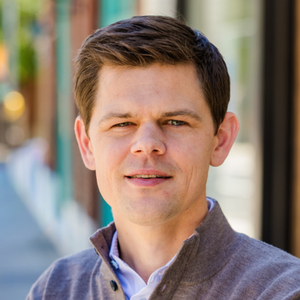
Toye Watson is the Director of Community Impact at UNC Charlotte, where she works to strengthen partnerships between universities and historically underserved communities. As a Charlotte native, she has dedicated her career to education, community organizing, and capacity building. She is experienced as an educator, program director, and grant writer.
Toye specializes in helping schools and nonprofits develop innovative, sustainable solutions. She holds degrees in Africana Studies, English, and Urban Education from UNC Charlotte and is a Charlotte Equity Impact Fellow, committed to advancing equity and meaningful collaboration.
Learn more about UNC Charlotte’s urbanCORE.