Using Collective Impact for Economic Mobility with Khalil Salim
Collective impact—a framework where organizations across sectors come together with a shared vision—can play a big role in addressing complex issues like economic mobility.
This is especially important in cities like Charlotte, where decades of structural barriers have limited upward mobility for many residents.
Collective impact brings together nonprofits, businesses, and government agencies to work toward common goals, using data to measure progress and drive decisions.
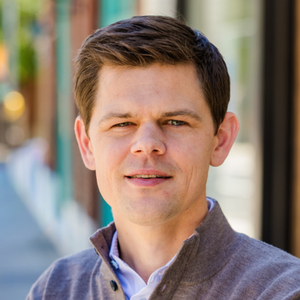
Today’s guest, Khalil Salim, Ph.D., Director of Research and Evaluation at United Way of Greater Charlotte, shares his expertise on how this collaborative approach is being used to address Charlotte’s challenges, and his thoughts on Raj Chetty’s latest research on economic mobility.
You’ll Hear:
(03:09) What is the United Neighborhoods program and how does it use collective impact
(06:01) What makes collective impact different from other collaborative approaches
(11:00) How to measure and document success from a shared goal
(17:53) The challenges of doing collective impact work
(20:45) How to balance broader indicators with community-defined success metrics
Key Takeaways
Collective impact initiatives in Charlotte focus on setting measurable goals that hold organizations accountable for their contributions. For instance, when multiple organizations collaborate to improve access to job training programs, they establish clear benchmarks for success, like the number of participants who secure employment within a certain timeframe. This accountability creates transparency and encourages ongoing collaboration to meet shared objectives.
Community engagement is integrated into the evaluation process by actively involving residents in program assessments. This is done through surveys and focus groups, where community members provide feedback on what services are effective and what needs improvement. Direct input improves evaluation quality and ensures that programs are tailored to meet the community’s specific needs and preferences. This approach leads to higher participation and satisfaction rates.
Evidence-based research, such as Raj Chetty's findings, informs local strategies by pinpointing specific barriers to economic mobility. For example, Chetty's research might reveal that a lack of access to quality schools disproportionately affects certain neighborhoods. Armed with this data, organizations can prioritize initiatives that target educational resources and support systems in those areas, ultimately creating more effective pathways for upward mobility.
-
Drew Reynolds: Welcome to the Common Good Data podcast. I'm your host, Drew Reynolds. So today we're going to talk a little bit about the importance of collective impact. This idea that we look at the success metrics, not just as a single organization, which we often talk about on this podcast, but rather collectively as a whole community.
We also talk a little bit about economic opportunity and the geographic nature of addressing poverty. To do that, we're going to do it in the context of the United Neighborhoods program, which is a program offered by the United Way of Central Carolinas and is based in Charlotte, North Carolina. And we're going to invite Dr.
Khalil Saleem, who is the Director of Research and Evaluation at the United Way of Central Carolinas. Khalil is a great guest and has such expertise on this project, on this project. So I'm so glad that we've been able to invite him on for this conversation. Khalil has been involved in evaluations for the design implementation for so [00:01:00] many different organizations and agencies over his career and now leads this effort at the United Way.
In this episode, we're going to talk. about the United Neighborhoods Program and specifically about the importance of place based services. And this idea calls into mind the idea that poverty is, has a geographic nature to it. And that when we think about the geography and distribution of poverty, that to address that also requires a bit of an understanding of geography.
And that place based services approach really tries to address that. by giving voice to and priority to local conditions and needs in organizations and leading the efforts on those issues. We also talk a little bit about collective impact, of course, how a community can think about measuring success, trying to mix the local context with the larger macro approaches that are so necessary and when you're trying to have a whole community get pointed in the same direction, so to speak.
We mentioned a little bit about the opportunity, the Chetty study on [00:02:00] economic opportunity and its impact on Charlotte. So a lot of great things in this episode. As a reminder, please follow us on YouTube. You can find us at Common Good Data is the handle there. And you can leave us a review on Apple Podcasts as well.
That'd be so helpful. As we continue to grow and expand this podcast check out our show notes as well, where you can get details on this episode and more additional resources and links at www. commongooddata. com slash podcasts. And without further ado, let's dive into the interview.
Drew Reynolds: Khalil Salim. welcome to the show.
Khalil Salim: Thank you for having me, Drew.
Drew Reynolds: So excited to have you
on today. We have lots of listeners from the Charlotte region on our podcast. So we're going to talk a little bit about the city of Charlotte in particular, the work of the United Way in across the city. And so you have been doing some work on the United Neighborhoods program and initiative, and then talking a little, can you talk a little bit about United Neighborhoods and then also in.
the context of collective impact across the city, [00:03:00]
Khalil Salim: Yeah, so United Neighborhoods, it's a place based
initiative and it's focused on serving historically disinvested communities. So the way the model works is that you
have what is called a backbone agency, or
some folks might call it a community quarterback, that's embedded in the community, that's focused on engaging residents, helping establish trust.
Identifying strengths, assets, and needs, and then
ultimately connecting them with resources. So what United Way does is we fund the backbone agency, but we also fund the services that are brought into that community. In the context of collective impact, essentially what you're doing is not just focusing on one issue that a community might face.
You're focusing on a multitude of issues and serving the whole community the whole child and the
whole
family.
Drew Reynolds: can you talk a little bit about this notion of place based services too, a little bit, and why is it that, you this program views that as such a critical part of the work of United Neighborhoods?
Khalil Salim: Yeah we know opportunity [00:04:00] is tied to place. The Chetty study that came out 10 years ago essentially tied somebody's ability to rise up across the financial ladder or economic mobility being tied to zip code. And so basically the idea came if we want to make a difference in terms of a community, we need to not be siloed or having people just staying in place.
So what is the way that we can bring
investments, resources, services and serve communities where they're at? The idea being in order to help achieve economic
mobility, we need to lift up not just a child or a family, but the
community as a whole.
Roger Suclupe: Yeah. Khalil, thanks for sharing
that. It's,
about community based initiatives like the one that you just shared. And I love the concept of the community quarterback the, this individual who is the spearheading, but also gathering everybody together. It's just not, you're just not relying on one person that may be the identified individual who is well known or who [00:05:00] is.
Outspoken, sometimes maybe not outspoken, but just somebody who's recognized and that person is trusted. And so just like a quarterback is trusted on the football team, right? And so they drive, like they're the ones who are driving these initiatives through collectivism. So I really love that.
My, my question for you is if you can talk a little bit about what makes collective impact different from other collaborative approaches and why it's important for addressing complex social issues like economic mobility.
Khalil Salim: Yeah, great question. So the research tells us that poverty is incredibly complex to solve, right? So there's no silver bullet or magic bullet. And no organization can solve it on their own. So the idea of collective impact is, can I bring a set of organizations that are really good at what they do across a wide range of sectors to work together towards a common agenda, which in [00:06:00] this case would be economic mobility, They're helping complement the work of one another.
They're not duplicating efforts. They're shared learning. They're complementing each other's strengths. And with the support of the community quarterback, they're really pushing forward a vision that the residents have, that the neighborhood leaders have. I think oftentimes in philanthropy or government, you have a set of outsiders that come in and prescribe what that community needs without talking with the residents, without talking with the neighborhood leaders, and then are surprised when it fails.
So the what's really great about this approach is that you have somebody that's a trusted leader who knows the community, knows the residents oftentimes knows the organizations and can help facilitate that bridge of connecting the community. Residents who historically might not have had a lot of trust with organizations within the community and saying we see this gap, we think we might be benefiting from [00:07:00] the service would it be okay with you if I helped connect you with this organization?
That's really ultimately what makes it different is that you're recognizing the complexity you're bringing people together and people are complementing the work of one another.
Roger Suclupe: this is great. This reminds me of a few years ago, I took a trip to Los Angeles And they have the with a group of folks who are interested in community, participatory research concept, right? So looking at communities and how Can we, when I say we, like academics or even researchers come in, not as the experts, but really treating the community members as the experts of the community and us coming in with, we have some skills, you have some skills, how can we connect?
So it's called the community Magnolia Community Initiative, I believe. And it was beautiful. It was very community driven, very community rooted. And really relying on folks
in the community to be those, the leaders that they are, right? With the resources that perhaps a university or researchers bring in.
But then the [00:08:00] information stays there, like it is owned by
the community, right? And and it, it gives value to community members and folks who
are involved. And not to go on a sports theme
here, but I love how you
mentioned Bringing people together and
utilizing their strengths. So I coach soccer and Drew also is a soccer avid fan as well.
You, in soccer, you definitely know that everybody on the
field has a purpose, right? The goalie is not going to go out and play striker, for example, or a
forward You need the goalie to be focused on their job as the goalie, right? And then you have, the midfielder who is very creative and you have. the center back.
Who is the anchor of the
defense. And but every, even the wingers
have purpose. Everybody strategically moves together
in triangles. Remember from our previous podcast where we talked about triangles.
Drew Reynolds: right. Yeah.
Roger Suclupe: In a triangle, there's always an outlet.
There's always somewhere to make a pass to, right? and so similarly with this concept of
this community quarterback, or just, like putting [00:09:00] folks in places where, this is an outlet. This person is known in this space. This is their
strength. This is what they do. This is all beautiful. I really am
enjoying hearing and
learning more about this.
I hope our listeners are
too.
Khalil Salim: Yeah, and I know nothing about sports, so you just saw me like nodding along and smiling. And I watched Ted Lasso, So, I saw the episode about the triangle, so I was like, okay, I think I'm following. But yeah, I think a lot of overlap for sure.
Drew Reynolds: I feel like Ted Lasso
Gets a lot of
airtime on this podcast.
We were mentioning, I
think in the last one too, it's such a great show. I think one of the challenges too,
that comes up around some of this. community,
based work, place based work, trying to work collectively across organizations, thinking about
collective impact, then comes down to a question around measurement.
And of course,
This is a Common Good Data podcast. We got to talk a little bit about measurement evaluation data
somewhere. So I guess,
I'm just curious about how you guys at the end, I've been thinking about that question.
What is, how do we get a sense of where we [00:10:00] are as a
community in Charlotte?
And then as we're what we're
working toward, how we measure and document success toward
a shared goal. How are you thinking about that
Khalil Salim: Yeah, that is
an excellent question, and I think, Roger, you started giving like a preview to it. You didn't even mean
to. so we are actually doing a pilot
study in two corridors
in two corridors that we're serving along with
the City of Charlotte And the,
Knight Foundation, and we're doing what is called a community well being
study.
So we
are going door to door. We've been
sending mailers but basically designed an
assessment. Where we want to get input from residents on how they're doing
related
to the social determinants of health. We know that the work and services that people are doing are,
fairly broad, so it's really important to get that holistic approach to health and not just focusing on one thing, which here in Charlotte,
a big thing for us is economic mobility, but we know it's more complicated
than
that. But
essentially,
We're asking questions about
physical and mental health access to resources, and then [00:11:00] questions that are
really specific to our community that it's really important for us to get
information in a timely fashion. Questions about gentrification and displacement. We know that's happening but unfortunately there hasn't been a lot of on the ground studies in these communities that are rapidly
changing. So that has That's going on at the moment, and our hope is to get a baseline of how communities are doing, a hyper local perspective and then using this data to inform our strategy moving forward,
identifying what priorities are, and then doing a follow up in three
to five years to see how We move the needle on, on particular areas.
But what's been Really exciting about this work is that we're going to
launch a community advisory board where we're presenting these
findings with residents, we're trying to get context and then most importantly, co generating solutions, going back to
that point of a lot of, times it's outsiders, academics
Philanthropists local government, people that don't
have ties to a community that are coming in and
saying what they [00:12:00] need.
So it's really important for us to work with the residents, lift up their voices,
and then work with them to generate
the recommendations of what
changes that they want to see in their community.
Roger Suclupe: Khalil, if you can you share the two corridors that y'all are looking into for this pilot project?
Khalil Salim: Yeah Historic West End, and then North Grand, North
Tryon.
Roger Suclupe: On and what's embedded in there, but then also respect the culture that has been rooted in there. And so how can you morph the two? How can the two coexist, right? So I think sometimes folks think that you can't two things can't coexist in the same space. And the reality is that more than two things can coexist in the same space, Right. How do you, how do, how can we, a community, by. honoring and respecting their, the roots the culture, the history, then also bringing in new concepts or concepts that can fit what their needs are, right?
Instead of saying this is what you should do and saying what is it. that you need and how can [00:13:00] these new concepts fit into where your needs are?
Khalil Salim: beautifully said, Roger, I couldn't have said it myself. Oftentimes in doing this work, and this is how I had the privilege of meeting Drew, is we were working with an organization together. With my training and background with evaluation is What I find, what I think is important to maybe study or examine or prioritize, the community thinks the same way about it, right?
And generally I find if there's gaps or something that we're missing, it's usually the researcher, right? And it's because we don't have those community ties. We don't have that community context.
So really glad to
hear you say that for sure.
Roger Suclupe: And real quick, you mentioned the of health, right? And so I think what's left out at times is cause we look at economic mobility, we look at mental health, we look at health, we even look at like food insecurities, but really what's important is the utilization or access to green spaces, right?
So that, cause that ties in, that can [00:14:00] tie into health and mental health, that can tie into so many other things that impact social determinants of health. But really knowing if, you know what, a block or two blocks over is an area, a green space area that I can. I can run or I can play. basketball or throw a football or soccer or whatever, that we know not only is it going to be helpful for health reasons, but it's also going to impact your mental wellness.
So it's, I look at things as a sort of a holistic approach, right? So if I can improve my health, Then I can also move the needle and improve my mental wellness and vice versa.
Khalil Salim: Yeah, absolutely. And that's so when we were developing this tool a big thing for us was how can we get. The research, the literature,
Find valid and reliable tools, but then also get community
context. After doing our deep dive and having a set of recommendations for tools we essentially went to the community and got input are, is this [00:15:00] addressing everything that you think is important to lift up?
What would you lean into? And. Our original draft of the tool was fairly long, right? And we're like, okay, this is a good way for us to narrow it down, focus on a few specific subset of items. And really what the feedback that we got back was all of this is important. There's nothing I would cut. And it was really surprising.
But at the same time, it taps into exactly what you're saying is that Health and
Being is fairly broad. There's not just one thing we need. For a community to thrive, you need a multitude
of things. And
it's not just, a good paying job or a good education.
It's the green space.
It's the access to parks.
It's having a
neighborhood and a culture and a sense of community. So spot on.
Roger Suclupe:
That segues into this next question I have about challenges, right? so if you can talk a little bit about
some of the [00:16:00] challenges that y'all have run into in doing this collective impact work.
Khalil Salim: So
I think the main one that
comes to mind is that, the work that we're doing is
really hard. And these communities
that we're serving
have experienced decades of disinvestment, hundreds of years of
disinvestment, arguably. And I think a lot of times funders expect for change to happen
overnight or for us to achieve the outcomes or move the needle.
And the reality is, It's going to take time, so I think that's something that we try to socialize, even when our grant applications, we're meeting with donors, we're meeting with funders, is that we need to be making investments for the long haul, and these communities have seen people come in and out. Unfortunately, I think philanthropy has a history of chasing that next shiny thing.
And, right now it's economic mobility, who knows what it might be in [00:17:00] 20, 50 years. But it's really important that we stay the course for the residents, for these communities. If we stay the course, we'll end up making a difference. The Chetty study just came out and we moved up in the rankings from 50 to 38, and that was such a beautiful small win, but it shows that we're making progress, but we still got a long way to go.
But I think that's ultimately the big one, is just making sure that people are committed and for the long haul. And that's what's great about Charlotte is that all the organizations I've had the privilege of working with recognize that they see it. And they know it's gonna take some time.
And I don't see anybody stepping away from this work because. People are bought in they're so passionate, and honestly just working with
them kind of fuels me to keep going in this
direction.
Drew Reynolds: So one thing I love to talk a little bit about is about specific metrics that you think are indicators that you see are indicators of success. And as I'm, as we're having this conversation and I found this in [00:18:00] my work too, so I'm curious how you think about it. There is almost like an inherent tension between Doing community place based work where community members are identifying the challenges and ultimately then what success looks like in their community, while also trying to find some type of shared language or metrics across an entire community like all of Charlotte or Mecklenburg County. I think that I think of leading on opportunities work in this area too, in particular, the work of the Opportunity Compass, trying to figure out what some of those key indicators are. And your work, How have you thought about that kind of tension of having these kind of broader indicators while also trying to have space in and whatnot for individual communities to identify what success looks like to them?
Khalil Salim: Yeah, I think we need both. So it's really important to have a macro perspective to bring
awareness to issues, to study commonalities between
communities. But the more that I dove into secondary data and trying to see could we look
at changes in communities and the impact that we're
having with [00:19:00] secondary data from the census, American Community
Survey, the more I saw
how there was a lot of gaps and limitations for the populations that we're serving. So
some of the main things that you see is,
A lack of
representation when it comes to high poverty neighborhoods on the American Community Survey
undocumented immigrant refugee. And ultimately, if we
look at the Crescent and the Wedge and where we're making these investments, these are the populations that
we're serving.
So it was really important for us to have a hyper local perspective. And that's something that I'm
beginning to see a movement towards of How can we study a particular geography and community and
how folks are doing and
how they define success? And then tying it to that
macro perspective.
I'm very big on a one size fits all approach is not going to work.
We got to recognize the nuance,
have tailored strategies. so, I think that's a big thing when it comes
to indicators. So working with [00:20:00] that set of communities and that's what we're hoping
to do with that hyperlocal perspective of
What do you want to prioritize? Because we know there's
a lot of things that we may need to address, but what are, the three to five things
that you think this community should focus on in the next 10 years?
And how can we
start making investments and interventions to make a difference? And What's great about the COMPASS and a study like this is we have an opportunity to
have both. Where are we seeing things align? Where are we seeing things not align? And how can we examine those differences to strategize together?
Roger Suclupe: This is a great conversation. I'm really, I'm excited again that. We get a chance to connect through this podcast and, I'm hopeful that I can reach out to you outside of the podcast and see how I can support this from a personal level, because I really appreciate the work that y'all are doing and it's just, it's work that makes sense.
A lot of times as just human beings, we end up [00:21:00] doing work and we do it just because instead of this makes sense, right? And when things make sense, there is investment. There is there's a want, not a, I need to do it, but I want to do it. And there's very different between needing to do something and wanting to do something, right?
And so I know you talked about investment as in having. Either whether it's philanthropists or funders like the investment part of it is it's not going to happen overnight. It's not going to happen within a month, right? The needle, because of the long history of, injustices and just the way communities have been treated, the needle's going to take some time to move, but it's still going to move. If we can move the needle, even an inch, it's an inch more than it was the day before, and having folks try to realize that concept. And just like when you, if people are investing money, like if you go long term, you're not, you may lose some money for a bit before you [00:22:00] start making that.
So it's almost like. You gotta realize those growing pains. And so appreciative of this conversation and would love to connect with you off, off air to see how I can be helpful. be more involved with this.
Khalil Salim: Yeah, absolutely. This is my passion project. I've been so excited about it and the work. We've been doing and talking with the residents and how appreciative of how we're approaching the research and the questions that we're asking has been really energizing and I've been canvassing with some of our folks on our team and just seeing the communities that we're trying to serve and then tying what we're doing To the people and seeing the day to day and hearing stories directly from them has been incredible.
Yeah, I'd love to talk more about it.
Roger Suclupe: Excellent. Drew knows that what time it is and it's time for us to have a little fun. Not that this wasn't fun. This has been really fun, but I'm going to switch gears a little bit. I'm not [00:23:00] sure if Drew
mentioned this to
you, Khalil, but we like to talk about pop culture on this podcast.
I like to talk about 80s and 90s pop culture, but it could be about any
decade pop culture. There's a lot that pop culture tells us about society. And so whether it's movies, whether it's music, whether it's shows,
what have you And so today,
My, my pop culture thought and question is we're going to revolve around
songs that make impacts, especially, or songs that talk
about economic mobility or social mobility.
Yeah. And
so I'll start us off,
A song that I remember from the
eighties. I'm taking it way back, is by Peter Gabriel called Big
Drew Reynolds: Oh, yeah, I
Roger Suclupe: know what he was saying back when I was, pre teen, teenager, um, of this concept of like big time, right? So it starts out with, I'm on my way, I'm making it.
I've got to make it show [00:24:00] so much larger than life. I'm going to watch it grow. And it's I just thought it was I like Peter Gabriel, but now that I look at it,
it is much more deeper than that. It's another part of the lyric of the song is, so what's the price?
future And, fame, friendships going down the drain, what becomes of those you meet, stepping stones beneath your feet. And
right there, it's boom,
it's like a
punch in the gut. That is what
communities have been, have felt. Like this, hey, we're going to use you for this and now
you're like a stepping stone for us. And so whether it's researchers or
philanthropists or, organizations that are hoping to do good and using, The stepping stone
perspective.
So anyway, that was, that's my
That's my 80s choice for today. You're next Drew.
Drew Reynolds: love it, Roger. I'm up. All right. Yeah. We'll give some time to
think.
Khalil Salim: for joining us today.
Drew Reynolds: so, I was reflecting on this cause we were talking about economic mobility and we've had a couple of [00:25:00] culture questions that have hit on this topic. Cause I feel like Roger, you've mentioned some, some Tupac or, some Grandmaster Flash on this podcast before too but I, I think I'm going to go.
With Tracy Chapman's Fast Car, which of course got some recent attention because of the Country Remake. But I think that it just does such a good job of illustrating the challenges of economic opportunity. And it makes me think a little bit like, you take something like the Chetty study that had put Charlotte in last place so famously, which is why it's had such a huge attention in the community.
But then give some narrative and, lived experience to that. and as someone who does a lot of work with data, I always am interested in both the sort of
quantitative, but also the storytelling and the qualitative aspects that give meaning and connection to the experience which I think FASCAR does a great job of doing.
So I'll turn it over to you Khalil. What do you think?
Khalil Salim: this was the hardest question of the interview. And thank you for giving me a little bit more time. So mine won't be 80s and 90s. It's like just what came to mind. And [00:26:00] Bob Dylan. He's been around for a long time. And I think every time I listen to his music, he's such a wonderful storyteller and advocate and talking about, political movements, social movements.
And I think that ties a lot to economic mobility, right? There's so many songs that I could pick from his catalog where he's talking about those things, but Hurricane, I don't know if you've heard that one, but that one I, it's based off of a true story of a boxer. I can't remember his name, but really telling a story of what it's like growing up in a community of disadvantage, how that affects you.
And Yeah, I have to say a number of Bob Dylan songs for sure.
Drew Reynolds: Yeah, you could choose almost any of them,
times there are a change in and Maggie's Farm, I think comes up a lot for me too
on that one too. It's great. Cause I know, that you've got a guitar in the background there too, So I, know, that if a true guitarist is always going to come back to Bob Dylan
Khalil Salim: [00:27:00] yeah.
Drew Reynolds: some point, that's a little bit unfair.
Guitarists have all different kinds of people, but I know, that Bob Dylan often comes up with guitarists. I shouldn't be so reductive.
Khalil Salim: yeah.
Roger Suclupe: Ruben Carter is the boxer that The movie the Hurricane is based. Yeah, Ruben Carter, I believe, and that was a movie that Denzel Washington played the lead role of Ruben Carter. Excellent movie. the song is about, yeah, and It's a great movie for those who haven't had a chance to watch it. I do want to correct myself, so the second part, the lyrics that I read out about what's the price of fortune and fame, friendships going down the drain, what becomes of those you meet, stepping stones beneath your feet, is actually, the song is called People and it's by Action Pack, but it's this correlation with that song by Peter Gabriel, Big Time.
Khalil Salim: I love you fact checked your own, like Drew and I had no idea, you could have gone away with that.
Roger Suclupe: No. We gotta be, we gotta
be [00:28:00] accurate on this podcast for our listeners.
Drew Reynolds: We do. and you had mentioned Peter Gabriel and I was going back to some of
My Peter Gabriel songs that I know well,
Sledgehammer or Salisbury Hill or something like that. But I don't have enough of a deep knowledge of Peter Gabriel beyond that
or maybe a few Genesis songs. So you, but that's it.
We got to keep honest on this podcast, right? So for all you out there who were like, Hey, I heard Roger the
first time and I had some questions about that. you have your questions
answered today. Khalil, thank you so much for coming on
today to talk about economic opportunity, about collective impact, the work of United Neighborhoods.
I know that this is a great lesson for both of us, but,
I'm sure our
audience as well. So thank you so much for coming.
Khalil Salim: Thank you Drew, thank you Roger, it's a pleasure to be with you too.
Drew Reynolds: Oh, and one last thing. If people want to learn more about you and the work of United Way, where can they go to find out more?
Khalil Salim: Yes United Way of Greater Charlotte is our website. So just subscribe to our newsletter. Instagram and the newsletter is probably the best way to keep up to date on the study. We're going to be [00:29:00] trying to release some findings in there for sure. Greatly appreciate us you having us on here and let us.
have a plug.
Drew Reynolds: Khalil Salim, thanks so much for joining us.
Our Guest

Khalil Salim, Ph.D., serves as the Director of Research and Evaluation at United Way of Greater Charlotte, where he leads efforts to drive data-informed solutions to improve economic mobility and community well-being. Khalil’s work focuses on collective impact, supporting cross-sector partnerships to address systemic challenges in Charlotte’s most vulnerable communities.
Before joining United Way, Khalil held key research roles at the UNC Charlotte Urban Institute, where he led evaluation projects for nonprofits and public agencies. He has also worked with organizations like Life Connections of the Carolinas, MeckEd, and THOMPSON Child & Family Focus. Khalil has a passion for leveraging data to create lasting social change.
Learn more about the United Neighborhoods program.