The Common Good Data Blog

Insight and mistakes from the world of program evaluation
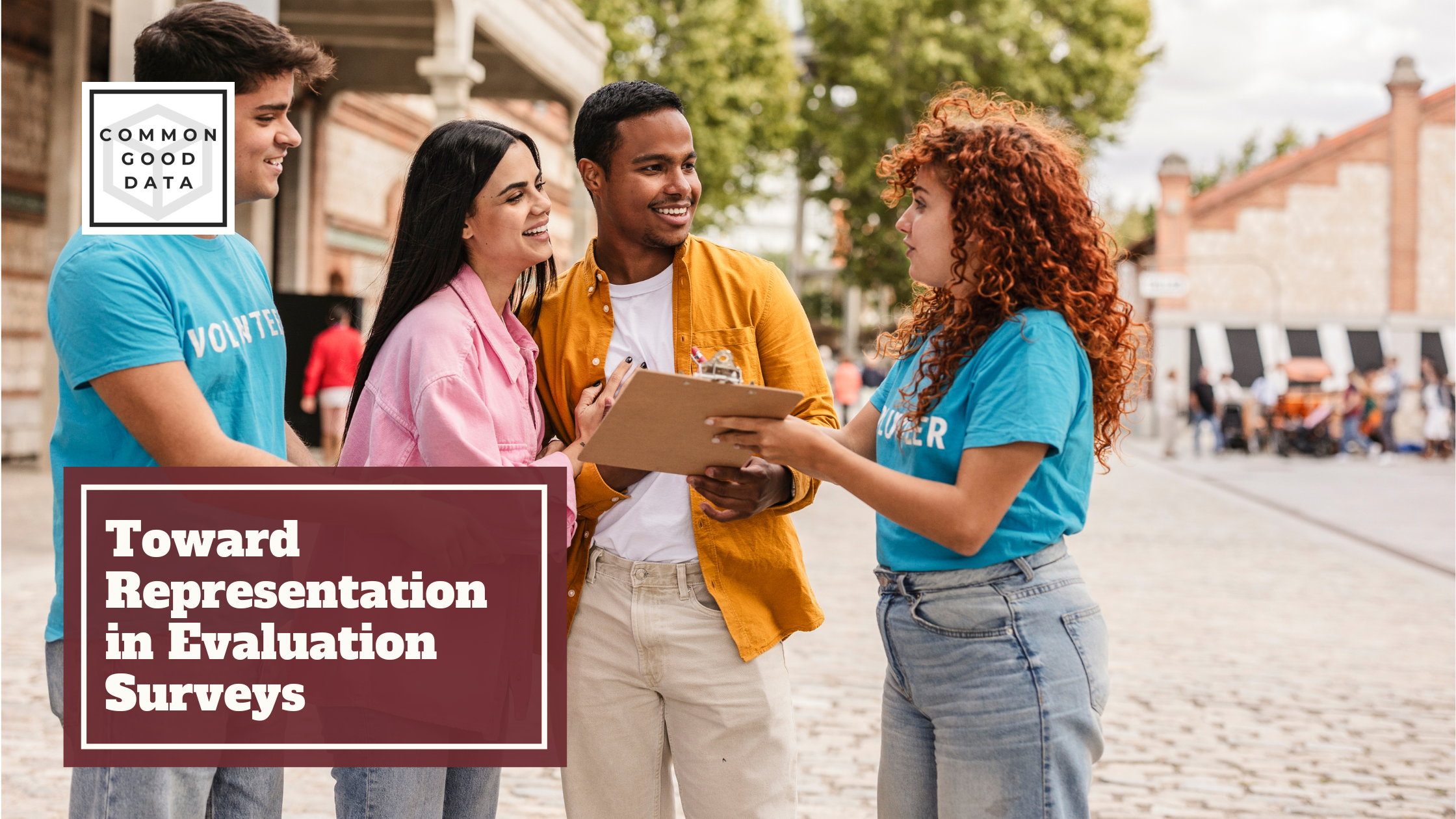
Toward Representation in Evaluation Surveys
Think of a time you were serving your community. Perhaps you sent out a survey to town residents at a community gathering, and you received 35 out of 60 answers, making you confident that you had responses to apply to the entire town. However, what if the 25 people who chose not to respond to the survey were people who varied strongly from the rest of the group? Maybe they lived in a different neighborhood than the other 35 people. Without knowing it, you may have gathered responses that are not actually representative of an entire community. And without those 25 responses, it might be more difficult to make decisions that truly benefit the whole community.

What is a Data and Impact Plan - and Do You Need One?
“Tell me about your outcomes.”
This is the question that causes many behavioral health leaders face to freeze. Shoot! you think. I know we’re doing great work, but I feel like we just can’t quantify it!
“We’ve got lots of data. I see the change in our youth every day - just come by and visit one of our programs, and you’ll see it too!”
You know it’s just an ok answer. When funders and other community partners experience and see your work, they’re more likely to get involved and support you.
Beyond Good Intentions: Protecting Funding Through Defensible Impact
Most behavioral health programs are doing meaningful work. They are serving individuals in crisis, coordinating care, building coalitions, and responding to evolving federal and state requirements. The commitment is real, and the impact on communities is significant.
Yet many program leaders quietly feel vulnerable as grant terms approach their end. Not because the work is weak, but because sustaining it often requires securing new funding. When a federal award sunsets, the question becomes whether the program can compete effectively for the next opportunity, whether from the same agency or a different source altogether.

How Do You Know If Your Program Is Actually Working?
I hear nonprofits tell me all the time, “I think our program is working. But I just don’t know how to show it!”
They weren’t alone. Many nonprofit and public-sector organizations are working incredibly hard, delivering services every day, and meeting urgent needs in their communities. And yet, when it comes time to answer a simple question of whether the organization has evidence that their program is working or not, the room gets quiet.
“We know it works. But I can’t give you any data to support that.”
This uncertainty isn’t a failure. But it is a sign it’s time for you organization to level up.

Not Just a Report: How Strong Leaders Use Evaluation Data to Drive Impact
As fiscal years wrap up, many nonprofit, public health, and human service leaders find themselves staring at a thick stack of charts, graphs, and narrative summaries. The evaluation report is finished. The numbers are in. The funder deliverables are met.
Now what?
For too many organizations, that report becomes the end of the evaluation process. It gets submitted, filed, and rarely referenced again until the next grant cycle. But strong leaders—those who drive lasting change—use evaluation differently. For them, data isn’t a formality. It’s a leadership tool.
Here’s how those leaders turn evaluation reports into real impact.