
The Relevance of TNGOs with Tosca Bruno-van Vijfeijken, George Mitchell, and Hans Peter Schmitz
Listen to the Common Good Data Podcast on Apple Podcasts or Spotify.
This week, we welcome Tosca Bruno-van Vijfeijken, George Mitchell, and Hans Peter Schmitz to talk about their book, Between Power and Irrelevance: The Future of Transnational NGOs. We talk about how the “architecture” of the sector - or how nonprofits are set up and function - may in fact get in the way of bringing about the change nonprofits seek. We also discuss inherent challenges in the sector including the tension between advocacy and direct services as well as themes across the sector related to leadership and organizational culture. The episode closes with a conversation on the cars of the 80s, with the Volvo station wagon getting a lot of love!
Key Takeaways
Donor interests don’t always represent what communities need. Nonprofits in the structure are set up to be accountable financially - but there’s little in the structure of nonprofits to hold them accountable to communities.
Newer models of NGO practice examine how beneficiaries can have a greater say in the role of their own development, and how NGOs can empower local communities to more effectively demand services from local actors. led and driven by communities and supporters rather than by NGO staff.
NGOs may overstate how “unique” they are and may view their origin story with rosy lenses. Sometimes, the best solution for the problem they seek to solve is actually to merge, be acquired, or make hard decisions about their practice.
It’s importnat to model as an organization the change you seek in the sector. For example: if you’re against the unfair emphasis on overhead costs as a measure of impact, avoid highlighting your overhead on your website. ‘Be careful not to “forge" your own handcuffs” by repeating what you do not want to see in the sector.
Nonprofit leaders are not immune from challenges, and there are “shadow” sides to nonprofit organizations. How can your nonprofit use self care and other models of self-inquiry to ensure your organization models ethical practices?
Resources and Links
Our Guests

Tosca Bruno-van Vijfeijken has worked on international development and civil society issues for 30 years, in practice, in academia and as independent consultant. Before launching her consulting practice, Five Oaks Consulting, Tosca was the Director of the Transnational NGO Initiative at the Maxwell School of Citizenship and Public Affairs at Syracuse University (USA). There, Tosca focused on the governance, leadership and effectiveness of INGOs, directed the TNGO Leadership Institute, and advised 5 major NGOs on change management and worked on evaluation. Tosca has served on several boards of INGOs and holds multiple honorary appointments. As Principal Consultant at Five Oaks Consulting, Tosca helps senior INGO leaders turbo-charge their ability to lead dramatic and useful change. She guides leaders in shepherding complex organizational change processes, supports leadership development and coaching and loves to work on organizational culture and effectiveness issues. Tosca is a public thought leader and co-author of the book Between Power and Irrelevance: The Future of Transnational NGOs and host of the podcast NGO Soul+Strategy. At the start of her career, Tosca worked as international development practitioner for a European think tank, the World Bank, a US INGO and the United Nations.
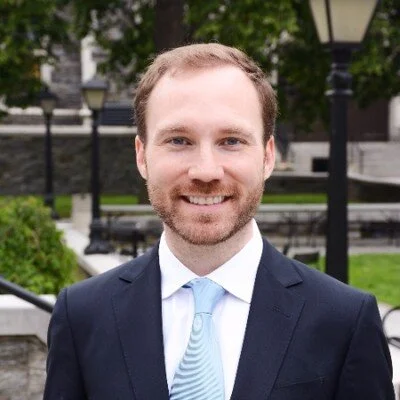
George E. Mitchell is an associate professor at the Marxe School of Public and International Affairs at Baruch College, City University of New York (CUNY) and is an affiliate of the Marxe School’s Center for Nonprofit Strategy and Management. Before joining the Marxe School, he was an assistant professor at the Colin Powell School at the City College of New York, CUNY and co-founder of the Transnational NGO Initiative at the Maxwell School of Syracuse University. His research examines topics in NGO and nonprofit management, leadership, and strategy, and appears in journals of NGO and nonprofit studies, public administration, and international relations. He serves on the editorial boards of Nonprofit Management and Leadership and the American Review of Public Administration. His coauthored book Between Power and Irrelevance: The Future of Transnational NGOs is available from Oxford University Press.

Hans Peter Schmitz is currently professor of leadership studies at the University of San Diego. He is the co-founder and former Research Director of the Transnational NGO Initiative at the Maxwell School of Citizenship and Public Affairs/Syracuse University. His research and teaching interests include international NGOs, global health, digital media in advocacy, and global philanthropy. He is the co-author of Between Power and Irrelevance: The Future of Transnational NGOs (Oxford University Press, 2020). Recent publications also include 'How Billionaires Explain Their Philanthropy' published in the journal 'Voluntas' and 'Billionaires in Global Philanthropy: A Decade of the Giving Pledge' published in the journal 'Society.'