The Common Good Data Podcast
The podcast for nonprofit and public sector leaders looking to use data and evaluation strategies to build effective and sustainable programs in the areas of prevention, mental health, human services, and education.
Subscribe on:

Telling the story of the impact of your organization is critical to gaining support—from volunteers to donors to multi-year grants. But using data to show your impact can be challenging.
Learn how the best organizations build a culture of data that impresses funders, wins competitive grants, and changes the lives of individuals and communities.
-
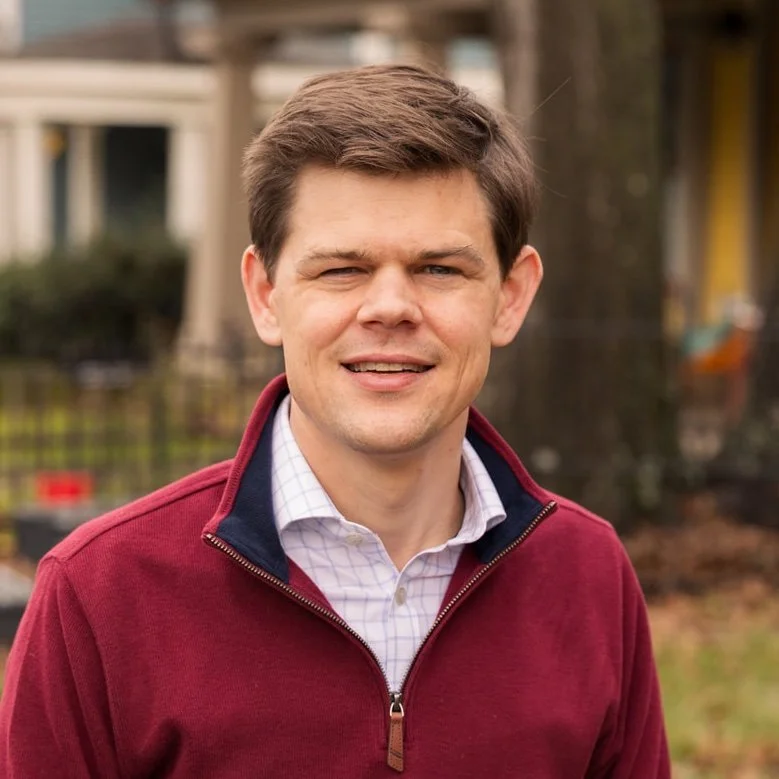
Drew Reynolds
Cohost
-

Roger Suclupe
Cohost
Become a guest.
Book Drew as a guest.

Search for a topic or guest:
Listen to past renditions of the podcast:

The Relevance of TNGOs with Tosca Bruno-van Vijfeijken, George Mitchell, and Hans Peter Schmitz
This week, we welcome Tosca Bruno-van Vijfeijken, George Mitchell, and Hans Peter Schmitz to talk about their book, Between Power and Irrelevance: The Future of Transnational NGOs. We talk about how the “architecture” of the sector - or how nonprofits are set up and function - may in fact get in the way of bringing about the change nonprofits seek. We also discuss inherent challenges in the sector including the tension between advocacy and direct services as well as themes across the sector related to leadership and organizational culture. The episode closes with a conversation on the cars of the 80s, with the Volvo station wagon getting a lot of love!

Representation in Nonprofits and Immigrant Justice with Atenas Burrola
Atenas Burrola joins the CGH to talk about her work at the Immigrant Justice Campaign working for and with immigrants and offering legal representation to ensure they receive fair and just treatment under the law. We also talk about nonprofits can think about their connection to the community they serve and how nonprofits can navigate advocacy work as a registered 501(c)3. We begin the episode discussing the importance of representation among five areas of your nonprofit: board of directors, staff leadership, front line staff, donors, and volunteers. Roger’s trivia question asks you to dig into the history of the iconic 80s band The Clash.

Quarantine Cookbook and Affordable Housing with Marc Pollack
What’s a “recipe” for success in housing and homelessness in Atlanta? This week, we invite Marc Pollack, developer, investor, community activist, and home chef to discuss his work in affordable housing and his recent new project, the Quarantine Cookbook. In addition to having a fun conversation on cooking, the slow-food movement, and farm-to-table practices, we talk with Marc about his work with Partners for Home Atlanta, the Atlanta Affordable Housing Fund, and The Gateway Center, three organizations working to address affordable housing and homelessness in Atlanta, GA. We begin the episode discussing the role of staff and leaders taking time to know their community - drawing inspiration from the phrase, “good shepherds smell like their sheep.” Roger also shares this week’s trivia question that will test your knowledge of 90s baseball trivia.

Ep 17: Know Your Community: Affordable Housing with Whitney Jackson and Monica Akerele
How do the best nonprofits define, know, and serve their community? This week, we invite you to reflect on how you define community in your nonprofit, and how you navigate knowing, serving, and working through issues of insider-ship and outsider-ship as a professional nonprofit leader. For our guest interview, we welcome Whitney Jackson and Monica Akerele this week to talk about the work of Warrick Dunn Charities in providing access to affordable housing for single mothers and low-income families. Whitney shares the importance of following up with families, supporting them through difficulties, and providing financial literacy and affordable financing as critical pieces to solving the affordable housing crisis. Roger also shares this week’s trivia question that will test your knowledge of 90s basketball movies.

Ep 16: Solidarity and encounter through dictatorship with Sam Stanton and Cecilia Espinoza
How do we overcome indifference? This week we invite Sam Stanton and Cecilia Espinoza, two former Maryknoll Lay Missioners as they describe their work providing social and family services in the community of Nirivilo, near Linares, Chile, during the dictatorship of Augusto Pinochet. They share their experiences of cross-cultural encounter through international exchange programs and mission trips and share what they have learned when working across cultural difference. Sam and Cecilia also share their love for Chilean folk and protest musicians and the role of music in inspiring social change. Drew and Roger share a new 80s/90s trivia questions and Roger shares an inspiring story of kindness from a former Common Good Hour guest.

Ep 15: Practices of encounter with Dr. Marcus Mescher
How do we practice encounter? What does it look like, and what specific practices help create it in our daily work in the nonprofit sector? We begin this episode talking about how to integrate courage, mercy, generosity, humility, and fidelity into our everyday nonprofit practices. We also invite Dr. Marcus Mescher, author of The Ethics of Encounter: Christian Neighbor Love as a Practice of Solidarity, to deepen our understanding of encounter and to share an ethical framework for advancing the Common Good through solidarity. Dr. Mescher shares how nonprofits play a critical role in bringing people together across sectors to solve challenging social problems. We conclude by taking a moment to remember the 539 thousand people who have passed away due to Covid-19 over the past year, especially Norma Suclupe, Roger’s mother, for whom this episode is dedicated.

Ep 14: Cyphers and public art as spaces of encounter with Flux Projects and Soul Food Cypher
This week, Drew and Roger share practice stories and highlight how moments of encounter often come through ordinary interactions. Anne Archer Dennington and Floyd Hall of Flux Projects discuss how artists serve as our community’s best storytellers and documenters of culture, as well as how public art creates spaces of encounter. Alexander “COSTxONE” Acosta of Soul Food Cypher describes how a cypher builds community with youth through celebrating identities and drawing upon the positive aspects of hip/hop and rap. Cost also talks about how cyphers, rap, and hip/hop serve as medicine and spiritual practices for the black diaspora communities. Don’t forget this week’s trivia question featuring an actor from John Singleton’s 1991 film Boyz n the Hood.

Ep 13: Doing good through encounter with the MS Society
This week, we begin a new series focusing on the theme of encounter and the idea that all good social sector practice begins with and is rooted in relationship. We share three key aspects of encounter that every helping professional can integrate into their practice. In addition, we invite Karen Mariner, Jeff Lax, and Suzanne Boyd of the National Multiple Sclerosis Society to share their work supporting individuals living with MS. They discuss the challenges faced by MS patients, highlight the work they are doing to build a national network of support services, to advocate for new legislation to support the MS community, and to support cutting-edge research that will lead to a cure. Be sure to participate in this week’s Betcha Don’t Remember to test your knowledge of the iconic 80/90s band, the Beastie Boys.
Ep 12: Global surgery at Childspring International
Over 5 billion people lack access to surgery worldwide, posing a massive global health challenge. This week, Drew shares about his work Childspring International, a global health nonprofit based in Atlanta which just completed its 5,000th pediatric surgery this month. Drew describes Childspring’s projects in pediatric orthopedics, cardiology, plastics, and general surgery and the organization’s growing focus on supporting medical capacity building. He also describes how he integrates a lens of accompaniment when working with children, families, and communities seeking access to surgical care. Be sure to participate in this week’s Betcha Don’t Remember to test your knowledge of the #1 billboard song of 1997.

Ep 11: A tale of two cities & the Cut To It Podcast with Gerard Littlejohn
We’re joined this week by Gerard Littlejohn, Executive Director of the Steve Smith Family Foundation and co-host of the podcast Cut to it with former NFL player Steve Smith Sr. We kick off the podcast talking about Gerard’s work in East Charlotte, where his organization supports housing challenged students connect to class during Covid-19 through the innovative Virtual Learning Center.

Ep 10: Tikkun Olam - Helping students navigate college and "repair the world" with Elliot Karp
How are nonprofits and other community organizations accompanying adolescents and college students as they navigate their studies during a pandemic? We are so lucky to be joined this week by Elliot Karp, CEO of Hillels of Georgia, to talk about his work in supporting students on their journey through college.

Ep 9: Food security and faith-based nonprofits, #BLM and racial justice with Rusty Price
This week, we invite Rusty Price to the podcast to discuss the work of Camino Community Center, a nonprofit that works in solidarity with the Latino and immigrant community in Charlotte, NC. Rusty describes how the spirit of “dale” - do it! - helps his staff stay mission-focused and open to opportunities of growth and newness.

Ep 8: Serving family needs through Covid-19 with Jamie Lackey
This week, we explore how working families with young children are navigating the Covid-19 pandemic. To do this, we’ve invited social worker Jamie Lackey, CEO of Helping Mamas, to share about her work supporting families in Georgia and beyond. Helping Mamas is a nonprofit that aims to provide diapers and baby supplies to families on the brink.

Ep 7: DACA, The Sanctuary Movement, and stories of the immigrant experience with Theo Rigby
This week, we explore the immigrant experience in the United States through the lens of film and storytelling with director, cinematographer, and interactive storyteller Theo Rigby. We begin with Rigby’s film Waking Dream, which follows 6 young undocumented people with DACA permits over two years and highlights how they navigate their documentation status in their day to day lives.

Ep 6: Advocacy and policy change in mental health and criminal justice with Valerie Arendt and Kathy Rogers
Policy is often discussed a national level. But most social policy that actually impacts the lives of those served by nonprofits and other social sector organizations happens at the state and local level. With the social transformations currently being brought about by the Covid-19 pandemic and #BlackLivesMatter, we invited two professionals to discuss their policy and advocacy work in the areas of mental health, criminal justice, and more.