How UNICEF is Making Cities ‘Child-Friendly’
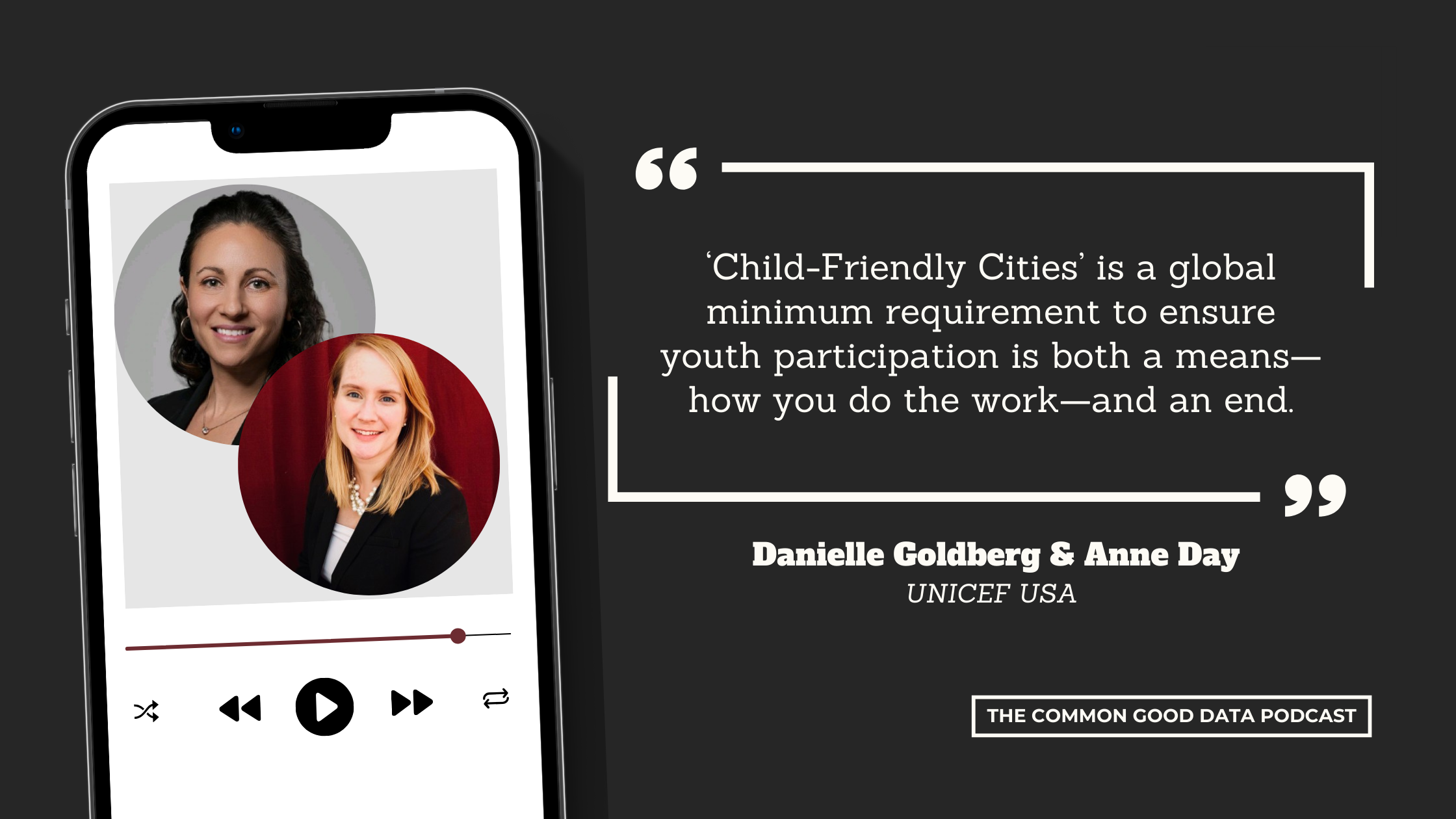
Think back to when you were young.
Can you remember a moment when an adult truly listened to you, took your opinion seriously, and made you feel like your voice mattered?
Many of us don’t have those memories—at least, not until much later in life. But for a child who hears, “You are an expert in your own life. Your voice matters,” the impact can be profound.
When young people are empowered early, they grow into engaged, informed adults who shape the world with confidence.
That’s exactly what UNICEF’s Child-Friendly Cities Initiative is working toward. And just recently, Decatur, GA, became one of the first cities in the U.S. to receive this designation.
But what does it actually mean for a city to be ‘child-friendly’?
And how do we ensure that youth participation isn’t just symbolic, but truly embedded in governance, policy, and community life?
Today, we’re joined by Danielle Goldberg, Managing Director of the Community Alliance for Child Rights, and Anne Day, who is the Senior Director of Research, Evaluation, and Research Partnerships at UNICEF USA.
Skip Ahead:
(01:31) Why children’s voices are often missing in governance, and how this impacts policymaking and funding decisions.
(7:56) How the “Child-Friendly Cities Initiative” helps local governments adopt child-centered governance strategies.
(13:10) How are cities selected.
(15:25) How did Decatur, GA achieve Child-Friendly City status, and what unique steps did they take to become more child-friendly?
(18:19) What are the challenges in evaluating large-scale, systems-level initiatives like CFCI, and what indicators define success?
-
Drew Reynolds: [00:00:00] One challenge I've been thinking a lot about lately is the degree to which children are involved in decision making, especially when it comes to decisions about their future. One way to approach this is to look at how much money we spend on children. Data from First Focus on Children shows that despite making up roughly 23 percent of the population in the United States, children received just 8.
9 percent roughly of the US federal budget in fiscal year 2024. Data points like these are used to make the argument that children's voices are not reflected. In our governance structures to address the problem of child governance, Unicef USA launched the Child Friendly Cities Initiative across the world.
Unicef partners with cities to create environments where Children's rights are not just acknowledged, but actively prioritized in policy and decision making here in the US, one standout example of this took place right here near me, actually in Decatur, Georgia, a community that set out to become a model for how cities can engage young people, make services more accessible and ensure that every child has an opportunity to thrive.[00:01:00]
But what does it actually mean to be a child friendly city? And how does a city translate this framework into action? And most importantly, how do we measure whether or not it's making a difference? So to answer these questions, Roger and I are joined on the episode today by Danielle Goldberg, Managing Director, Community Alliance for Child Rights, and Anne Day, who is the Senior Director of Research, Evaluation, and Research Partnerships at UNICEF USA.
Anne Day Leong: UNICEF has an annual report called the Report Card Series that looks at child well being globally across peer high income countries and even goes as far as to list and rank countries on how well they're doing on various metrics of child well being.
And it shouldn't be terribly surprising that the U. S. consistently comes out towards the bottom of those lists. The most recent report was on child poverty. The U. S. placed 32nd out of 39 peer high income countries on metrics of the current levels of child poverty and [00:02:00] shifts in child poverty over the last 10 years indicating that not only are we not doing great on child poverty, but we haven't gotten much better in the last decade.
So really, across kind of those high income, countries, we are not doing great on child well being and child health and improving in child health. And in fact one of the most crude metric of child well being, which is child mortality. The U. S. Is the only high income country on earth where child mortality is going up instead of down.
So really supporting Children in the U. S. Arguably is in an area of underinvestment. But to make that a little bit more complicated in the U. S. a lot of our child supportive programs, policies and initiatives are at the state and local level with funding trickling from the Fed, but the implementation happening at that state and local level, which makes things like policy analysis and advocacy particularly nuanced and complex in this country.
So we do have a report that'll be coming out May 15th, if I remember correctly that's going to be looking at [00:03:00] disparities, geographic disparities in child health and being and academic improvement and that'll start to dig into some of those nuances. But as it comes to advocacy and policy analysis.
I think Danielle really has a lot to offer on how UNICEF USA is approaching that at that state and local level where a lot of those policies are implemented.
Danielle Goldberg: And first, you'll hear UNICEF USA increasingly talking about governance, child centered governance. And so I think it would be helpful just to articulate what do we mean by that? Because I don't know if it's in the regular lexicon of how we talk about government. What is that?
And in short, the way I would think about it in any level of government, are there people waking up every day and looking at every area of our decisions and not just in health care for Children or in education, but saying how are these decisions impacting Children directly or indirectly, and especially those who are furthest from opportunity?
Who is asking the questions about how this is going to impact their well being? Have we [00:04:00] directly engaged Children or caretakers who are going to be affected? And the truth is that in many cases, it's not there systematically. There are decision makers saying that they care about children, but if we don't put in the systems in place to ensure that question is asked, it's often an afterthought.
And I think we see that in many decisions coming out day by day. It is not in the conversation, in the narrative. And that's something we want to change. Right now, I would say, At the federal level, that's particularly difficult at the state and local levels. We see a great deal of opportunity. And that's where we're focusing our advocacy work and our partnerships work.
There's a lot of opportunity for innovation, incubation for democracy and ensuring that Children and youth have a real saying decisions. And that's why we're working with cities to put into place These promising practices around child centered governance. And there's opportunity because increasingly there's this devolution of power we [00:05:00] find.
Bring it down to the state and the local. They have resources, they may have constraints, but we find that there are ways that they can make sure that they're breaking down silos so departments are actually together and having an agenda for children as a constituency. And starting to shift the perspective, drawing from lessons around the world.
Why are we, despite our wealth of resources, the question is, why are we faring so poorly on so many levels around emotional health, physical health, skills building, despite the wealth of resources? And I think it is about how we make decisions. That's what we mean by child centered governance. That we are systematically ensuring that these questions are being asked and that there are meaningful and inclusive and lasting platforms for children and youth to be informed and then have a say and the decision makers are taking that information and putting it into practice in their policies, their budgets, their programs.
Roger Suclupe: It reminds me of the perspective and concept we probably all [00:06:00] heard growing up about children being seen and not heard and how toxic that, that is actually that concept of learning how to just be seen and not heard, and we need to have more encouragement of, not only being partners in children's voices, but encouraging children to be heard.
Like where are their voices in the policymaking that is occurring now that's going to impact their livelihood as they move into adulthood. And so how do we break that cycle of children being seen and not heard? And I appreciate the efforts that y'all have talked about.
And helping to create a new narrative for children. Because again, if we all in agreeance that children are the future, right? We are looking at children as our replacements of where we are now in, in our adulthood or our careers. We anticipate somebody hopefully will be filling in that role for in the future. Thanks for sharing that. so, I'm a social worker, right? So I'm going to look at things from a solution focused approach here. And I would love for y'all to talk about this perspective here. So [00:07:00] at UNICEF USA. You have a program that aims to address this challenge called the Child Friendly Cities Initiative, right?
And so this aims to help governments adopt child center local governance strategies. So can you share more about what the CFCI program is about and what you hope for this to create as you, build upon this initiative.
Danielle Goldberg: I've been fortunate to be able to take this global framework that UNICEF launched in 1996. It's been in over 40 countries and starting in 2020. There's a lot going on in that year with the pandemic and so many emergencies and racial injustice. But we move forward to work with a cohort of pioneering cities like Minneapolis and Houston and Decatur, Georgia, to try to say, what can we do to take this approach to center the voices, rights, and priorities of children in how we make decisions to change our culture, change the way that we are ensuring that children are at the [00:08:00] center of
not just our values, but our investments. And so the Child Friendly Cities initiative, it's so much more about than just child friendly, safe, accessible parks. And that is important. Or child friendly restaurants as a parent of two little kids that is who runs out the door. Yes, that's important, but it's so much more than that.
That's why we get back to that governance. There's so many different issues impacting Children, whether it be mental health, public safety, what have you. But we truly believe that if we change the way decisions are made, that social infrastructure that will help to get a lot of these issues in a sustainable way so that the decisions are made are informed by a holistic perspective of how Children are faring and that their voices are being heard.
Their perceptions, not just the public data, how do they feel safe in their streets? Why and where? And at the very hyper local level, those are taken into account. And that we break down not just the silos between the transportation and public safety and education departments, but between families, children's and service [00:09:00] providers.
So CFCI, I call it like, it's just a citywide youth participatory planning process. And we give them incentive to do it, because it's easy to work in silos if that's what we do it because it's quicker. It's not an easy process to have to bring everybody together to take a look at who's doing what and where are the gaps.
But these cities are willing to really put the effort in. Where they have to go for like a multi step process where they first partner with us and sign an MOU, which is a lot of work to get to that point, because this is a long term multi year change process. They have to get the city council on board.
They have to get the mayor and this is beyond one mayor. We want this to go for many years because as Anne will get into, you can't affect real meaningful change and move beyond activities unless you have the time to invest long term, and that's what we're getting at here. So these cities are bringing together stakeholders, having a management structure, doing a really comprehensive look at the situation of Children, not just the public data, [00:10:00] but also the voices of Children through community conversations and through a child rights approach.
So like we're asking them all these other countries, these high income countries that and spoke about everywhere else around the world. They have recognized the U. N. Convention on the Rights of the Child, this global framework on what every child at minimum needs. People don't know about it here. Even if we haven't ratified it, it's our playbook through CFCI.
So that also means certain rights that we don't really often think about, and they're discretionary, like the right to play and leisure, the right to have access to information and have a say in decisions. Cities are saying, I choose, myself, we choose to be accountable for that. And that is at the heart of this planning process.
Children have to be at the center. They are active partners in this, not just passive beneficiaries. And once they identify priorities, looking at the information, they come up with solutions together, the adults and the youth. And the children in many cases, because there are ways and their data shows that even [00:11:00] young children as young as five, they can, their voices and perspectives in an age friendly way, they can share their experiences.
They put together action plans that should be resourced. And with a logic process around it, and then at the end we evaluate it, which I think Anne can get into, give recognition, but it should not be a one time thing. We want them to continue and go deeper and expand and sustain the work they're doing over time.
Roger Suclupe: Yeah, I think there's beauty in playful growth,
As we grow older, our playfulness meter starts to decrease a bit, whether there's many reasons why that happens to us. Right. But again I was just at a meeting and we talked about how can we have, or experience. Seriousness, playfulness, right?
So how we live in the context of still being responsible, but putting a playfulness spin on it and some folks it can be really challenging, right? There's a lot of challenges to that, as we get older, we hear we need to be more serious but that doesn't negate the fact that we can still [00:12:00] display playfulness.
And that can happen in so many different ways. So I appreciate you sharing that perspective real quick, before we move to a following a followup question or get more information from Anne, how are cities selected or how did Houston or Minneapolis how did they become involved?
How does a city become
Danielle Goldberg: Yeah, I'll tell you, like any kind of startup initiative, it's often like you don't have the resources, but you have a lot of heart and belief, and that's how we did it. We started off just scrappy with this belief that there's so much promise here. We brought a lot Just a bunch of city representatives where we had relationships already and brought them to Jacksonville, Florida, who they have through I think their public health sector been doing these child friendly initiatives independently without UNICEF.
for over a decade. And many of our partners like Houston showed up out of interest to see what's this all about. And can we see ourselves in this Houston? We had a relationship because we were there during Hurricane Harvey and putting these child rights [00:13:00] equity based approach to emergency response.
And they saw, you know what? The things We do with UNICEF right now to center children in our emergency response should be how we work all the time. So they immediately saw the vision. Others did as well. We didn't do an open call because we just wanted to co create this and we're still, even as we're post, moving into post pilot.
Now there's another iteration phase of, okay, we've taken these learnings. How can we take these ideas and use that for advocacy more broadly around child centered governance across the country? So it's a constant. process. And we're gonna be more intentional unless maybe opportunistic around who we select because we have limited capacity.
But it's like having champions on the ground who have good relationships and they're willing to push us and push those in communities through transitions and leadership and through emergencies. You really have to believe in it to be able to push transformative political and cultural change like this.
Drew Reynolds: So we also have some [00:14:00] exciting news for today which is that the city of Decatur, which was one of the original cities to go through the CFCI process, was just recently awarded a child friendly city status. So can you talk a little bit Danielle and Anne about the work in Decatur and maybe What were some of the ways that the city of Decatur has become more child friendly?
And what was unique about that project?
Danielle Goldberg: would love to, and I'm just very excited about this because, every time a partner like this reaches a milestone. It's success for us. Success for them. And it's been hard, hard fought and won. So Decatur, Georgia small, relatively small town with a deep big commitment to centering children in their decision making, and they took this requirement, Child-Friendly Cities, it's a global minimum requirement to ensure.
Youth participation is both a means, how you do the work, and an end. Where there's actual improved mechanisms for children to participate and they just embraced the [00:15:00] youth led part of it because it's on a spectrum. You can consult you how you feel about this, which is a good start, but they had high school students who were driving in the driver's seat all along the way.
And we're learning from them. I don't know many cities around the world who have done it to this level. And it takes a lot of accommodation and making sure that the youth really have the background knowledge and the training on civic engagement and decision making processes. It is. But they really did that when they started, they conducted survey of Children and youth from like middle school, elementary school, high school to say, what do you all think?
We're able to break it down and also then have the youth analyze the data and come up with solutions, which they did and ended up coming up with a local action plan. around a number of different issues, be it public safety or mental health or sustainability. And then the adult leaders in many cases stepped back and they took the onus on them to reach out to different city leaders to initiate projects around mental health, [00:16:00] around sustainability.
And then they embedded, as a result, it started to affect culture change. They started embedding youth in certain citywide planning boards, like on sustainability, in a way they hadn't before. And they have to go through an extensive evaluation process, which I know and can get into because that's a big part accountability for Children.
We don't want to just hear their voices. We want to make sure there's follow through. And then we want to help be able to help to evaluate and learn from the process. So that's a big part of it. Alongside this planning process,
Drew Reynolds: so you know here on the Common Good Data podcast, we always ask questions about data and evaluation particularly for listeners who are interested in evaluating similar type projects. And I think that there's probably a lot of challenges in evaluating a project like this that focuses on this big and systems level change, a lot of folks who are in the nonprofit sector who are doing.
Otherwise, we start to work think more on the programs level, but this is really a city wide change effort. What are some of the things that you think about when you want to evaluate a project of this size and scope and what are you looking for as [00:17:00] indicators of success in a program like CSCI?
Anne Day Leong: Yeah, that's a tough question. And, when you talk about systems level change, especially in the public policy space, public policy change takes a long time. The changes that come after those policy changes take an even longer time. And most organizations are not operating on the let's wait 10 to 20 years and see if this worked.
timeline. And so you have to find a way to patch that together. And that's not a unique problem in the US. That's not a unique problem for CFCI. I can tell you our peer UNICEF offices around the world that are doing CFCI struggle with this as well. And there's, been a lot of different approaches and we're.
fortunate to have some countries that went before us. We have some countries globally that have been doing CFCI for 20 or more years, and some of them are currently doing look back country level evaluations. Spain has one that I think is going to come out this year. There's a number of publications, scholarly publications that have come out of Korea around the impact of CFCI there.
But [00:18:00] as it comes to the work that we're doing in the U. S. And that deeper question of how do you do that long term impact evaluation when The investments are made now, and it's hard to come back and say in 20 years, I'll tell you how that worked out. One way that we're approaching it is first and foremost to lean into research.
We have volumes of research out there that can tell you if you do A, B, and C, D, E, and F is the likeliest outcome. And so we're doing A, B, and C in anticipation of D, E, and F. We're also, and there's a fundamental question around issues like CFCI and youth engagement and governance and how do you govern in that is youth engagement and governance in activity or an impact, right?
If we're talking about kind of the logic model evaluation kind of standard template is youth engagement a means to an end and that end being policy change? or is youth civic engagement actually an impact? And I would argue that is a space where it's a little bit wonky and a little bit both.
[00:19:00] Because the process is an important part of CFCI, right? And having young people engaged in CFCI is a part of the impact. It's not just the policy change that comes after. And so to that end we can measure that impact in the moment. That's not too challenging to capture that data and measure that impact.
But then we can also feed it into a larger model that looks at long term impact. And so it's both Engaging young people and then putting it young youth engagement into a bigger question. That's going to tell us down the road. Does youth engagement and policymaking shape the way policies are made and then an even bigger question of when you shape the way policies are made.
Is that impacting child health and being metrics way down the road. And so you can see that's already setting up for Two year study, five year study, 20 year study. And yes, I am looking towards my own career path when I talk about that. But certainly, it is that longer process.
But that said, we benefit from this global [00:20:00] community that's doing this kind of work. And in some of the publications that we've already seen come out of this, we have quite a number out of Europe, East Asia, and the Pacific region. And they have already demonstrated impact in youth engagement and policymaking.
And in the CFCI model that has shown increases in child-centric policymaking, community cohesion, broader economic benefits, which is I think for a lot of struggling towns and cities is really important that when you have that child-centered s child friendly city label, your community becomes more attractive to businesses and families and it input and it impacts the broader economy of the city.
So there are. Certainly larger long term impacts, and we can benefit from the research that's come before. And that research, we bake it into the planning component of it. And we have our cities filling out, pretty template logic models. And in the earliest stages, pulling research into saying, I want to achieve A, B, and C.
Let's look to the research to say, what actions do I need to [00:21:00] do to get to those things? Bake that into the logic model and then have metrics and processes along the way that'll capture whether or not you're getting towards those end goals. And if you're not, have the agility to adjust course when you need to, right?
If it's not going according to plan, if, something that worked in Korea is not going to work in Decatur and quite possible, right? It's a very different environment. Then, we have, though, that ongoing monitoring. It's not wait until the end for an evaluation. It's that ongoing monitoring so that if we need to adjust course midway, that's fine.
And we can, and through that partnership that we have with the cities. It's really not that hard to do to say this isn't working. Let's make an adjustment now so that we can get to that impact that we want later.
Roger Suclupe: I love how, what you just talked about is do's and don'ts, what's worked and what didn't work. And that's okay. Yeah. and I've talked about this with others in the past about how we always want to know what works, what works because we want to try to duplicate that.
But it's also okay to [00:22:00] talk about what didn't work and just because something didn't work somewhere doesn't mean that ineffective. It just means, hey, we need to shift, we need to modify, we need to, Decatur, Georgia is not, Minnesota, or, Houston, Texas, or whatever, like the demographics might look differently.
The environment's very different. We could take some threads of what worked here and see if we can, put it over here. And if it doesn't fit, that's okay. There's nothing
Danielle Goldberg: Mm. Mm
Anne Day Leong: I think you're speaking to something that, I tell even our staff within UNICEF USA is that we were all A plus students. I can tell that already. We were all used to getting gold star at the end. And, if you're setting your impact goals and your ambitions, and you're getting an A plus every time, your ambitions weren't high enough.
Like failure is actually a win because it means that you were aiming high enough to fail sometimes. So if you're in the business world, you might be talking about key performance indicators or KPIs. If you're doing research, you might be talking about evaluations at the end.
But if your impact goals are always a [00:23:00] green, Then they weren't high enough to begin with. And I think we really need a bigger culture shift around failure isn't a bad thing. Failure is a sign that one, you are aiming high and two, you were learning from it along the way. So I love that you bring that up because I think that's just a mental shift that a lot of people struggle
with
Drew Reynolds: that resonates so much from the evaluation work that I've done with other clients and other projects I've been involved in. And, there's another piece of this too, that I think has some really deep lessons that go beyond just CFCI. You mentioned, is the purpose of this project to have youth involved.
In governance in some capacity, or is what we're evaluating the results of that, how the city changed as a result of their involvement. And sometimes I think we missed the opportunity to look at both of those things. Recognize whether sometimes we call them differences between outputs and outcomes.
There's a lot of different ways you could think about those two things. But what's really unique. In my view about CSCI is saying, hey, having children stand up at a city council meeting and talk about how they want to [00:24:00] have a change in their community to their schools, their parks, or their access to resources, maybe in itself is its own goal.
And I think sometimes in the nonprofit and social sector, we sometimes miss those opportunities to catch those process things that happen along the way. That are a result of the work. And say that those two can be seen as a success in themselves.
Danielle Goldberg: Totally. We have to look at those little wings along the way. If you can recall when you were young, if you were so lucky that there was an adult that really took your opinion seriously.
Many of us don't have those memories and maybe it was not until college or later. If you have a young person who is has an adult who is saying your voice matters, you are an expert in your life. Thank you. And your opinions are important and you have the ability to shape the world around you that just who knows the ripple effect.
And that's an impact on that individual. And it's also setting us up to build a society with informed, engaged [00:25:00] young people where we're not waiting till they're adults. We're not becoming. They are social actors now. And that's why I am so inspired even just by these principles of child rights. that recognizes that Children are not our belongings.
You don't have to wait to have wisdom, your knowledge and your experience. I can't imagine what it's like being a 10 year old, a 14 year old. I need to hear directly from them and listen more than talking to be able to understand that perspective to make decisions that are going to impact their now and their future.
Anne Day Leong: And I think that also points to something that I see as an increasingly important conversation to bring up around youth participation and governance and that I have no idea what it's like to be a young person today. When I was growing up, I remember when AOL was a thing and dial up modems were making that strange scratching noise. I can't imagine walking around as a teenager with a computer in my pocket or on my wrist. That's a completely different existence in childhood than the one that I had. And I'm not that old. Maybe I'm kidding myself, but I think I'm
not that
old. [00:26:00] So if you're considering the majority of policymakers today, are significantly older than I am.
Do they really understand what it's like to be a young person today? And to that effect, when we talk about the ripple effect in evaluation research, we're often trying to measure the ripples. We're often trying to measure, you throw that rock in the ocean, where did the ripples go? And we're trying to measure the ripples.
But we need to remember to measure the rock, too, right? So is throwing the rock, is that youth participation, which is the rock in the ocean of policymaking, capture the rock, too? And then think through, what does that do, particularly in an environment where young people are living in a completely different existence.
And I think we have all had the experience of trying to explain Technology to an older person, an older loved one, an older family member. And it's like different languages. So how can somebody who didn't grow up in a world of, AI and Apple watches and all of these things, how can that [00:27:00] person fully understand and create policy that's going to address the needs of kids who just came out of the COVID 19 pandemic, which just.
Completely reshaped the constellation of childhood. So it's really important to capture the magnitude of the rock, which is that youth participation in the ocean, and that ocean is really disconnected people that don't understand childhood today, making policies impacting children today.
Roger Suclupe: Our youth need to be heard, but not only heard, they deserve to be at the table when these decisions are being formulated and then made because ultimately they're the ones who are going to follow through with those and we want them to follow through with them because then they will become adults who then will remember that experience and then be inclusive of it. when they're older, right? And being the senior of the bunch here, I will say that I do remember floppy disks. I don't know if any of you have ever had that experience of a floppy disk. And I'm not talking about the small [00:28:00] three by something that I'm talking about, the big old eight by 10.
That's pretty It's five by five by seven floppy disks that made a. distinctive noise when you entered it. And our screens were five by seven green and black. So
Anne Day Leong: I remember it. I remember it.
Danielle Goldberg: Oh, yeah.
Roger Suclupe: oh man. Since we're having such a wonderful moment of flashbacking to the eighties and nineties, or perhaps our childhood, I just dated myself there.
I do enjoy talking about pop culture. Drew it's so nice to still include this part of the podcast as one of our sort of closing moments, anchor.
Drew Reynolds: It's one of my favorites, Roger. We would never get rid of this section.
Roger Suclupe: okay. Think, we're having this conversation about youth involvement and being inclusive with voices of children.
Yeah, I guess my pop culture perspective for today is, is going to be about, doesn't have to be a movie. It could [00:29:00] be a show. It could be a, it could be a song or maybe music, but I'm going to, I'll start us off. So what pop culture or childhood song, music, movie, TV show was something that connected you with having a voice or like this youth, I don't want to say youth rebellion, but like that youth are part of something I'll start us off for me as Ferris Bueller's Day Off. I remember when I saw that movie and I thought, this is a kid and he is doing what he wants to do. He is saying no to the system and, or he's finding loopholes to, to create this independency day for him and his friends.
And so I just remember that movie thinking. want to do something like Ferris Bueller. Never could figure it out how, but that just, planted the seed in me of like having a voice to make a decision.
Danielle Goldberg: I love [00:30:00] that question. Yeah,
Drew Reynolds: Oh
I love that ahead. Danielle.
Classic
Danielle Goldberg: I'm thinking, though, like there is a theme throughout the 80s and 90s and maybe beyond, but particularly through our childhood. Where the young people were always the one that knew what was going on, that there are zombies coming out, that there's treasure hunt that, that, and people chasing them, or burglars coming through the neighborhood.
The parents were so clueless. They never had any idea what was going on. For us youth listening to these movies, it really did affirm young people, push, come to shove their ideas, their ability to collaborate, come together, really can be life changing, world saving. I think that it speaks to a lot of things that with this younger generation of things that they are doing when they're not seeing adults stepping up to look at the ramifications of climate change or public safety matters, they are stepping up and leading like it's not in the movies.
This is the things we're seeing in front of [00:31:00] us. But I would say like the Goonies in particular, it's just, it was fun. Who doesn't love pirates that, but and the characters but like they, they didn't need the adults. They were figuring it out and they were showing up and showing their bravery and helping each other out.
And it was fun.
Roger Suclupe: the Goonies,
such a classic.
Drew Reynolds: Oh man
Roger Suclupe: they're trying to do a remake
Anne Day Leong: No
way!
Danielle Goldberg: have to see
Anne Day Leong: Fantastic
Roger Suclupe: but I think it's based on like where they are now in there. their age, I think. I'm not sure. there's
Drew Reynolds: That, that
Danielle Goldberg: characters coming back.
Roger Suclupe: there
Drew Reynolds: that's when I know I've reached next level generation. It's like now they make kids movies to appeal to my childhood. 'cause they know that I'm gonna be the one that bring the kids to that gen like uni movie.
Danielle Goldberg: Goes right over
Drew Reynolds: I felt like now I,
Anne Day Leong: Originally, your childhood TV shows are in the retro section. My kids started watching Full House recently. That's great. And it was retro, so I was like, oh gosh, ouch.[00:32:00]
Roger Suclupe: 2025 cast of that movie Just leave them leave it alone Goonies is one back to the future is the other movie that should just
left
Anne Day Leong: yeah, that's that shouldn't have.
Roger Suclupe: Don't redo that all right y'all are up
Anne Day Leong: I will say so I had I cheated a little bit in that I grew up in a hyper politically involved family that has been in and out of DC for many generations. So the idea that I never had a voice in policymaking never crossed my mind as a child. I would have never conceptualized a world in which I couldn't have a voice in policymaking.
And it wasn't until I got older and saw the world outside of my own little teenage angst orbit that I realized so many people don't have a voice in policymaking. So I cheated a little bit in that I had that environment of the whole family sat down and watch the evening news together because we were always.
It's a very DC family, like we were always in that world. And I would say the thing that brings me straight back, I absolutely [00:33:00] was the teenage girl that cut off all my hair and listened to Ani DiFranco in the 90s. And I will own that space and I was happy in space. But I do, I hope That when my daughters grow up, they can find some rebellious music to cut their hair off to.
Cause I will be here for them when they do that.
Roger Suclupe: Awesome
Drew Reynolds: man. What a good example. Yeah, that's fantastic. Yeah. One of the movies that came to mind for me I always loved especially when I was in middle and high school reading or watching young adult literature, fiction, or movies that really focused on coming of age. And one of those is dead poet society, which has its own goofy nit misses to it.
So I'm watching that as I get older, as I was Oh, that's interesting. But I think at the core of that movie was this idea youth should find some way to have their voice and their ideas expressed in art and literature and the culture that they're involved with.
And that movie had a big lasting impact on me at that time.
Roger Suclupe: Movie Excellent choices Y'all excellent choices Drew you can cut this off if you want but this [00:34:00] episode of the common good data podcasts is sponsored by spindrift No I'm
kidding
always have something to drink And last time it was diet Coke So I figured if we shout out one of these products maybe we'll get
Drew Reynolds: See, you give the ads away and then hope they'll pay us later for it,
Anne Day Leong: it's a good approach. a good approach.
Drew Reynolds: Yeah
Anne and Danielle, you know, thank you so much for coming today. We really enjoyed this conversation dive back into eighties and nineties culture, but also a great conversation on youth voice in, in child governance. One last thing before we go, where can people who want to find out more about the Child Friendly Cities initiative go to find out more?
Danielle Goldberg: Yes. You can go to our website , if you go to UNICEF USA and you look up Child Friendly Cities Initiative, you can find out more about how we are building communities for every child and the process. And there's our email is on their cfci@unicefusa.Org as well as our new LinkedIn page on the Community Alliance for Child Rights that Anne and I and our teams are on there.
Working on to bridge policy and [00:35:00] practice globally and here in the United States.
Drew Reynolds: Wonderful. Anne and Danielle, thank you so much for coming.
Our Guests
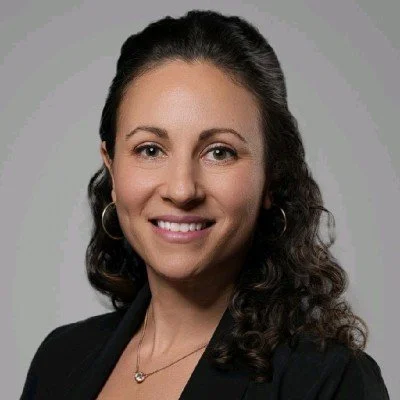
Danielle Goldberg is Managing Director of Community Alliance for Child Rights at UNICEF USA, where she has served since January 2016. In this role, she has been responsible for the development, launch, evaluation and expansion of UNICEF’s Child Friendly Cities Initiative (CFCI) in the U.S., as well as UNICEF USA’s wider strategy to engage municipalities to prioritize the needs, rights and voices of children and youth in local decision making.
Danielle is a training and facilitation specialist, senior program director, and certified executive coach with over 20 years of domestic and global experience working with various non-profit organizations, U.S. agencies, foreign governments and UN entities to design, manage and evaluate engaging programs, advocacy initiatives and multi-sectoral partnerships that promote children's rights, gender equality, inclusive development, international peace-building and global citizenship.
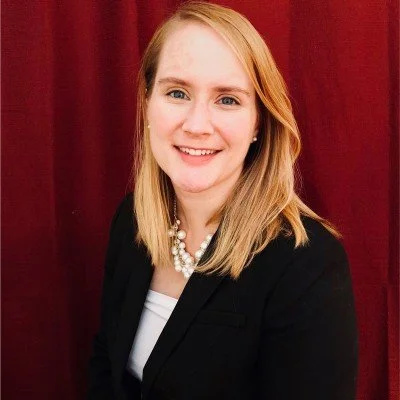
Dr. Anne Day Leong is the Senior Director of Research, Evaluation, and Research Partnerships at UNICEF USA. In her role she leads UNICEF USA’s research and evaluation portfolio which integrates research into UNICEF USA work and policy advocacy.
Prior to joining UNICEF USA, she served in the US Federal Government where she led systems level research and policy evaluations focused on maternal and child health, and vulnerable children. Dr. Leong’s research focuses on policy level solutions for children and families, with specific expertise on designing monitoring and evaluation system to drive impactful evidence-based change.
Learn more about the Child Friendly Cities Initiative.