Inside the Art of Focus Groups with Melissa Siegel Barrios
In this episode, we dive deep into the intricacies of conducting effective focus groups and interviews with Melissa Siegel Barrios of MSB Consulting.
As an expert evaluator with extensive experience in violence prevention and collaboration with various organizations, Melissa shares actionable insights on crafting compelling interview questions, creating a welcoming space, and dealing with unexpected dynamics during focus groups.
We also explore best practices for analyzing qualitative data to inform strategy and program design.
Additionally, Melissa offers valuable advice on building trust within communities, ensuring accessibility, and the importance of genuine representation.
00:00 Introduction & Best Practices for Conducting Focus Groups
01:24 Real-Life Examples and Challenges in Focus Groups
03:40 Key Recommendations for Quality Interviews
08:43 Differences Between Interviews and Focus Groups
14:20 Analyzing Qualitative Data: Coding and Themes
18:14 Ensuring Inclusivity and Accessibility in Research
24:53 Conclusion and Contact Information
-
Ep 42: April Guest - Melissa Siegel Barrios
How do you actually run a focus group that people want to show up for and how do you make sense of what they say when it's all over? I. What makes a good interview question and how do you know if you're really listening? To answer these questions, Roger and I sat down today with Melissa Siegel Barrios of MSB Consulting to have a conversation on the nuts and bolts of doing interviews and focus groups.
Melissa is an expert evaluator and consultant who I think brings a really unique perspective on qualitative evaluation work. She has expertise in violence prevention and has worked on numerous state and federal contracts. In collaboration with HBCUs, nonprofits, public sector orgs, and the CDC. So we'll talk about best practices on this episode for data collection, how to create a welcoming space and encourage participation in your focus groups.
What to do when things maybe don't go the way you think they will, how to ask good questions and managing some of those group dynamics with care. Then we'll shift also to have a conversation about what happens after that conversation. How to transcribe code and analyze qualitative data in ways that inform strategy.
Storytelling and program design. So if you're looking for more information, also for interviews and focus groups. Also, I do encourage you to check out our blog where I just posted a new article that talks about strategies for running strong focus groups, including recommendations for some technology and recording devices that you might want to use for the interviews.
So I encourage you to check that out at www.commongooddata.com/blog. But without further ado, let's dive into our conversation with Melissa.
Melissa Siegel Barrios: I was working on a project where we were interviewing survivors of interpersonal violence and talking about how they used activism to heal from their experiences. And so going into that being a survivor myself, that was something I'm really passionate about.
But it was really an opportunity for me to understand interviews could really be a conversation with a guide. And so using the guide to stay on track with, making sure I was asking the questions that we wanted to know and being neutral in that way. But really my tone and demeanor being more of a conversation made it very comfortable and easy to dive into.
And I've taken that into my work today. And then the other story I wanna share is more recently I did a focus group with some students at a college for a program around academic and professional growth. And we were using strengths, weaknesses, opportunities and threats, the SWOT analysis as a way to guide a focus group.
And so in my section I only had a handful of students and they were not very talkative and and they didn't really have a lot to share. And so I took a minute and was like, okay, let's try to talk about some of the other sections, even though that's not really what we're focusing on here. And that got them to open up and really engage in the conversation a little more. And then we came back around to the questions that we had for our section, and I think that worked pretty well to get some information. They still weren't the most talkative group in the world, but we got some good information from them. So that was really helpful.
Roger Suclupe: Wow. SWOT, you took me back to grad school. Excellent. We appreciate you sharing that. Having worked with middle schoolers and high schoolers in group context I resonate with that. You come in prepared with okay, this is gonna take about 30 minutes and then. It's five minutes in and you're like, I asked all the questions. Nobody participated. I felt that when you said that. And yeah. In the interview process as you mentioned, there are factors that we think as folks who are going in doing focus groups, we think we've captured everything. But there's a lot that we miss. For folks who are new to conducting or doing interviews,
Melissa Siegel Barrios: Yeah.
Roger Suclupe: what would you recommend that they ensure what they do?
What would you recommend that they do to ensure a quality interview in the context of program evaluation?
Melissa Siegel Barrios: That's a great question. I think the first thing is really focusing on what it is you wanna know from the interview. And a lot of times with program evaluation, we talk about outcomes. And really outcomes is just a way of saying what's the impact you wanna see from your program? And I think focusing there is a really good way to figure out what it is you wanna know from participants.
And so I often focus on the long term outcomes and then scale it back. What are the things that we are gonna see in the shorter term to know that we're making progress? And so a lot of the projects I work on are violence prevention focus, so they use risks and protective factors, which I think is really helpful.
And that's like individual relationship, community and societal conditions that make it more or less likely that someone will perpetrate violence. And so to connect back to creating like a guide for an interview, I try to form those into questions, right? What are the things that we wanna know? And I really try to focus on also figuring out what is the topic and taking time for myself if it's not something I'm super familiar with, to research it and get to know the topic more so that I can. Bond authentically in the conversations. Another thing I think is really important is getting people who are part of that community to review your guide and give input on your questions. And one of the projects that I work on, we have student interns, which is really helpful 'cause they're part of the program, but they're also interns.
So sometimes they're creating the tools themselves. But if. I'm creating the tools, I'm making sure to get their input and feedback. And so I think that's a really important piece. The other thing that I think I do a lot is that I have a big introduction that I do at the beginning of my interviews and I always joke at the beginning of an interview, okay, you're just gonna have to sit through my launch spiel for a little bit. But it really helps. Them to get to know what the purpose is and provide clarity on the ways that we're gonna protect their data, for example, which might be something that they are wondering but might not ask.
Roger Suclupe: Language and presentation is very important when presenting this to folks who are gonna be participants, right? What we say and how we say it what kind of your words we use, right? So I guess part of what I've learned throughout the years is. At times simplicity is the best form of introduction.
Rather than utilizing, research jargon or just things that may at times goes over my head perhaps. Then I need to make sure that I play to my audience in a way. And that's not a bad thing, it's just sure that the connection is there. And
I appreciate you, letting us know about how you go into the beginning parts of the processes by letting everybody know, all right, you're gonna have to listen to this, but we're gonna get through it and we're gonna have fun doing this.
Drew Reynolds: Yeah. I really like the way you talked about how in each of the examples you gave, even from the stories at the top of this conversation, you really focused on immediately responding to the environment you're in. And I think that can be scary for folks who maybe have less experience doing it.
We want to come in with a script. With everything figured out. We've got our sets of questions, but then stuff happens. You're working with middle schoolers and the questions are done in five minutes. You're having a conversation with someone around a very sensitive topic, like inter partner violence, for example, and maybe the conversation goes in a direction that you don't expect.
In fact, that's the point of interviews in interview in focus groups is that a lot of times you gather information. That, that were not directed by your questions. So I really appreciate the way you brought that out. And also the way that you've just lived into that.
There's a sort of expectation we sometimes put on ourselves that things have to be perfect in line altogether buttoned up. But there's something almost inherently opposite of that occurs in focus groups and interviews,
Melissa Siegel Barrios: yeah.
Roger Suclupe: Yeah. Real
Drew Reynolds: Yeah.
Roger Suclupe: I wanted to just thank you for mentioning is the fact that sure that there's representation right? With folks who are. Reviewing the questions or reviewing the interview process. So a community advisory board that consists of individuals who can guide you,
Melissa Siegel Barrios: Yes.
Roger Suclupe: as a researcher, as somebody who is conducting focus groups. because ultimately I feel like for me, when I'm doing this type of work I'm not the expert. I just know, I know a few things. I've been part of a few things and I'm trying to piece everything together. ultimately the experts should be the folks on the community advisory board to guide you, right?
And that involves community members, whether it's, students at a high school or college, a students or adults, adult age students whatever the population is that you are working with, making sure that there's representation and inclu inclusivity to help guide as interviewers, as folks who are conducting focus groups.
Melissa Siegel Barrios: I appreciate that. I really think that same thing about them really being the experts of their own stories and experiences. And so I see my role as like just a conduit to gather that information and then share it share it out for them. And provide a platform for them.
Drew Reynolds: We've been talking in this conversation about skill sets for interviews and focus groups. And I'm wondering if you can distinguish, I'm flipping our, conver our script a little bit here, but to talk about what as the biggest differences between interviews and focus groups to prepare people like, if somebody hasn't done either one before, what are the things you want to be thinking about when you're planning interviews versus focus groups?
Melissa Siegel Barrios: Yeah, that's a really good point. I think that there are benefits to both and challenges with both options. And so thinking about interviews you're really able to get one person's perspective really deeply. And so if you want to really dive into a particular person's experience or story, I think that's a really good opportunity to do that. And then in focus groups, you're able to get a group dynamic of people being able to bring up things that others can build off of or share. It prompts something for them that they wouldn't have thought of on their own. But then you also have the challenge of sometimes that creates group think, right?
And people can't get into a space where they, they can't think on their own or they don't want to share something that feels different than what's been shared in the space. And having, practice with facilitation, whether that's. And I think a lot of times people who do program work have facilitation skills in other ways and don't realize that they're translatable.
And so the same way that you would translate, a program, excuse me, facilitate a program, you that same thing in a focus group setting to make sure that everyone has a voice in the space. So I think those are some of the things to consider when deciding on which one to use. I tend to use a mix of both in my work, so sometimes interviews are the best fit and sometimes focus groups are the best fit. And sometimes it's a combination of both.
Roger Suclupe: Yeah, I guess a lot of it really depends on what it is what the question is, what's the overarching question and then which particular style would help best answer that particular question that I. The overarching question that you're hoping to answer, you're hoping that is answered by the information gathered yeah.
Melissa Siegel Barrios: Absolutely. Yeah. 'cause if you want, a one person's deep experience, then you're not gonna want to have a focus group. But if you want, more of a whole group perspective on a program, for example, and how effective it was, then that might be a better fit.
Roger Suclupe: And you mentioned something interesting in regards to focus groups and just group work in general. The concept of this group think
Being very cautious of how questions are asked or how a statement is presented because it could I guess one of the challenges in doing, some of the work is, Planting seeds that aren't there. And then that may sprout a different type of response or a different type of input that is that is gathered, so that's definitely a challenge.
Drew Reynolds: It can be tricky. I had an experience doing focus groups and it was for a program that was like a community health worker kind of program, and it was community health workers going out into the community and then the community members were responding. And this was a Spanish language one and which was a fun adventure for me as a non-native speaker, but.
It's somewhat conversant in Spanish. But as we were doing it, it was interesting to see how one person would share their experience with something and it would almost like a light bulb would go off in somebody else's, and like sometimes when you're in interview sessions, almost sometimes people can feel a little bit like I.
I don't know what to say here, or am I saying, answering this correctly? And I found particularly in community settings, that focus group can be really helpful. But at the same time, in that same interview, there were different community members coming with different perspectives. And there was one where almost an argument came out.
It wasn't negative, it wasn't like there was nothing that was like inappropriate or anything like about that. And people were respectful, but there were some very clear disagreements about like a vision for the community and for this program. So it was very interesting to try and navigate that dynamic a little bit.
And sometimes it can be hard. I'm always a person that likes to let things go, but it's been challenge for me to sometimes step in and say, okay, we have to redirect the conversation here.
Melissa Siegel Barrios: Absolutely. I'll sometimes, with groups like that where I have a feeling there might be like a getting us off track in some way, I'll add that into that introductory section and just be like, might have to say, we are gonna pause this conversation and come back a little later if we have time so that we can get through and talk about all the things.
Roger Suclupe: So Melissa, in focus groups, we just talked about some of the unique challenges that are present right in regards to this qualitative research. So in your opinion, what makes for a successful focus group? What would you recommend practitioners do to improve their focus group skills?
Melissa Siegel Barrios: Yeah, absolutely. I think one of the things is the size of the group is really important. I tend to make my focus groups about five to eight participants. I find if you have much larger groups, you don't. Really have the opportunity to hear everyone's perspectives. And so that can be really challenging.
I also find that it's helpful if you really spend some time practicing those facilitation skills. So if it's not something that you've done before, finding ways to practice that. Trainings are great, but I think when it comes to facilitation practice is really where you get, the ability to really react and respond to the different ways that conversations can go and flow. And so I think that's really important. I also think that taking time to, really think about the group dynamics and thinking about if there's a need to do things like set norms create icebreakers, doing some of those types of things can help to make sure that you have a productive conversation and that everybody feels safe in the space to share.
So those are some of the things that I think about with focus groups, especially.
Roger Suclupe: Awesome.
Drew Reynolds: Say those norms can be so critical upfront and sometimes prevent things, challenges that you may experience later on. So once you've done the focus groups, I think a huge challenge for folks is to think through, okay, what do you do with it? You've got this interview.
Maybe you've recorded or you've taken notes. How do you make sense and analyze that? In qualitative researchers we often use the term coding to talk about the analysis. So can you talk a little bit about what coding is and how maybe you approach your analysis in your work?
Melissa Siegel Barrios: Sure. I think one of the things I wanna start by saying is that I always caution people to not collect qualitative data unless they have the capacity to analyze it. Because I think that we do a disservice to communities when we collect information, especially stories from. People and their personal experiences and then do nothing with it. So that's one of the things I wanted to just start with. I often explain coding especially to like my interns when I'm training them as like themes and patterns as well as identifying any standout data. When I start an analysis process, I try to really take in the data in a few different formats. So if there's a recording, for example, and I either wasn't a part of it, or it has been a while, or I just need a reminder, I'll start by just listening to it and taking some time to like really, reflect on what I'm hearing without trying to jump into analysis. Although brains always go there, but I try to at least.
Takes some time to just listen. And then I'll also do the same thing with the transcripts. I'll read over the written transcripts and take the time to think about some initial things that are popping up for me without formally coding. When I used to hand code, I would lay out all transcripts across my dining room table and a bunch of.
Different highlighter colors and highlight all sorts of different things and bracket off pa passages that once I started to notice those themes and patterns, and I do think that first review of like just getting a sense of the data really helps you'll start to see the patterns come up. And I tell my interns a lot, trust your gut.
If something is telling you that this is something that you're seeing, look for it in the data and then confirm that. And I think that's really important, especially with young people who are learning how to do this. Nowadays I use, software like Deduce to code but it's the same concept, right?
I'm taking the data and I'm identifying the passages that really connect back to a theme that I've noticed or a pattern that I saw, or something that really stands out to me as important to recognize, even if it's different from what else is in the data. And then when I go back through and identify and read over everything, I'll revisit it and see if there are things that have come up and really make sure that I'm taking the time to reflect the stories as authentically and accurately as possible.
Roger Suclupe: I think that's such an important process for folks to consider and to be patient right with themselves and with their team. When it comes to coding, when it comes to listening to recordings or even reading transcripts. I love how you mentioned that back in the day you had, I. You a dining room table full of paper and highlighters and markers and writings that only you could understand, right?
So if anybody else walked in, it would be so foreign to them.
Melissa Siegel Barrios: Yes. But that just shows the the passion you have from making sure that you capture what was shared with you accurately. And I think
Roger Suclupe: honors the the participants that honors the folks who. Are willing to share their narratives with us, right?
So share their experiences with us.
If we don't, we don't do it that way, then it is a dishonor, it is disrespectful to the information that was just given to us, right? So
It's . Been handed over to us and I love how you said be prepared don't just do it and then hold onto this information and do nothing with it.
Melissa Siegel Barrios: Yeah.
Roger Suclupe: so yeah I think these are very incredible tips for folks
Thank Thank you. Who are starting, or even for students who are looking into research and just conducting focus groups and conducting interviews how to just be patient with the process. Melissa, you bring a strong emphasis on finding different ways to include unique voices. Can you share some of the ways you work to make this happen in your work?
Melissa Siegel Barrios: Sure. I really try to focus on working with the agency or the client that I'm working with to help explore with them what are the different things that you want to know, and who are the people who are involved in your programming? Who are the people who are invested in your programming or have you know, an interest in knowing the success.
The work and the challenges. And then who are the people who are involved in making changes to programming? Because a lot of times what comes up in program evaluation is feedback for shifts and changes that need to be made to make a program more effective. And so when we take the time to assess who all those people are it's really important that we make space for making sure that all of those people are included in some way in the process. So sometimes that means that they're directly participating in focus groups and interviews, or sometimes they're involved in different stages of creating the design of the evaluation or giving feedback on what we're collecting or after the fact giving feedback or receiving the information and then.
Being able to ask questions and follow up. So those are some of the ways that I try to make sure that we incorporate different voices. I think that it's really important that we make spaces accessible. You were talking earlier about, Spanish language focus groups. And so if that's a barrier that's something that we need to work on and make sure is accessible for people who do speak Spanish, to be in the space and be able to. Communicate in their most comfortable language. Other accommodations for people who have other accessibility needs and making sure that we're making space for.
Roger Suclupe: Speaking of Spanish real quick, drew, I will always highlight your Spanish speaking skills. Drew speaks way better Spanish than I speak Spanish, so
Drew Reynolds: That's not true.
Roger Suclupe: that. I fumble my words. I say the wrong words, I get 'em backwards. But it as, as a practitioner who is also dabbling in some research I have found, and this is not new information, this isn't something that we don't know about. There isn't a lot of research when it comes to. Latino community or Spanish speaking communities.
Melissa Siegel Barrios: Yeah.
Roger Suclupe: I, I really hope is to become more involved in how to have that in order to get voices and information out there on how to best support speaking communities, Latino communities, it's health, mental wellness, resources. Childcare, work opportunities, social capital, like all of that.
There's still, it's 2025 and we still don't have an infrastructure to support through focus groups or through interviews. And I'm hoping that we can get creative right as helping professionals who are as well. We can get creative on how to. And this is there's other languages in other communities as well, since my focus is with the Latino community and Spanish speaking communities saying this in that context.
Melissa Siegel Barrios: Yeah, absolutely. And there's a lot of distrust from what I've seen with the Latino community and research. And a. I also have been learning Spanish for 15 years and my partner's from Guatemala and we speak Spanish with our kids, but now my kids are to the point where they correct my Spanish, so that's fun. But it's something that I've been working on as well, is trying to. Band to do more of that facilitation in Spanish even though it is a challenge for me but it's been a really good learning experience and I think really building trust with that community is really important. Working with people who already have established trust. And building relationship with them and then building relationship with the community themselves is something that I have found to be really important. 'cause I think that's a big barrier to why a lot of that research doesn't exist as well, in addition to just, lack of focus on that community.
Drew Reynolds: Yeah. Moments when. There, there's two things. One is that we always have to like, revisit this challenge because even with the best intentions, we still miss things as researchers. And I was giving a focus group recently and part of the exercise of the post group involved writing. And when I arrived it was at the group of youth.
One of the individuals had physical limitation with his arms. And so the actual writing activity was a little bit more challenging. Now, he was actually able to do it, but it made me think through that again, sometimes you might make an assumption, Hey, let's just write something on a piece of paper and we'll go through it.
But always thinking, okay, really what, who is coming to this focus group and are they gonna be able to have that accessible? And I was working on another proposal too that was wanting to do some work with I. That was focusing on disability specifically. And so we thought like maybe we would need a, like an a ASL interpreter there to assist.
And then in another case it's, I had so many come up in the last month, which is why it's been, it's just been on my mind so much. It was a conversation around research around substance use disorder. And one of the challenges is that you have folks who are in recovery. And a lot of the research is on folks who are in recovery, who are not not incarcerated, who are not in prison.
But the problem is that there's a lot of back and forth in that, in the more. Intense areas of that community between those two. And sometimes the voices of those who are not out in, in the world, I guess are sometimes missed. And I'm not saying go do research in prisons 'cause there's a lot of there.
You have to get a good r rrb and do a lot of things to make sure that you're doing things ethically and responsibly there. But it has made me think that sometimes, we pattern our normal lives around certain expectations around what a focus group is. But then when you walk in, sometimes those assumptions are challenged.
Melissa Siegel Barrios: Yeah. And even accessibility. There's like all these like lists of things that you should do, but the reality is like you really need to respond to the people who are in the space because their requests for accessibility might look very different than what some list, told us we should do to be accessible. and so that's something that I've been grappling with, even in presentations. Like the idea of having so focused on like text size and then also like alt text on photos. But did we take a minute to access, like who's in the gonna be in the space and what their actual accessibility requests are?
. And even consent forms, we often don't think about, like someone needs to have a certain level of reading comprehension to read the consent form to be able to sign, to say that they're, willing to participate. I think that's a good point around reading comprehension too.
Roger Suclupe: Lots of stuff to think about.
Melissa Siegel Barrios: Yes.
Roger Suclupe: at the point of our interview, my favorite part of our interview. The beginning in all of this was pretty interesting. Cool, and incredible. So thanks for sharing that. But Drew knows that I love bringing in eighties and nineties pop culture into our conversation. of this group type of of work has me thinking about groups in general from eighties and nineties. And so my question is, and I'll start us off so I'll share, my concept here, but throughout and nineties, culture history, there have been bunch of, a lot of groups in movies and TV shows.
And and I'm thinking of what group of folks would you. Love to have a focus group with. And and then what kind, what conversation would that be? Like what would that conversation look like? I'm gonna go back to the eighties with I would love to have a focus group with the Lost Boys. I. From the mo from the movie, the Lost Boys. I don't know what question I would ask but I would be very interested to get that group of individuals. And there are two sets, so I would actually go with the Coreys and their group, try to, trying to capture, trying to kill the Lost Boys.
Then I would go with the Lost Boys. So yeah that's my. That's my answer to my question
Melissa Siegel Barrios: That's awesome.
Drew Reynolds: Oh man. Go ahead.
Roger Suclupe: I gotcha there.
Drew Reynolds: Yeah.
Melissa Siegel Barrios: I would say boy bands
Roger Suclupe: Oh.
Melissa Siegel Barrios: boy bands from the nineties. So like Backstreet Boys, Hanson, all of them. And ask them about what music looked like then versus like how music is now and like how they've seen that shift and change and some of them are still in the industry yeah, I think that
Roger Suclupe: Oh wow. So like maybe a focus group with, you could go back to the future, right? I'm using another eighties. You could go back to when they first started as a boy band and then interview them now and have a comparison. Whoa.
Melissa Siegel Barrios: That would be really cool. Yeah.
Drew Reynolds: Oh man, I feel like. I'll give, I'm gonna give two answers to this. First is I would love to interview, I'm gonna say interview instead of focus group. I would love to interview John Candy, who I think is just an absolutely hysterical actor. And I love John candy in a number of different movies.
So that would be like a super fun thing to do. Maybe like with the cast of Blues Brothers. I think that would be like just awesome. But another way I might answer this. I was at a school fundraiser lately and they had a nineties cover band come to play at the fundraiser. I. And it was at that moment that I realized that I am old.
This is we were not we're now remembering things like they were, they're gone. And they we're like just bringing them back from the past. But I would love to have a focus group with like other millennial Gen X people to just talk about music from the nineties and what was your experience of it?
What first concert did you go to? So maybe we'll say that. Yeah. For folks who are watching this on YouTube. Drop it in the comments. What was the first concert you went to and why? That would be a fun question to ask.
Roger Suclupe: So not to make us even sadder, because I'm feeling really old here, but I saw this somewhere. I, me, it's a meme. Y'all probably seen it too, but it basically, it was like 1990 was 35 years ago. If you think about it in that context. So I was in high school. All right. And then. 50 to 1990 was 35 in between.
So if you think about that, you're like, oh my goodness, like that is that, that, that halted me. I was like, Ugh.
Melissa Siegel Barrios: It's
Drew Reynolds: Oh man. Great conversation about music and culture of the nineties. Melissa, thank you so much for joining us today. For folks who are interested in getting to know you, learning about your, the evaluation work that you do how can they get in touch with you?
Melissa Siegel Barrios: Yeah, I would say visit my website. It's msp consulting.org. And I have information on there about the different type of services that I offer as well as contact information.
Drew Reynolds: Wonderful. Wonderful. Melissa Siegel, thank you so much for joining us today.
Melissa Siegel Barrios: Thank you so much for having me.
Roger Suclupe: Yeah, thanks.
Our Guest
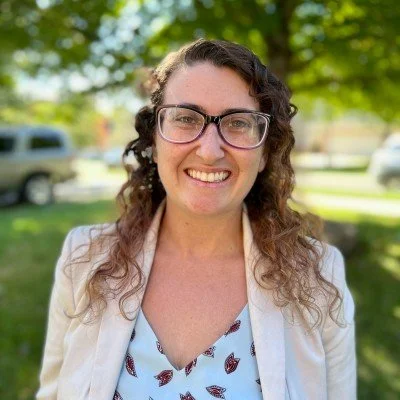
Melissa Siegel Barrios, founder of MSB Consulting, LLC, is a trained evaluator with a track record of successful evaluation contracts, including: a project focused on supporting North Carolina Historically Black Colleges and Universities with improving sexual assault response and prevention, a community readiness assessment project, a statewide awareness campaign evaluation project, multiple teen dating violence prevention evaluations, DELTA Impact and Rape Prevention Education Centers for Disease Control and Prevention funded projects evaluating efforts of violence preventionists in North Carolina, and evaluation of a unique professional and academic development program. Melissa grew up in North Carolina and still calls the state home, where she and her partner Elver live with their 8-year-old daughter Xitlali and 4-year-old twin girls, Luna and Nova. Her work and her daughters keep her very busy, but she always makes time for Harry Potter and fantasy fiction breaks!