Tracking Impact, Transforming Care: A Conversation with Carolyn Allison of CCHC
In this episode of the Common Good Data Podcast, we’re joined by Carolyn Allison, CEO of Charlotte Community Health Clinic, to explore what it really means to care for the health of a community. Together with co-host Roger Suclupe, we discuss:
How more than 100,000 Mecklenburg County adults live without health insurance
The innovative ways Charlotte Community Health Clinic expands access to care, including integrated behavioral health, dental services, and partnerships with reentry programs and immigrant-serving organizations
How data and needs assessments guide service expansion and decision-making
The vital role of community health workers and health literacy in advancing equity
A moving story about how dental care changed one patient’s confidence and future
Whether you work in healthcare, the nonprofit sector, or simply care about building healthier communities, this is a conversation you won’t want to miss.
-
Drew Reynolds
Hi everyone, and welcome back to the Common Good Data podcast, where we explore how data and storytelling can drive stronger programs and healthier communities. My name is Drew Reynolds, and it's good to be back with you. We took a little bit of a breather this summer, a little break, so we're back for our fall podcast season. In Mecklenburg County, more than 100,000 adults live without health insurance, and that statistic alone really raises big questions about equity access and the kinds of systems that we build to care for one another and to help us unpack some of these questions. Roger and I are joined by Carolyn Allison, CEO of the Charlotte community health clinic. Carolyn leads one of Charlotte's federally qualified health centers, where they offer primary care, behavioral health and dental services to 1000s of patients, many of whom are uninsured or navigating complex systems or new to the US healthcare model. Altogether. It's a really great conversation. I'm so glad that we were able to bring Carolyn on in our conversation together. We talk about everything from health literacy to partnerships with community organizations, from returning citizens and refugee families to behavioral health services embedded right in the exam room. And of course, we always talk about data, so how it's used to understand needs, expand services and make decisions that truly reflect the community. You'll also hear some powerful stories in this episode, like a patient whose access to dental care really changed not just their health but their job prospects, confidence and connection to community, which I think really speaks to the power of the work of community health centers. So it's a rich and thoughtful conversation about access to care and what it means to really show up for people. So let's go ahead and dive on in.
Carolyn Allison, welcome to the Common Good Data podcast. Thank you for having me awesome. So let's get started. According to the most recent Mecklenburg County Health Assessment, approximately well over 100,000 adults across the county do not have access to health insurance. So for our listeners, can you talk a little bit about the health challenges that individual without insurance face everyday?
Carolyn Allison
Yes, it's very significant. First of all, most individuals know that as it relates to the greatest expense for families and individuals, health care is one of your greatest expenses, and so when you don't have insurance, typically, you have to absorb the financial burden for your care. And the beauty is, is that on the flip side, there are some free clinics, community health centers like ours that can open up access to care because we have what's called a discounted program, or some, some of our patients know it as a sliding fee scale, and that enables individuals have access to care at a reasonable amount of the cost. We also have program for medications, because it's not going to help you if you don't have access to care, if you have access to care and not medications. So we have a discounted program that we offer through our pharmacy, and we can give reduce, you know, cause medications, and these are state of the art medications to help you with your care. The One of the challenges in this environment, from a healthcare standpoint, is giving the message out to the community of individuals who do not have health insurance coverage. The healthcare system is very complex to navigate, and so I think that that's one of the big reasons why individuals end up in the emergency room and use it as their healthcare home.
Roger Suclupe
You know, thanks for sharing that, Carolyn, you're absolutely right. It's and Drew, and I've talked about this with other guests as well, about having access to information and then having access to accurate information. And there's a big difference between between between that, right? So you can have access to information, but if it's not accurate, then I'm concerned about the type of care an individual is receiving if that information is not accurate, right? So it's access to accurate information. I can't remember where I was driving. I was driving somewhere. I know it was on the interstate. I honestly can't remember if it was North Carolina or another state, but they had billboards that were, like, infographic, billboards that explain, like, if this, then go to your primary health care physician. If this, then you go to the ER, right? And so it's one of those. It was really an interesting marketing tool, you know, visually that people can see, like, Okay, if this, then this. And so I feel like as basic or as simplistic as that was, it really caught my attention, and it made me think like, Oh, wow. Using these figurines to help somebody understand where to go and what to do when this happens was really, I thought was really, really wise. And so it's really about that access to accurate information. So that tails into my question about information, right, and how accurate it is for community members. And so can you tell us a bit about Charlotte Community Health Clinic, who you serve, what makes you you know your model unique and and how you think about community care in regards to providing folks with accurate information,
Carolyn Allison
that's excellent. And I think about health literacy for all of us. You know when you speak about accurate information good, but answering your question about our Community Health Center, we are what's called a federally qualified health center, or community health center. We started back in 2001 as a free clinic, actually, and the board directors and the leadership at that time, years later, around 2014 decided to apply for a federal grant to HRSA Health Resources and Services Administration at the federal government. When you apply for that grant and you're awarded that grant as a medical practice, there are three core requirements that go along with that. One is, you must provide primary care services. Second, you must provide. Behavioral health services. And third, you must provide dental services. So we are very unique community health centers are because we have those three core services that we must provide. We also, and this is a federal grant that we receive. There's also about 93 requirements that we have to be in compliance with. So quality of care is very important for community health centers, and we must report back to the grand tour every year in North Carolina, there's about 43 community health centers. Across the country, there's about 1500 some are very small, maybe one or two sites. Some can be as large as small community hospitals with multiple sites, like up to 20 plus sites. So we vary a lot with my health center. When we started, we had two locations, one at the university, what we call the university area, and we're in the Novant medical Plaza building, and the second site, we're in the goodwill opportunity campus. A lot of people think about Goodwill as, wait a minute, they sell clothes and stuff. Well, here in Charlotte, goodwill, they have a 160,000 square feet facility. Part of it is to sell, is retail, but the other section houses several nonprofits, and we are the only medical and dental practice there. The beauty is, is that the other nonprofits, we actually work together and collaborate. We were the first ones in Mecklenburg County in order to participate in what's called the formerly incarcerated Transitions Program, or sure for fit. It's a model that came out of San Francisco, and a physician from Chapel Hill actually went out there to learn about this model, brought it back and introduced it to me. And because we are housed in that goodwill building, there's actually an organization that helps individuals who come out of incarceration and really get back into the community. We call that re entry program, and so we were able to partner with them and connect them to primary care, behavioral health and dental services, especially if you have a chronic disease, when you leave the prison system, you may not receive the proper amount of medication, and you don't know you're not connected to what we call medical home, a doctor's office, etc. So we were able to bridge that gap with this bid program. Part of our requirement also is that we serve the homeless. We provide clinical services to the homeless or the unhoused, and we partner with the organization here in town called roof above, and we have two full time registered nurses at their sites. And so that also creates another bridge between an organization that serves individuals who are unhoused, and connecting them with primary care, dental and behavioral health services. Part of what we do too, is we have integrated our behavioral health services into primary care. And what that means is that my licensed clinical social workers. I had to put a plug in there with our clinicians, and that's been wonderful, because if I come in as a patient, and I'm in the exam room with a provider, and I may be going through a very anxious time right now due to my son or I lost my job, and if they assess that, they could say, Carolyn, would you like to speak with someone? And I may say yeah, and or down here? I say, yes, my family's from New England, so I say, yeah. Instead of something that happens, the social worker will come in and will meet with me instead, especially if I'm uninsured, going back to the first question, I may have to use several forms of transportation to get to the clinical practice, or have a family member take time off to get me here, whereas I'm here in what we call the point of service. I'm in the exam room, so if I can see the licensed clinical social worker at the same time I see the provider, then that's wonderful, because now you're taking care of me. It's a very holistic approach, and we've seen improvements on the clinical side of our providers who love it, and also with our patients who also loved it. We also partner with other organizations. Community health centers are required to have multiple partnerships because we can't do it all. So we partnership with an after school program that serves immigrants and refugees and also an immigration attorney. We came together and created one space at the Resource Center in East Charlotte. We call it Charlotte is home center. So when you come into this community, if you need an attorney, health care or an app, school programming, we're all in the same space. So this is community health centers. We are very community driven, as you can tell. And these are, these are just some of the things that we do. So I'll stop
Carolyn Allison
there, because I can keep going on. No,
Roger Suclupe
this is great. He gave us a lot of good, accurate information, but some of the things I appreciate about what you just shared with us is the three fold approach that you mentioned as a center providing healthcare, so access to healthcare, embedding that with behavioral health, which, again, when you improve someone's health, you also improve their mental wellness, and vice versa, right? And health, health could be, you improve somebody's diabetes, right? You get them information about how to how to navigate diabetes that impacts their mental wellness as well, right? Dental Care as well. So, you know, something that folks don't think about, I don't know how physically I would feel if I have a, you know, a toothache, or I need a, you know, a root canal, or something going on with my teeth, it's also going to impact the. I think, and I feel emotionally, it just drains you. So I love that y'all are doing that. And then secondly, I think you had mentioned 92 or 96 specific markers or or things that y'all have to address through, through funding. That's a lot, that's a lot to navigate. And I'm sure, I'm sure drew will get into some of that with with data, and how that drives, you know, information that comes in and goes out. And then lastly, the, you know, this holistic approach, integrative approach to care, which involves, of course, incredible plug and for licensed clinical social workers to be embedded in those spaces. So I love it. Love what y'all do. Thank you. You
Drew Reynolds
know one, one thing that comes to mind for me as we're having this conversation, you mentioned the Charlotte is home project that you all are working on, and Rogers talking about access to information, and I'm curious about what you're seeing when you're working with communities. Maybe they lack insurance, maybe they lack information about the healthcare system. Maybe the healthcare system where they're from is different than it is here. Walk into a doctor's office and be treated, whereas the United States, we have a very unique healthcare system here, as you know, it's from the rest of the world. So can you talk a little bit about what have you learned as a practice in helping the patients who might not have an understanding of the American healthcare system and
Carolyn Allison
how to navigate that? And it's obviously, it's multi layered. We're very intentional about the staff that we hire at our front desk office and all of our sites we have now. We have five locations, three satellites and two main offices. Just about all of our front desk staff are Latino, Spanish speaking. The reason being is because 6000 people we served last year, 60% of them are Latino. And so we have a very international population that comes from many different countries, not only South Central America, but also other countries too. Our staff makeup is very similar, not only at the front desk, but we have individuals coming who work here, from Vietnam, from many different countries, from India. So it's very, very multicultural, and they help us to understand, you know, the delivery of care, and begin to remove some of those barriers having that type of communications and also staffing pattern, to be very intentional about it, I think is important. We also through covid, it helped all of us, not just health centers, but I think the healthcare industry, to get out into community. And once we started to get out into community, we realized we had to develop a had to develop a department, which we call Outreach and Enrollment Department. So we have community health workers. And the community health workers, they are, they represent our community, and there are many of them are international too. Sot we have a lot of learnings from that. We make sure that the information we provide is in several different languages. We also have access to what's called language line, and so that's a service that can provide multiple languages. We use an iPad that's on a portable stand, so that when a patient comes in and needs an interpreter, then they can see the individual and interact with them instead of being on the phone. And we're trying to, over time, become more personalized. Some of our providers are bilingual, too, so making sure that your staff, not only support staff, but providers, you know, represent the community, but also the international community, really, I think, helps to benefit us greatly, and in just, you know, realizing that we're here to serve. You know this is a service, and keeping that in mind, which for health centers, for nonprofits, we're very mission driven, and keeping that in the forefront.
Roger Suclupe
I love that extra touch of care that you just mentioned, making sure that folks not only feel comfortable physically if they're coming in with an ailment, but also just feel comfortable and connected to someone. Even in spaces of medical care, there is a level of vulnerability that folks have to cross over, right? And you can't expect someone to be fully vulnerable if there's not connection. And so I definitely agree with you that extra level of care is so important and needed
Carolyn Allison
Exactly, and that can help the provider to really get to the root cause of what they're coming in for.
Drew Reynolds
going to ask you, you mentioned the term community health worker?
Carolyn Allison
for those who don't know an individual that is trained to provide information to the community and to be that connection for our practice in the community. They're involved in multiple health fairs, and so they'll go out to various health fairs to provide information. They also work with our partners. They also work internally with our providers in helping to link individuals to care. I talked about the Outreach and Enrollment Department. One of the individuals in there, she is a patient navigator, and what that means is that she'll sit down with individuals and determine what kind of insurance, you know, they may qualify for. So we have the Affordable Care Act, or most people call it Obamacare, and some individuals may not fully understand it. She'll walk them through it. Here in North Carolina, we are. Went through Medicaid expansion over almost two years ago, and so she will sit down and help individuals to enroll in Medicaid. And that's huge to be able to have that personal touch and education. We went the next step further with our community health workers, in which we train them to take blood pressures, and also we've been able to, through a brand, get blood pressure monitors. So when they go out into the community, they can take a blood pressure. If somebody has high blood pressure, they are trained to educate the individuals, and if the individual wants, you know monitored, they can actually give it to them. And I've witnessed that by being at one of these health fairs, and I was blown away, even though I knew about it, just to see it in action, a couple of ladies who just came by to get some free trinkets from a health fair ended up, you know, being recognizing that, oh, I have high blood pressure. And also, you can go to our doctor, or please just make sure you go to some place to get this checked out. And but here's a resource for you. So, so they're involved in multiple activities.
Roger Suclupe
That's excellent work. I love the again, connection, the acknowledgement that just because somebody comes in for one thing doesn't mean that they may not have other needs. And so, like you mentioned, somebody just stopped by to get trinkets, and next thing you know, oh my goodness, we need to address your high blood pressure. And please seek services through us, or seek services through your own medical provider. But it's important that it's addressed. And I think that's incredible of how y'all approach that
Carolyn Allison
that's what we learned, because it's what you're absolutely right. It's one thing, giving people education, and you talked about it earlier, the health literacy, but also you need to provide them with the tools. And part of that would be, you know, blood pressure monitor. Another would be access to a practice. So going the next steps that's really important.
Roger Suclupe
So Carolyn, we know that hearing and sharing narratives is important, right? So sometimes it may take us hearing somebody else's story to make an impact or resonate something with us and make us go, oh, wow, I didn't think about it that way. So if you can share a story with us of someone served by the clinic that maybe can help our listeners understand the biggest challenges your patients face. And how do you how do you tailor your approach to meet those needs?
Carolyn Allison
That's really good, you know, I immediately think about, and this was a few years ago, a patient, when you think about dental services, you know you can't go for a job interview. You know, if you have problems with your teeth. And this patient came into our medical clinic had a really bad abscess, and our medical doctor was able to connect with our dentist and get that patient seen right away. The patient went to our dental clinic and received like penicillin for the abscess, and but the patient also needed to have a couple of teeth extracted and some work done, and so there are follow up appointments. At the end of this whole process, the individual walked away without the access, with a beautiful smile and able to go on job interviews. I think this person was a singer, you know, and so is always in front of individuals and probably compensated for that, you know. And now is able to freely, you know, open up as an individual and and that's a beautiful thing. And one thing I didn't talk about was that I work with our providers and our staff to identify patients who could serve on our board directors, because as a community health center, at least 51% of my board members must be patients who use the center. And what that does, it really helps us to stay focused on community and stay focused on what we do in and I was my organization, was fortunate enough to receive this award called neighborhood builders award from Bank of America. And only two nonprofits, any type of nonprofit, is selected within each Bank of America market, but we were selected as one of the awardees for this year, and I met a gentleman when we went to this banquet in order to be recognized for the award. And he was like, you know, I use your practice. And I was like, No way. He's an employee at the bank and and I was like, Would you be interested in the board? And he was like, yeah. Oh my God. And so, you know, when you think about our practice, you think about only the uninsured, because that's very important, the access there. But we serve, as you can tell, we serve people Medicaid, Medicare and private insurance. And long story short, the board approved him recently, and he'll be serving on our board and representing a patient. And so that's that's a difference. Another difference with community health centers is that, you know, we have to have a majority of the board members over a majority of the board members, you know, be patients in any capacity. So those are ways in which, those are a couple of stories, you know, as it relates to the community we serve.
Drew Reynolds
Thanks for sharing that. All right. So we'll do, we do one more question, and then Roger will wrap us up with some questions on some culture, which we always like to finish our podcast with you know, one thing that we do at Common Data is we focus a lot on data and evaluation in measuring impact, etcetera, and then kind of using that data to inform decision making. And I'm wondering if you can talk a little bit about some of the things that you look for in your organization's data and how that has helped inform the way that you deliver the services you provide
Carolyn Allison
Excellent. And this is something that. Community Health Centers across the country are required to do we're required to track outcome data for it covers several different areas. Part of it is administratively like demographic information about our population, age, you know, race, etcetera. And then part of it, the data we collect, is clinical outcomes. So when you think chronic disease, high blood pressure, diabetes, etc. And then finally, we also have to collect data around financial information, and that information comes together and helps us to plan, you know, for the types of services that we provide. All we also have to do is called a needs assessment. And we work very closely with Mecklenburg County, we utilize their needs assessment that they do with the hospital systems, etc, and that helps us understand where the needs are, and we can drill it down by zip code, so that we can really begin to study it and see what kind of services are needed. When I talked about our sites, over the last two and a half years, we opened three clinical sites in their satellite clinics. One is a same day clinic that we partnered with the Steve Smith Foundation and in East Charlotte. And when we say same day access, sometimes people need to come in that same day and cannot wait for an appointment, especially the population we serve. So that has been working very well. We also opened in partnership with Thompson Child and Family focus, a behavioral health organization. Health Organization, we embedded a pediatric clinic within their location. And so when moms or parents come in with their children for behavioral health counseling, if they are not connected with a pediatrician, we are there. So once again, it's that idea from covid getting back out into community. And then finally, the partnership I talked about earlier, the third satellite. We opened a family practice clinic on a senior living campus, in partnership with the after school program and an immigration attorney in our clinic and so which is so unique, actually the first of its kind in North Carolina. And we didn't realize that, because it was very organic, we started the partnership during covid, giving covid vaccine, vaccinations to the after school program, you know, children and that evolved into this partnership, coming together, and so using data to, you know, determine what's going to work for us. You know, I talk about this partnership, the after school program, immigration attorney, well, the demographic data by zip code helps us to say we need more access in East Charlotte, because we have patients coming from the East Charlotte area, and we're we have a location in West Charlotte and also in the university area, and so we really need to have a presence there to open up more access to care. We serve over 60% of our patients are Latino, and they come from multiple countries. We need to have partnerships in that regard. And looking at the age breakdown, we're on a senior living campus. We serve from birth to seniors. And so there's conversation around, can we serve, you know, the employees there who work at, you know, the Senior Center? Can we open up access for some of the seniors? Well, yes, we can, over time. So that's evolving, because community health centers, although we serve a certain population, certain demographic. We also have to look at the other demographics that we serve. And the reason why I say that is because we are very unique as community health centers. We serve not only the uninsured, but people on Medicaid, Medicare and private Medicaid and Medicare, actually, we get reimbursed at a higher rate than a private practice. The reason being is it offsets the expense of serving the uninsured. The uninsured are on a sliding scale. I have to pay a small amount, but that additional amount of money that we receive and reimbursement from Medicaid and Medicare helps us offset it. So when a senior center says, you know, can you see our seniors? I'm like, Yes, you know, we want to so, so we look and when. So I talk about that, because we're tracking our pyramids too, so that from a financial standpoint, we can continue to provide the services and be financially sustainable.
Roger Suclupe
Wow, true collaboration, right there. I mean, it can't get better than that, right? So we appreciate all that work that y'all are doing true community work, right? Like you just said, Yes, you folks who may come into the clinic, may meet a certain demographic or whatever, but you're also looking at, we are also embedded in the community. So to be a true community health clinic, we have to include the community. And that involves includes, like you said, folks who are working at the senior living facility, they're part of that community too. So excellent. Kudos to y'all. Thank you. Lots of great information. We know that our listeners are just going to gobble this up. We're going to shift gears a little bit. So we've talked a lot of a lot of about some great work that y'all are doing. So we're going to shift our minds. One of my favorite parts of the show here, besides meeting guests and talking to them, is talking to them, is talking about pop culture, particularly 80s and 90s, because that's the era that I grew up in, and I know that not everybody grew up in that era, but we have some form of connection. We are heading into, we're in spring passing. Spring, gonna be into summer soon. By the time this episode comes out, we might be full fledged in summer. Yeah. And so my question is, revolves around summertime, right? And activities that we remember from our youth. I think Drew's youth is in the 2000s because Drew is way, much younger than I am, but, but what are some childhood memory activities that you can share with us? And I'll start us off, right? So, yeah, so that'll be our theme, like, childhood activities from again, for me, it'll be 80s, right? So, so I remember, so I grew up. I was born in New York City, so I grew up in New York and grew up on 130/7 street between Broadway and Riverside Drive, so each block had a, I don't know if I'm getting trouble for this later, later, I never did it. I just, I just participated in the folks would open up, open up the fire hydrant, yeah
Roger Suclupe
would have a can, and with the can, they would put it at the base, and it would just shoot out. And we would, I mean, it could last two minutes, it could last 20 minutes. Eventually it would get shut down. But I just remember those, those memories like, those were the funnest, just going out there you didn't have, like, a baby too, who cares, just run up there with your shorts and your shirt and just having a good time. So that, that's my childhood 80s. There's some listeners out there who probably are like, Oh my gosh, I remember that if you grew up in that part of town, up in New York, or New Jersey, or somewhere .Carolyn, what's your memory?
Carolyn Allison
Oh, my God, that just took me back. Yeah. Oh my god. And I'm much older than you guys. My childhood memory growing up in New Jersey, I grew up in Montclair, which is only about 30 miles outside the city, so you can catch a bus and get there quickly or a train.
Speaker 1
my brother lives right down the street from Montclair.
Carolyn Allison
look at that. We were meant to be together.
Carolyn Allison
I remember growing up and we lived as walking distance from the park, and in the summers, there would be like people playing jazz music, or any type of music. And, you know, all of a sudden the community would gather around, and it was just so refreshing. And this was a part where it had a pool and a playground, you know, wasn't anything fancy, but musicians would come and just play. And that just sticks in my mind around it just a joy. And then the other part too is we did not have a lot of, or at least my parents didn't have that fear of stay close to the house. You know, we would ride our bikes like miles away from the house until we got dusk, almost dark, and then come back. And it was just that freedom of exploration as a child with a group of your friends. It's just it was really those memories I cherish. So this is really cool.
Drew Reynolds
yeah, well, very similar. My initial thought was running through the sprinkler, but you guys took it with the fire hydrants. I, you know, growing up, I was a big fan. I love to follow the Cincinnati Reds. And when I was real young, in 1990 the Reds won the World Series, and that was a very exciting time. And in the 90s, I would kind of follow the reds, and we, you know, it's Cincinnati, they're not gonna do we didn't, we didn't win a lot, but I have great memories of opening up the Cincinnati choir and following just the standings, like following all the National League and American League teams who won the night before, how many games The reds are back. And then my two brothers and I would play a lot. We call the Backyard Baseball, and we had it so had it set up in the backyard in such a way that you could play with three people, but it would still be very fun. And just had great memories playing baseball in the backyard. So that was my 90s child.
Roger Suclupe
it's was fun. I appreciate y'all sharing your memories. One thing I'll circle back. I also remember the there's a cart. Someone would come around with a cart and a block of ice and a shaver, yeah, they would have these bottles of flavored, you know, mixes, or whatever it could be, cherry, strawberry, whatever. And so you get a little cone. And when you saw, when you saw that person, you would just run up 25 cents, 50 cents, whatever. And I just remember the sound of the ice because they had a scraper like sh sh sh and then you would pick your you pick your flavor, and yeah, I want that one. It just went a little bit more, oh, that was the best right after plan in front of the fire hydrant. We'll go do that. Incredible, incredible stories.
Drew Reynolds
Thank you so much for joining us today. Great conversation on Charlotte Community Health Clinic and everything. If people want to learn more about the community, if people want to learn more about the community ealth clinic, where can they go?
Carolyn Allison
We do have a website. It is Charlotte Community Health.org so they can go there, or they can if they need an appointment. Actually, our main telephone number is 704-316-6561,
Carolyn Allison
so, and we are always open to, you know, accepting new patients, but this has been a wonderful experience. I just want to say thank you to both of you
Drew Reynolds
Thank you. Thank you. Thank you so much, Carolyn, for joining us today. You're welcome.
Transcribed by https://otter.ai
Our Guest
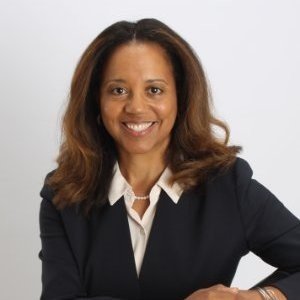
Carolyn C. Allison, MPH is CEO of Charlotte Community Health Clinic (CCHC), with over thirty years of health care administrative experience, including over eighteen years managing community health centers. She earned her Masters in Public Health with a concentration in Healthcare Administration from the University of Illinois. Carolyn also founded Creative Health Care Consultants, which provides consulting services to community health centers across the country. Ms. Allison is the proud recipient of The Network Journal Business Magazine-Top 25 Influential Black Women Award (national search) and is active in local, state, and federal healthcare coalitions and associations.