Trust-building, Direct Support, and Systemic Advocacy with Jamaal Kinard and Adrian Sundiata
Listen to the Common Good Data Podcast on Apple Podcasts, Spotify, or YouTube.
The 28208 zip code in Charlotte, NC, including the Lakeview neighborhood, is one of the city’s areas with significant economic challenges. Residents born in this neighborhood have less than a 5% chance of transitioning out of poverty into the middle class.
Originally established as a mill village for white workers in the late 1930s, Lakeview became predominantly Black in the late 1960s due to urban renewal and white flight. Today, the community faces ongoing challenges, including issues of trust, gentrification, and a lack of meaningful engagement.
Jamaal Kinard and Adrian Sundiata from the Lakeview Neighborhood Alliance (LNA) join us to discuss their efforts to improve the quality of life in the Lakeview neighborhood.
You’ll Hear:
(05:49) The origins of Lakeview as an exclusive park and neighborhood to its transformation and renaming, and how these shifts have impacted the residents' identity and unity.
(13:35) Why the Lakeview community has faced significant socio-economic challenges and what short-term and long-term efforts are being taken to address them.
(23:50) How the Lakeview Neighborhood Alliance rebuilds trust within the community and creates a solidarity economy.
(41:03) How the gift card program has evolved from a pandemic response into a tool for financial education and empowerment, serving nearly 170 residents in 2024.
(45:36) Why immediate relief should be balanced with advocating for systemic solutions like universal basic income and housing reform rather than relying solely on nonprofit efforts.
Key Takeaways
Kinard & Sundiata have built trust within the Lakeview community through personal engagement and consistent presence. By actively participating in neighborhood activities and maintaining open lines of communication, they have shown genuine commitment to the community. This personal involvement helps them connect with residents on a human level, reinforcing their role as trusted allies in the community.
They discuss their direct support initiatives with a focus on the impact of the gift card program. This direct financial assistance allows residents to address immediate needs such as groceries, medications, and transportation, significantly improving their quality of life. The program integrates financial education by requiring recipients to participate in workshops and open bank accounts, ensuring that the support not only meets short-term needs but also contributes to long-term financial stability. This approach shows their commitment to combining immediate relief with empowerment and skill-building, a comprehensive strategy to support and uplift the community.
They are dedicated to tackling systemic issues such as economic inequality and housing insecurity, acknowledging that nonprofit efforts alone cannot resolve these deep-rooted problems. They advocate for universal basic income and equitable housing as essential measures to address the underlying causes of poverty and create a more just society. Lasting change requires coordinated action from government, private sectors, and other entities to effectively address systemic inequalities.
-
Drew Reynolds: Hello everyone and welcome to the Common Good Data podcast. I am your host, Drew Reynolds, and I am thrilled to welcome you to really a very special episode today because for the first time we are going to be producing a video version of our podcast. So you can find this video on our YouTube channel where you'll be able to see some insightful conversation about data and program evaluation.
So be sure to check it out and of course don't forget to like and subscribe. The channel's name is Common Good Data and you'll be able to find it on YouTube. Okay, so for today, we are going to have a wonderful conversation lined up for you with two amazing guests from Lakeview in Charlotte, North Carolina.
That's Jamal Kinard and Adrian Sundiata who represent the Lakeview Neighborhood Alliance, which is a community organization that focuses on improving the quality of life for residents in the Lakeview neighborhood. And they focus on the three E's as they call them, engaging residents, educating them on opportunities and connecting the resources, and then lastly, empowering the community.
through civic awareness economic mobility and a number of other initiatives. And so today Jamal and Adrian are going to come onto the show and talk a little bit about a couple of things, but first they begin with trust and building relationships and how they do that in the Lakeview community through personal engagement and just persistence, showing up every day working with residents, meeting them where they are, holding events.
To build that trusting relationship with residents in the community. Jamal is also a resident of the Lakeview community, so that that importance of being present in the neighborhood was really something that was important to both Jamal and Adrian when Lakeview started LNA started. In addition, they go and really make the organization structured in such a way that it ensures participant and community voice.
For example, most of the residents sorry, the majority of board members on the LNA board are, must be residents of the community, for example. So they have lots of different ways that they try to ensure that the organization is community led and that it brings and incorporates community voice.
We also talk on this interview a little bit about The notion of direct support initiatives. And so the idea here is, and I think Lakeview, it takes a really unique approach to this, which is to say, what if our organization can be a part of a program that provides financial assistance directly to residents so that they can address the immediate needs as they define them, things like paying for groceries, medications, transportation, some of those basic needs To meet the needs that families have, that gap between what is brought in and income versus what expenses they know that they're going to be having.
And I think that they take an approach to this that brings together a almost like a universal basic income type of approach and jamal and adrian will share a little bit about more that more about that in the interview and we'll give maybe you some ideas to think about what would An assistance program look like, and why might something like this, where you take away some of the constraints, right around what you provide to ensure that the residents are able to decide for themselves how to address their needs.
Lastly both Jamal and Adrian talk a lot about the historical context that gave rise to the conditions of concentrated poverty in the Lakeview neighborhood. And that in turn, you have to then respond to those changes in with an approach that recognizes and takes on those systemic inequalities, right?
So how do we tackle systemic issues like housing inequality, like economic inequality? You do so with systemic level responses and that really comes through the level or the channel like of advocacy. And I think some nonprofits sometimes might be a little bit scared of advocacy because they don't know, can I do that?
I'm a nonprofit. What are the constraints around what I'm able to do? And I think Jamal and Adrian give a really good example about how an organization that is represented in lives in the community can be an advocate for residents of that community in the context of nonprofit practice. So a great listen there as you listen, I do encourage you to reflect on a couple of questions.
First, what are some actions that you can take to build trust? In your community, what are some of the things that, You can learn from Jamal and Adrian's example about how to build that lasting trust with community residents. Second, how can you design support programs, whether it's direct support programs or direct assistance like the gift card program at LNA, or other programs that really allow for residents to have a voice in how they receive assistance and then in turn use that assistance.
And then third, what ways can nonprofit organizations serve as advocates? to be able to work on some of the more bigger systemic change issues while doing that in the context of a nonprofit organization. So very excited for this episode for you all, a great discussion with Jamal and Adrian coming up in just a second here.
So let's go ahead and dive into that conversation. But as a real quick reminder, this is our first episode on video. So again, those of you who are listening on a podcast, head on over to YouTube where you can find Common Good Data, our channel, and be able to follow us. So you'll be able to see more of the podcast information and other content that we put in together for you on data evaluation, nonprofit practice, and the rest.
So check us out on YouTube and without further ado, let's dive into the interview.
Drew Reynolds: Jamaal and Adrian, welcome to the show.
Jamaal Kinard: Thank you. Good to be here.
Drew Reynolds: Can you tell us a little bit about Lakeview?
Jamaal Kinard: Yeah for my sake of being a resident here and being the executive director of Lakeview Neighborhood Alliance how Lakeview was introduced to me. It's very rich history from 1910 to 1933.
It was, considered to be the Carowinds, the theme park that's currently here before the thought of Carowinds. So it had a Ferris wheel, petting zoo, trolley. A lot of presidents came and did speeches here, FDR being one of the most prominent. But with that rich history is a very sad history as well because that park is reserved just for white people to enjoy.
If he was a person of color, especially a black person, he was either the entertainment or he was working at the park. So it stayed that way for about that 20 year period. And then from there, during the Great Depression, the area, the dam broke. To the lake that was surrounding the park and it flooded the neighborhoods around the park and the park lost steam.
And when it was redeveloped as a all white neighborhood with racially restrictive covenants. It stayed that way till about the late 1930s, early forties to the late 1960s when the urban renewal was a big thing here in Charlotte. One of the most prominent neighborhoods where black people were living it's called Brooklyn Village here in Charlotte, North Carolina.
A lot of the urban renewal happened right there in the center city of Charlotte Nashville, Hall of Fame, all that stuff. was built as a result. So those people got pushed to neighborhoods like Lakeview. But at the time, when it was a white neighborhood, it was called Lakewood. When the black people were displaced here, the neighborhood school was called Lakeview Elementary School.
Therefore the residents referred to the neighborhood as Lakeview. So you can imagine that tell the two neighborhoods in Charlotte This can be considered the tale of two cities and multiple cities. It added to that whole narrative there. So it's right about the early two thousands. There was a late with C.
D. C. That was formed. And when they formed, they did a lot of paving of the road, storm water system, buying a lot of land, sold a lot of land to habitat. as an effort to help improve the neighborhood. But they did so without talking to the residents. One thing they did was put a sign on the neighborhood and call it the late wood community going back to when the neighborhood was all white and racially restricted covenants.
So you can only imagine what that did to the current residents. They rubbed in the wrong way because you feel like you're taking away their name, taking away their history, taking away their idea. So that caused a major rift between the CDC, which was housed inside the church here. Faith Memorial Baptist Church and the residents that have been here in story.
So when I moved to the neighborhood in 2016, beginning 2017 and we begin to organize here reform the Lakewood Neighborhood Alliance based off the name of the neighborhood side. But we very quickly began to realize that was still at the distaste of residents. Because it was one day we was doing a cleanup in the neighborhood park, and a guy walked up to me and I got to tell you, Drew and Roger, it really tested my fortitude in doing this work because the guy had on jean shorts, no shirt, tattoo, bald head, and Timbaland boots, and he yelled my name, are you Jamaal?
So I had to really ask myself, do I really want to be Jamaal today? But I said, yes, I'm Jamaal, and he walked up to me and He dabbled real hard, pulled me in close for a hug, and he said, man, we love what you do, but we're not going to get behind you until we get our name back. He said, this is Dubuque, this is Lakeview, this is now Lakewood.
So we want our support. You have to change the name. So we led to We did a community wide survey and that survey came back and overwhelming favor was Lakeview. So we changed our name from Lakeview Neighborhood Alliance. And from that time, our community database from about 30, 34 people to now we're serving over 200 people on a regular basis here in the neighborhood.
So that's the brief history, a little bit about how we got started here with the Lakeview Neighborhood Alliance.
Drew Reynolds: I think that's a really telling story about the changing in the name as a reflective of the change of the neighborhood. Can you talk a little bit about the neighborhood today? What are some of the challenges that Lakeview Neighborhood Alliance has set out to try and tackle? And what kind of information or data or stories can you tell about the problems today?
Adrian Sundiata: A great question. I think before I get in with Adrian having so much history insult, I want to hear his perspective. from him. He's been here than I've been here. So I would love to get his perspective of just Charlotte as a whole and the history of Charlotte Coming into Lakeview. more of a coming home for me. Initially I lived on
the west side of Charlotte as a elementary child and I live right down the street off of hospice.
And so this is really was a real opportunity for me to come back into a area that once we Once my parents got a little bit better jobs and opportunities, we were able to move on to other areas that similarly, right? Hidden Valley Country Hills were predominantly white communities in the 60s and early 70s, and then towards the mid 70s, early 80s.
Black population grew and now you go to have your hidden value. And it's a complete, the complete opposite. But it was our opportunity to do a little better, right? So being on the West side, then it was. Being in the hood, being in, in struggle, if you would, and so my parents were able to secure jobs, post office, and so we moved into what would have been described as better communities with manicured lines and so on and so forth.
Being able to come back and they have introduced the mutual friends with Jamaal but I will say going online and seeing the work that they were doing around COVID, just seeing this this resilient community rallying around itself to be responsive to the needs of the people inspired me to really want to come out.
I think I was asking Jamaal, just let me volunteer, let me just show up, call me for anything I wanted to be a part of. then being able to sit down with him and being able to see someone who had an actual plan. A lot of people have a lot of ideas. A lot of people want to help. But not many people have a strategic plan on how to go about helping in a sustainable way.
So I think Lakeview is just indicative of a lot of what was going on in Charlotte I just experienced it through a different lens where We moved from the west side where people were displaced to the parts of the west side to another part on the east side northeast side of Charlotte where we And becoming a dominant population.
Jamaal Kinard: so to answer your question, Drew, I would be remiss to talk about the state of Lakeview without giving a large overview history of this country and how we got here. So when we think about. The 60s, black people led the movement to accomplish a lot of great things for all people of color and even white people benefited from the civil rights movement.
We had things that were birthed like before affirmative action fair housing act voting rights bill, all that stuff came out of that. But at the end of the 60s, all the leaders that were helping to lead that charge, most of those leaders were assassinated, talking about MLK, Malcolm X, RFK, JFK, Medgar Evers, Fred Hampton.
All these people are now gone. You have people like Assata Shakur, exiled from the country, Angela Davis, pretty much silenced after her trial and what she won. But so you go on to the 70s. And we're trying people like my parents, Adrian's parents. are trying to build all that momentum, but we have this false sense of we made it, all the big problems have been solved.
And that was a little arrogant, to think that. And I think we might confuse them there because of mainstream media. You're not telling people to go to college, not stay home and work. And these jobs were pitching trillions. But at the same time, you're taking those trades outside of the school due to Richard Nixon time as president, and he declared a war on drugs.
In these communities where black and brown people, heavily were populated. But at the same time, that war on drugs sent thousands, if not millions, of our black men to jail. But at the same time, Richard Nixon was involved in Watergate and didn't spend a day in jail, even though he had to resign from the presidency, but he didn't spend any time behind bars.
So a lot of time, another part of that, a lot of the major institutions, look what happened in Detroit with the molding industry, all those. Jobs that were heavily populated by people of color are now displaced to outside the country. So you decimated these areas where black and brown people were doing very well and working to build their lives and have family structures and so on and so forth.
But now that is no longer happening. And then you relate that to the 80s, where, you had the crack epidemic with Ronald Reagan where you populate, you flood these neighborhoods with this substance. That caused a major, major disruption. I think if you talk about it, we still have not really quantified and have fully understand what that did to this country, especially black people in this country.
And the impacts that come from it. So when you talk about potential husbands, fathers are dead, in jail, are struggling on drugs, and now you're leaving women to fend for themselves. When we ask people, and lately, when was the best time? And lately, they say the 70s. We say, why? Because it was family oriented.
It was, Ubuntu. We are, I am because we are. We had an economy. We didn't have to go outside this neighborhood to get none of our needs met. You had the teacher down the street. You had the person that was a doctor or midwife. You had an engineer, you had welder. So you had stores, you had restaurants, you got all this stuff in one area.
But as a result, the 80s got those decimated. And then you told women like, okay, you're gonna choose to take care of your family with these government benefits or you don't choose to have a man inside the household. But if you have a man inside the household, then, you can't have these government benefits.
So you had case managers coming through looking for a man size shirt, shaving cream, man size shoe. If they saw those things, they took away those benefits. Right away. So then the nineties, we had all these at 80s, early nineties, all of these drug deals like stopping frisk mandatory minimum, so on and so forth.
So now you're really taking the people who was leaving this movement on the civil rights area, you take away their leaders and now you put the substance, you take away their way of taking care of themselves. And that led to where neighborhoods like Lakeview living in concentrated poverty or dealing with the compounds effects.
Yeah. What poverty brings people being displaced, elderly residents being left behind, can't take care of their homes, losing their homes due to tax bills and things of that nature. But I'm very happy to say that, we're answering the call here. In Lakeview in Charlotte, North Carolina to try to make people aware of some of those systemic things that took place and doing my best to build power here.
First of all, for home induction, our short term responsive plan is all about home induction. And our long term strategic plan is how do we go about building a solid economy building a solid economy. Cultural responsibility conduct here in Lakeview to where it solves the problems and meeting the needs of our cultural group, which is Lakeview.
So that's my point of view, but I don't know if Adrian has anything to add. I don't want to follow that.
Roger Suclupe: That's a hard follow.
Adrian Sundiata: I will say that just speaking to Lakeview specifically, it's a challenging thing because in the 70s and the 80s, you had a place based economy that was moving around, um, illegal activity, but it worked it was very well known for what we call look at houses.
And some drug activity, but those people became prominent people. In the community because they were able to supply the needs of the community through that economy. And we've seen it in other places. We've seen it with other groups of people who were able to secure a position through what they call organized crime, even other immigrant groups who come to the United States and secure themselves through organized crime, but then also had the opportunity to filter that out.
The revenue and everything from that into other industries, whether it was construction, sanitation or what have you, and being able to move away from the more street activity and the violence that built up the economy to sustain themselves and think that our communities even though I'm not justifying those things without those other access to then able to filter some of that place based into other areas and other industries to pull the community further out and so that it could be sustainable without those things.
So what we're battling with here as we come in is that culture that's used to drug activity to some degree used to those legal activities being a opportunity for income and doing things. And we're saying, Hey, we need to figure out how to do these things without that.
But it's also hard because we're also dependent. We're depending on funders. And so you're coming from a people who, at least with the older generation is that because of these activities, they didn't have to pin on anyone. So the partner needs something, he was like, all right, what department, how much is it?
And I'm able to give it now we're saying, Hey, we're raising these funds. We're doing these things. But even with us we're trying to figure out then how do we get back to the root of what they're saying? Which is correct is how do we be self sufficient, self determined without funding?
And how do we build capacity to do that while we have funding? And so that is, that's the trick that we have a culture that's already exist in the community and now you're trying to develop a new culture and a way of thinking. In that, and so that has been I will say the challenge. It's just there's the contradiction that we have to solve.
Roger Suclupe: It is unique to try to navigate spaces where something has already existed for X amount of years, and then trying to implement these new ideas or just creative ways to honor the past, trying to blend in. The present and and yeah, I feel like y'all are definitely you've rolled up your sleeves and doing a great job at this.
And I want to thank you for that. By the way the information that y'all just shared, I did want to follow up with. The three E's. So as I was doing some research on y'all's organization. I noticed that there are three E's that stood out to me the engage, educate and empower and I thought that was so powerful.
That was just an impact to see those three words. I would like to know if you could share with us a little bit about how you utilize the concepts of engagement, education, and empowerment through your organization and how that does work to address the challenges or just to address the needs of the community.
Jamaal Kinard: Yeah so we came together we got our first funding in 2018 that was used to do a community engagement series. And during that time, we just every weekend in May, we did a cookout at the church. We just let the smell of the food permeate throughout the neighborhood. One thing that Lakeview is known for.
We had a lot of great cooks here and we did it every weekend and that brought people out and we just started collecting information. from there. And as we did that in May, we had a culminating community meeting to bring all those things together. And that's when we formed my strategic plan. So things that came out of that meeting in that community engagement series was number one.
We considered ourselves to be community impact organization. Look around the room and realized that we were individuals making progress and change together. So that became like our staple of who we are. And then the things that rose up from there is like we have to continually do this engagement. This can't just be a one time thing from this engagement.
We have been educated about the top problems in the neighborhood. Some lived experience and some historical context so that education has to continue. And as we're educated more and more, it leads to this empowerment of being civically engaged. Holding people accountable that are in elected official elected offices here in Charlotte and figuring out a way to create economic mobility.
So when we did that we put those three E's again and came up with a mission statement where we say we engage with the residents of Lakeview. We educate them on opportunities and connect them to resources while also advocating for Lakeview's growth and empowerment. So from there how do we do that from day to day?
We broke down the four main areas that we needed to do that. That's child and family stability prevention of displacement due to gentrification economic mobility and civic awareness. And that's how we formed the short term responsive part of our of our 3D plan. Long term, we know that really create economic mobility and have a way to be self sufficient.
We have to find a way to create an economy. And that's when we start thinking long term about what are some of the spaces that we have in the neighborhood that can be refurbished. One being the old late year elementary school in the old Lakewood Preschool building, which we are now where we are right now.
We released that site. From Charlotte Mecklenburg School, and we're able to run our operations from here, and we have a plan for revamping that building so we can use it as what we call our economic mobility hub, which will be a place where you want to hold a garden, supermarket, bistro type of operation, and also do some things around vocational school and production.
And the core of everything we're doing is around a solidarity economy. Worker own cooperatives to where it's not just us reaping the benefits, but it's the neighborhood, it's the community. It's the zip codes of 2 8 2 0 8 2 8 2 1 6, which are the most impoverished zip codes in Charlotte, where the highest concentrated of black people live in Charlotte.
So we have to figure out something that's not just good for Lakeview, but what's good for Charlotte as a whole. And we think the model that we're building here with the help of Drew helping us collect the data we will be beginning to show that impact here. And then we can begin to replicate that throughout the west side and hopefully throughout Charlotte and then from there, hopefully throughout the nation, where we have other neighborhoods of concentrated poverty and people dealing with these These challenges of being in concentrated poverty and capitalism and racism.
And we can offer a solution to begin to continue that home reduction as we continue to evolve as a country and as a people.
Drew Reynolds: Following up on the model of the three E's, can you talk a little bit too about some of the current strengths in the community? Thinking from a strengths based lens about Where solutions to existing challenges come from the sources and resources and people that you already have in your community.
So can you talk a little bit about those strengths and how those are incorporated into Lakeview's work?
Jamaal Kinard: Yeah we build our relationship off of values, not interests. But then when you do that and you put values first, people can't connect with that. One thing I learned with Adrian and him being here, people want to be safe, heard, seen, and valued.
And that's a big thing that we do here. And when we do that, keeping the main thing is we're building trust. I think our last trust rate that we just measured is around about 97 percent of the neighborhood of the neighbors that we're involved with. They really trust us when we are bringing in services at the quarterback agency offering some kind of support, whether that be through our gift card program, through the services we offer with my medical goal, my education goal, basic needs, safety.
economic mobility. And just us being reliable and being someone here that make you feel like you're a part of something bigger than yourself. So that's a big part of that engagement, that loving and belonging that esteemed work doing that social emotional support, mental health services and just being someone that you can count on.
We have reliable was being one of our goals, being consistent, being accountable, taking the hills with the winds. Discipline doing what needs to be done because it needs to be done what it needs to be done. All of that stuff plays a big part in helping to build the esteem and creating a new culture here in Lakeview.
And lastly, that self actualization, that empowerment. When we say self, we mean the collective self. But not just us as an individual, it's us as a true neighborhood, as a true community, as a true district. 1608 again, 2821628208 as a whole. We want to look at ourselves as a collective west side. As you see on my shirt, I'm so west side.
And as you see on the hat, those are the three D's right there. So We are putting that that message out each and every day, not just in what we do here at LNA, but in how we live our lives, right? We say the clothing company that supports LNA is called Living Statements. And we spell statements with an A, which is a a verbical infinity sign.
Because we believe statements last forever. And when you think about that, I would much rather see a sermon rather than hear one any day. Let me see how you live. Are you modeling that? Or is it just lip service, which I think a lot of people have seen from nonprofits that's coming in and want to do quote unquote great work.
But they come in. They don't let people have a say so in the problems or the issues that will be addressed. They don't let the residents. Choose the program of services that will be given to address that they don't hire the residents to work those programs and then the residents will participate in the evaluation or effectiveness of the program.
You're taking that power away from residents and what we're doing here is LNA is truly resident led. started with a 500 seed from Faith Memorial to begin to organize the residents in a way that we define the issues and the challenges that want to be addressed. We create the programs or work or choose the organizations that will help us work the programs.
We are residents here that have been hired from within the community, and then we do the evaluation so it puts us in a power position to where we're able to work hand in hand with potential funders, potential supporters, and not just them coming to do for us, it's us working together in the work.
Roger Suclupe: I love the statement you said about values over interest and how powerful can make a community feel.
You are looking at them from the perspective of value based rather than interest based. Yeah, so instead of what can you do for me, it's more of how can we collectively work together? How do you how do your values incorporate into what we're trying to do to strengthen the community? And then you mentioned that we all want to feel safe.
We want to feel heard. I'm sorry. We want to feel safe. We want to be heard. We want to be seen. We definitely want to feel valued, right? And also be valued as an individual. So if y'all can share a little bit about Do you have a story, right? Or some data that can tell our listeners a little bit more about how you capture this sense of safety being heard, being seen, and being valued?
Adrian Sundiata: Yeah, to kick it all out. I think it's let me just backtrack for a second. One of the, it's a, it's good and it's challenging. Sure. Every time when we're looking at the data, when we're looking at how we're going about doing things or creating a rubric for measuring our success, we, it's hard for us to separate ourselves from the community.
A lot of times we even catch ourselves like, oh, wait, oh, hold on. I think we're supposed to be talking about L and A. Like we mentioned, and then the opposite happens oh. So there is no, I think that blurred line is that thing that separates us is because I don't think the community sees us as separate from them, and from day to day we don't see ourselves, there is no separation.
We're not trying to solve their problems. We're trying to solve our problems. And so we approach that every day. What's what's good for this community is good for us as individuals and vice versa. And so having that no boundaries, no lines to separate us and trying to blur those lines out even more where it's almost non existent.
And we just represent a body or vehicle in which the community uses to acquire certain resources or execute certain things that they want to see done in the community. And that we truly become a tool and a vehicle for our community. And ideally to have all of our staff, everybody involved, live over here, live in proximity to this.
And I think that's that, but then along with that, I think what happens is it's so much, I'm gonna run quick. Jamaal had an experience with a young lady who was experiencing domestic violence situation. And The, the house that she ran to, not the office, not the, the building his residence.
Like I know Jamaal, but Jamaal is here. , I feel safe with him. I feel like he can help solve this problem. I'm gonna knock on his door at two o'clock in the morning and say, Hey, I got this problem. Can you help me? And then him to be able to be responsible to that from unfortunate shootings in the community and helping.
Just seeing our zone captain, seeing Jamaal, seeing people rallying to make sure truthful information is being told about what's going on, to get everything organized, being even on the follow up with law enforcement to come out and update the community on what's going on with the situation to, to having a resident who was squatting in the elementary school, to us being able to set up some tiny house situation with one of the lowest rates we had.
To secure housing for him to him now. From us hiring someone within the community, lifelong residents to do our grounds keeping from that person that hiring that person who was houseless to help and earn but also not only earn what was given, right? So it's not a charitable thing. It's a mutual aid culture that we're establishing.
And those two individuals bumped heads. Previously in a very dangerous way. But we were able to mediate that and to go from a dangerous situation to them. Now, one employee Other person through the relationship that you know, they have with the organization. These are some of the things that I think that, that come to mind.
That we become this point of people's, we want to be the needs to solve the problem, and that's our goal culturally. And that's how people are seeing. Plus in that light.
Jamaal Kinard: Yeah. Yeah. I think it's just trust, so many situations. And when I first came into the neighborhood and begin to knock on doors, how I got to this work, I used to work in education and seeing kids, Started the beginning of the school year, loving school.
By the end of the year, they hated school, and we started doing home visits to figure out what was going on. And I was introduced to concentrated poverty in neighborhoods like Lakeview. We had this big study that was done by Rods Chetty, I wanna say back in 2015. Around economic mobility that had Charlotte ranked 50 out of 50 due to segregation and racism and side of our institutions and our neighborhoods and lack of social capital, and going to the Racial Equity Institute training and having conversations with agents where they broke down all the things that happened systemically.
It led to me knocking on doors in my neighborhood and trying to organize this effort, working with the then president at the time, Ms. Nola Murphy. But in doing that I'm sitting on the porch having tea with Ms. Hattie. I'm taking out Ms. Priscilla's trash can. I'm cutting Mr. Joe's yard. Cut this grass and I was introduced to the major of the neighborhood.
Miss Robin Corporal through the Lakeview Reunion Committee. And then when I met her just detailing the history of the neighborhood and why is a tale of two neighborhoods, why they don't frequently visit the church, why they didn't support the Lakewood C. D. C. And hearing it from every different perspective to now being here to what we have organized.
These groups to work together is a testament to how we got here. So there's so many stories and examples of success that we can tell. But I think with myself and Adrian leading this effort in this position at Bellarmine, it's hard to even, he reminds me of, The incremental wins, right?
Sometimes you get so fixated on the long term goal and it's almost like you don't want to celebrate until you get there. But he reminds me of, man, look what we have. We got lights. We got lights outside. We didn't have lights. We in this building. We got the fire system working finally.
It's all of these different things that it tells you to slow down and truly enjoy the journey. Is the process. It's the journey that you need to be in, Joe. We are the journey, and what we're truly doing is creating a blueprint. What we're doing is building a cathedral. Nobody who built a cathedral necessarily saw it through to its end, or what we marvel at today in some of these countries that people visit to go see these cathedrals.
But what we can do is lay the pillars that we're working on as perfectly as we can, so that the next generation that we're birthing can come pick up that blueprint and say, okay, we see where they were going. We're going to add our expertise. We're going to add our experience. We're going to add this proper historical context and these numbers from the data we've collected, and we're going to keep moving that ball down the field.
I think that's the thing that makes me the most proud to be a part of this work that keeps me focused and not so beat down by some of the frustrations that come as a result of doing this hard work.
Drew Reynolds: So I want to ask a question about a program that you all have implemented the gift card program.
And looking at your annual report that in the 2023, y'all served 156 community residents through the program. And I want to talk a little bit about kind of some of the data and information that are showed from that, that most people are spending it how people are spending their funds and why they're talking about that need, because I think there's sometimes a reticence in people who are engaged in community work or who do non profit work about providing direct funds to residents for specific needs.
And so can you talk a little bit about what the program was like what you all have learned from it, how people are using those funds and how that narrative can shift based on what you all have learned.
Jamaal Kinard: So I'll start, let's talk about the history of the program, how it got started. And with Adrian being our culturally responsible strategic operations director, we have actually handed that off to him for us to begin to think about ways that we can involve this program.
But this program came as a result of the pandemic. When it hit, we realized that a lot of people were wanting to give away bread and milk and spoon drives. We did. We said no to a lot of those things. And again, we went to the residents first. We held a community meeting virtually. And we talked to people and we asked what do you want?
What do you all want to see other than they do during this time? And the one word that came up is no matter what you all do, we want our dignity. And what you're doing. How do you know we drink pet milk? How do you know we like sun bean bread? It is no, we have true needs due to the scare of people's health being threatened due to this pandemic.
So we took that information and said, what if we do gift cards to grocery stores to where they can go pick the stuff that they need? And at the time, we had about six or seven grocery stores from Walmart to target a local grocery store here with Harvey's. Full line, all these. So we was getting the funding through United Way of Greater Charlotte and Foundations for the Carolinas.
We applied for the grant, got the funding to do this program, and so I think we started off with about 45 people getting a hundred dollars gift cards per week. The next time we went to the cover to get those phones, we were the 75 people. So now I was able to give out these gift cards quite a month.
And from there we begin to see the need grow. We saw our engagement pickup and we saw that we was putting the neighbor back in neighborhood during the time when people were selling us the socially distance. I think it really meant physically distance. You really can't socially distance if you socially distance.
I think that led to a lot of people having even more health concerns during that time because you away from the social interaction that beats your health. But during that time, who was able to Ride down the street. Hey, Jamaal, we got people outside cooking on the grill even though we couldn't be in the yard with them.
But they're like, hey, you see what this gift card did for me? I was able to buy groceries. I'm cooking out and I'm able to get my medication. I'm able to pay for my Uber ride back and forth to work. I'm able to get my PPEs, my mask, my hand sanitizer, things of that nature. So when we answer that need, people begin to really see, oh, LNA is really here.
And they're really for the people. They're not just here to glorify themselves. So that's where it started. And it just began to evolve and evolve to where now we're serving close to about 100, I think 169 people this year, 2024. With our gift card program, and it's a part of a larger goal of a l and a membership to where if you're getting that gift card, now you have to participate in our financial education with one of our community partners Life group.
So you have to have a one-on-one, sit down with them and attend. Their seminars that they have on Saturdays every other month. And then you have to agree to open up a bank account if you already don't have one. That way, with the money that you're now saving from getting that gift card, you're talking to the live group and you begin to put a saving and budget in plan in place to help you deal with some of the challenges that come from living in concentrated poverty.
So that's where the program started. And I let agents speak to where we're trying to grow it to make a case for the universal basic income, mutual aid and so on and so forth.
Adrian Sundiata: Yeah, so I think 1 of the things I appreciate about tomorrow is leadership. And his even his vision is being able to challenge ourselves on 1, telling ourselves the truth about the reality of things.
1 is that we operate within a nonprofit industrial complex. So never lose sight of that and what that is. site on what we're able to do versus what we believe should be done. And so harm reduction inspired by, even inspired by the Black Panther party for self defense when they came up with their survival programs, pending revolution, right?
So for us, it's how do we do this harm reduction resource extraction, reallocation? Pinning the world realizing it needs to do better, right? And by people. So we know that the industry will allow us to do gift cards. And I say it makes everybody feel good. It's useful.
It's helpful, but it's not sustainable. And so we wanted to be able to take this opportunity to create add our voice to the conversation around why universal basic income, guaranteed income should happen in this country and throughout the world for people. So we wanted to convert not only what we were doing in the data we was collecting into an actual study to answer certain research questions that we have.
around why this is helpful. And in the process of doing that and pulling that together, I just did a novel novice kind of data collection, realized that the average household in Lakeview was about 500 deficit based on in current earned versus the cost of living in Mecklenburg County and in this area in particular.
And so it's, it becomes not only a good thing to do, it becomes an absolute necessity. We need, and so how do we expand that? But more importantly, how do we expand the conversation? To push for so everything we do, even with our housing initiative, we know we need the no non profits to try to solve the housing crisis, like that should never be the responsibility of a non profit, but we'll do what we can do through our ADU initiatives and other things, but we'll always still argue.
as a basic human right. what we can do, but also the line about what we kn be done. And it's not jus It's the responsibility o On state and federal and local level to just do the right thing. And we'll lead by example, right? With the resources and the capacity that we have. But we not want to stray away from the argument that something much more needs to be done.
And it don't just leave us holding the bag to to have this symbol of problem solving when this doesn't solve the problem. That's right.
Roger Suclupe: I love this. I love this interview. I love hearing about more about your organization and your passion. And all this is about intentionality. So how intentional are y'all as individuals to become bridges for the community?
I'm going to shift gears for a second as we start wrapping up. And this is the portion that I love. Of our interviews I love talking about things related to pop culture. I love talking about things that can connect me to my past. And you mentioned. How having a cookout was something that was really ideal, right?
As it connected. Y'all to the community, and you were able to find out information and collect data, probably do surveys, et cetera. My, my question, my sort of pop culture type question is what food memory do you have that you can connect to your childhood? So what food memory could be a particular meal that was made could be particular food item that you remember getting from the grocery store, et cetera.
So I'll start us off. I usually do so that way I can give you all an idea of where I'm going with this. My growing up, my parents are from Peru. So my mom would make Peruvian food. And there was one particular food that she made that just, Like when I smelt it, I knew that it was going to be the best meal that I would have ever have, made for me.
And it's called Lomo Saltado and it's basically steak and onions and tomatoes and French fries and it's all sautéed and then there's rice involved. It's so good. But. That was a food my mom made and when you could smell the aroma in the air, you just, I just knew there was, I didn't need anything all day cause I knew like I was gonna, I was gonna feast later on that night.
So that's my food memory.
Jamaal Kinard: Nice. Mine is my mom. Me and my mom have a very unique relationship. And I think she saw something in me way before I saw it in myself, as mom and parents usually do. So my mom is known in Newberry, South Carolina for her banana pudding and for her dressing, right?
Some people call it stuffing but we call it dressing down here in South. And what she would do, my mom's a cosmetologist, and my mom and dad are deacons and deaconesses at the church, at the Rennery Baptist Church in South Carolina, and so a lot of my people that went to church were my mom's customers.
My mom had a a true reverence for the elders in the community, especially the older ladies who husband had transitioned and they're not with us. So what she would do Is doing like certain holiday times and stuff like that. She will cook all of her elderly women customers dresses and banana puddings.
And she would dress me up in the suit and I would go deliver all of these things, all these containers and stuff to these elderly women. And when I would do it, it wasn't just, it ain't no such thing as knocking on the door and saying here it is, but you got to come in and got to sit down and have a cup of tea.
And they want to have a conversation, right? So in doing this work here in Lakeview, I got very emotional one time. I was knocking on the doors and talking with people, mostly older women, because it's 75 percent women in Lakeview. And I realized, man, this is what my mom was preparing me for my whole life, to be able to have that experience.
So when I do start doing this work, I don't know if she knew it was Lakeview and all that kind of stuff, but it led to me being able to relate and help build a foundation for where LNA is today. So that's my full memory that also helped with building LNA and creating that trust here in the neighborhood.
Adrian Sundiata: yeah, so mine wasn't anything that was cooked. I didn't prepare. It was and I said this all the time, being a black boy growing up in the south and then hearing these conversations about food dances and food scams, it's just unwilling to be because it was food outside. And so growing up with blackberries muscadines, Apple trees, palm trees, crab apples, crab grass, honeysuckles we will be staying outside we will get put out after our chores, asked not to return into the house, and I think the thing that, Sparks that nostalgia for me now and what I'm hoping to even incorporate back into Lakeview.
It's a honeysucker thing. Honeysuckers is the aroma that reminds me of that time of being outside finding, finding food sources. Just from within the environment and wanting to bring that back into the lives, into the ecology of Lakeview neighborhood.
Roger Suclupe: Thanks for sharing that. Drew, what about you?
Man,
Drew Reynolds: I was trying to think of some really good ones. I just have a great, I'm work entering in the summer and I just really appreciate a lot of the food that is associated with a summer cookout. And I have lots of good memories as a kid of summer being a time when you're eating outside.
It's a time when a lot of times you're eating with people outside of your own family cause you're outside of the house and doing different kinds of things. So I. I always appreciate that and just and for me, watermelon is like the key food of summer. And that's like a good memory of my of my childhood is digging into watermelon on a hot day. Jamaal and Adrian, we are so grateful for y'all to share this information with us and talk a little bit about the work that you all have been doing in Lakeview. For those who want to learn more about your work, how can they get in touch with you?
Jamaal Kinard: Definitely you can visit our website at ww dot lna, the letter L, the letter N, the letter a Charlotte.org.
You should also see us on social media, at our page l and a I'm sorry, Lakeview CLT at Lakeview CT on both Facebook and Instagram. And then you welcome to follow my page as well. On and that's at Jamaal Kinard. And then you can learn more about living statements and how if you go purchase a piece of clothing is a hat shirt or any of my other accessories, those proceeds come to what we're doing to help us make, bring that into fruition and doing the things you want to get done here.
Some of the two main missions we're working on as a hub and in this building trying to build this. Youth and family learning with funds and trying to make learning truly fun, critical thinking and things of that nature. So all of that stuff you post on the website for you all to see and see how you can participate by donating or volunteering and being involved in a multitude of ways.
Don't be dirty with us. Don't be dirty
Adrian Sundiata: with us. Any of our volunteer days, any of Our festivals come see us in action. That's the best way to get the noise and roll up your sleeves and engage us the community in the work that we
Jamaal Kinard: do. That's right. We have, we still have those same community engagement festivals.
We have two a year. We have a spring festival. We have the fall festival. We have a late year reunion coming up. July 27, we're going to have a community softball game because that's a big thing here in the neighborhood. Softball is one thing that brought a lot of people out, so we're going to try to bring that back.
And then our Fall Festival is that first Friday in October here and here in the neighborhood. So we'll be sending that stuff out to you, Drew. If you want to share it on any of your platforms, you're welcome to for people who want to support.
Drew Reynolds: Wonderful. Jamaal and Adrian thanks so much for coming on today.
Our Guest
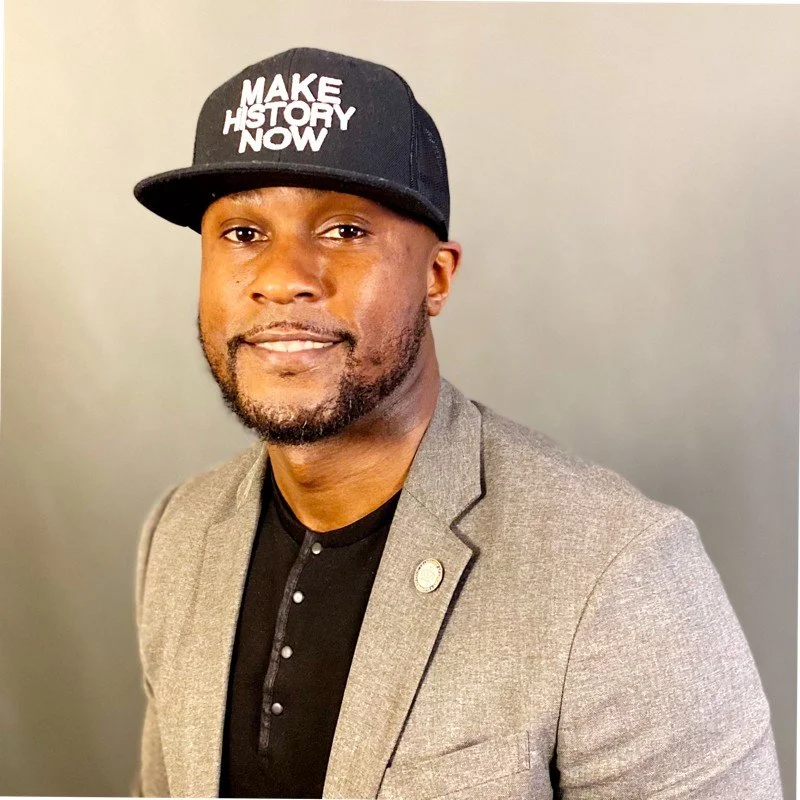
Jamaal Kinard is a community organizer and consultant that devotes much of his time as the Executive Director of the Lakeview Neighborhood Alliance (LNA), where he is leading the charge on revitalization efforts in his community. LNA's mission is to Engage the residents of Lakeview, Educate them on opportunities and connect them to resources, while advocating for Lakeview’s growth and Empowerment.
He has also been a resident of Lakeview since 2017. LNA is a Community IMPACT Organization. IMPACT stands for Individuals Making Progress And Change Together. Those Individuals who have come together to form LNA are all residents of the Lakeview Community, and they have organized themselves around a 3E Strategic plan (Engage, Educate, Empower). Their strategic plan contains four main components 1) Child & Family Stability, 2) Prevention of Displacement, 3) Economic Mobility, and 4) Civic Awareness. Jamall is also the founder of Conscious Leadership a racial equity and trust-based philanthropy consulting firm.