What It Really Means to Be Trauma-Informed in Human Services
Trauma and resilience are being talked about more in helping professions, yet what’s often overlooked is how human service organizations can become more trauma-informed and resilient.
Is another trauma training really the answer, or is there something deeper that needs to shift within organizations themselves?
I’m joined by Brett Loftis, a human rights attorney and child advocate who has spent his career working with children in the court system, many of whom have experienced severe trauma. In 2018, Brett founded the Center for Trauma Resilient Communities, where he helps organizations across the country embed trauma recovery and community resilience into their systems and practices.
If you’re in a leadership position or just want to understand more about how trauma shows up in organizations, I learned a lot from Brett’s wisdom, and I know you will too.
Skip Ahead:
(04:08) How Crossnore supports youth facing adversity.
(06:52) What Brett believes new professionals need to know to effectively assist vulnerable youth.
(11:20) What challenges organizations typically face around becoming trauma-informed.
(13:45) Why addressing the personal experiences of helping professionals is essential to show up and do this work over a career.
(16:08) What it looks like to measure an organization’s readiness for trauma-informed practices.
(18:04) The surprises leaders uncover from doing organizational assessments.
(27:28) What makes for a good partnership, according to Brett.
Key Takeaways
Effective trauma-responsive work requires understanding both the lens through which you view clients—shifting from “What’s wrong with you?” to “What happened to you?”—and the mirror of self-awareness, ensuring personal experiences don’t hinder the ability to foster resilience and safety in others.
Healing kids means healing families, communities, and the organizations that serve them. Trauma-responsive cultures and protective practices help organizations support clients effectively while safeguarding their staff from the damaging effects of secondary trauma.
Organizations need to take the time to find and implement evidence-based practices that really work. It’s all about starting small, focusing on high-quality interventions, and making sure your staff’s skills and interests align with your goals. The key to success is staying focused, tracking progress, and helping your team get comfortable with using data to drive decisions.
-
Drew Reynolds: [00:00:00] We know that there's been a lot of attention around trauma and resilience, particularly the conversation around adverse childhood experiences,
but what's been given less attention really is how Human service organizations can actually become more responsive, more resilient, more trauma informed. Now, I've spoken with lots of leaders in the social sector who have a strong understanding of trauma. They were clinicians or they worked with families and youth and adults in some capacity throughout their career, but then all of a sudden they make a transition from being a clinician or a direct staff member to all of a sudden being in a position of leadership, being a program director or an executive director or CEO.
And they might feel a little less experienced. per se, about how to transform an entire organization, a staff of 10, 40, or 100 plus people, to become more trauma informed. So to help answer this challenge, we've invited Brett Loftis to the show. Brett is a human rights attorney, a child advocate, and national expert on trauma and [00:01:00] resilience.
And in 2018, Brett founded the Center for Trauma Resilient Communities, or the CTRC, where he works across the country to embed and embody the science of trauma recovery and community resilience in organizations. Friends, you're going to love this interview with Brett. I really enjoyed it myself, and I'm excited to be able to share his wisdom with you on this show.
Brett Loftis: Since we had the kind of seminal adverse childhood experiences study and it's been replicated over and over, I think one of the main learnings we now know is that trauma is common. It is not a them problem, it is an us problem, and it affects so many people. Most of my career has been been working with children who are involved with the court system.
Um, as a, as a child advocate attorney, that was the first half of my career. And most of those kids were there because there'd been a petition filed because they were abused or neglected by their families. They were coming into foster care, [00:02:00] or they were older youth that may have been involved in some behavior that was really connected.
to their early childhood trauma that got them in trouble. And so I think the big thing to understand is that it starts just as we know, and the data and the research tell us, is that it starts to develop into some attachment issues early because there's so much attachment related trauma with a lot of kids, which, which, you know, has early learning environments getting disrupted, developmental milestones.
not happening at appropriate times, and then we start seeing problems in school. And by the time they get in middle school or early high school, they've already experienced so much failure that they start to internalize that failure. And we see behaviors associated with that underlying trauma that then get kids in trouble.
And so I think the real, The real issue for all of us in these caregiving and advocacy spaces is to see what's under the behavior and what's really driving, what needs are they trying to get met?
Drew Reynolds: I love the way you shared [00:03:00] that as like, you know, It's not an of them problem, it's an us problem in a sense of we have to learn how to re see the behaviors that we see. Um, and this goes for, you know, adults all across society. Um, and, and as we have more awareness around, uh, adverse childhood experiences and the effects of trauma, I think as adults, we're starting to get a little bit better of asking the question, you know, not just, Hey, This child's behaving in a way that's not working in my classroom, that's not working in my small group, or my after school program, or on my sports team, but rather starting to ask that question, you know, what's going on underneath?
You know, Roger, if he were on joining us today, unfortunately he couldn't make it today, uh, because he had a couple of, uh, conflicts come up. And I know he often refers to Dr. Nadine Burke Harris as, in this image of the onion, right, as you're kind of peeling back layers, which I think, you know, really hits at some of the themes that you talked about.
So you've been working in this field for a long time. So for our listeners who aren't familiar, Brett can talk a little bit about your work and particularly your work now at Crossnore. Just how does your organization, help youth [00:04:00] who are experiencing adverse childhood experiences and other forms of, of difficulty and challenge when you're providing support?
Brett Loftis: Yeah, thank you for that question. This is really a story of my career. So I've been doing this for about 30 years. I started as a Guardian Ad Litom, a volunteer. Working with the kids in the court system. And my first real child advocacy job was in a residential program with at risk kids. And they were there because of a certain set of behaviors, but you start to listen and hear their stories.
And you can just write this right, the whole pathway of their life around things that happened when they were very young, that were no choice of their own to start to show up for them later. And so I spent the first 13 years of after law school as a child advocate attorney. And The court system, seeing kids every day that I just intuitively knew had experienced things that I probably couldn't even imagine.
And then when the Adverse Childhood Experiences Study came out and then subsequent research, it just made sense, you know. And so [00:05:00] as my job running a child advocacy nonprofit, a children's law firm, I was pretty much an expert in all the ways you can do it wrong. Right? So all the brokenness of every system, child welfare, education, juvenile justice, mental health, all those systems is where advocates really sit at the intersection of what kids need and what they're getting, and the big gap between those two things.
So I was, I was well versed in all the things that were wrong. What I didn't know a lot about. How do you heal those things? How do
Drew Reynolds: Hmm.
Brett Loftis: get in front of that? And so that was what drew me to Crossnore. Crossnore Communities for Children has been around for 115 years and the whole history has been around how do you build communities?
an environment to help a kid heal from the things they've experienced, so they don't have to carry that into adulthood. And so we work mostly with children who are at risk of coming into foster care, kids who are in foster care, or kids who are aging out or leaving foster care or going to adoptive homes.[00:06:00]
And we have that whole continuum of services, but the approach is the same. How do we build safe, supportive, responsive environments to help kids heal from things that are pretty hard and that their brains and bodies are really struggling with that level of adversity.
Drew Reynolds: Yeah. And, and such a great, um, Kind of way to think about the whole continuum of services that might, where you might intervene with a child at a different area of a system. You know, you talked a lot about, um, advocates as being this center point of these different systems. I wonder if you could talk a little bit about, you know, what are some of the things that for people who are just entering the field, I have a couple of students at Georgia State and Roger does at UNCC who are also sometimes listening to the podcast and we share information with, but can you just talk about for folks who are kind of new to it?
You know, what would you, what advice would you give them to helping them kind of navigate some of these systems?
Brett Loftis: Talking to students is one of my favorite things to do. I love to see an excited young social worker or data scientist or advocate [00:07:00] coming into the field. One of the things for them is to really make sure they understand both lenses The lens for them is around what is the paradigm which they're going to look at their clients through, and it can't be their own experience because their own experience is not the same as their clients.
And so, as we know, in trauma responsive work, we're really trying to change the paradigm for what, what's wrong with you? Which a lot of our systems are what wrong with you systems to what happened to you and what's happening to you. And so really understanding that the paradigm of looking at everyone, whether the behavior is functional or not and say, what happened?
What's really under there? And then how do you take that next step and to be a resilience building force in a person's life to say, what's strong in you? What's strong about the fact that you speak up for yourself or that even if it's not in the way I want you to do it, what's strong about that? And really working on that resilience building lens.
So what their lenses are, are critically [00:08:00] important. And that paradigm that you look at your children and client, your adult clients through. But the other side is really the mirrors. What do you know about yourself? What do you know about your own experiences? What we know is that people in helping professions.
have higher ACEs scores than the general population. So people are coming some ways as wounded healers. So doing their own work around what's happened to them, how they're healing, how they're getting the support they need means that they don't perpetuate that. with their clients so that they can actually experience healing at the same time as bringing that safety to other people.
Drew Reynolds: This is kind of a good segue into another area of, of work that you've been, um, working on for the Center for Trauma Resilient Communities. And I, you know, this notion of how can we, build systems, but also support the workforce, engage in training, all those sorts of things.
You know, you mentioned so many of people who are in the helping profession come in with some of their own stuff. So can you talk a little bit [00:09:00] about your work at the Center for Trauma Resilient Communities and how we're kind of thinking about that?
Brett Loftis: If this career has taught me anything, it's that I used to think, man, we just get to fix kids and help kids and everything will be fine. And then it was like, well, kids come in the context of families, but we've got to work with families. We've got to support families, help them heal. And really families come in the context of communities.
And we need communities that understand adversity, understand its impact on your mind, on your body, on your spirit. And so when we think about that work, um, Crossnore for 115 years is building environments to help kids heal. Well, then they go back to another community. that's not trauma responsive. And so in 2018, we launched a national initiative, um, called the Center for Trauma Resilient Communities and brought in experts from all over the country as faculty and said, how do we teach organizations how to make that shift to be a trauma responsive culture so they can do this great healing work with clients, but not lose themselves in the [00:10:00] process?
I know way too many helpers who are harmed by the work that they do. They work in a domestic violence shelter all day, they work in a rape crisis, they work with child abuse neglect, or with homelessness, and sometimes that's triggering their own experiences, and just the exposure to the secondary trauma can be really damaging.
And so, how do we build organizational culture that builds protective buffers? around ourselves and practices that we all know and use regularly to make our workplaces place that we can be safe while we do the work that we're called to do. And so we've worked with well over 300 organizations nationwide, um, since our founding and continue to be really involved in that kind of movement.
around making our organizations, especially our helping organizations, schools, hospitals, healthcare, nonprofits, to be trauma responsive and healing centered. Um, and that's the work that we do. We love it.
Drew Reynolds: Oh, I bet. You know, in your work with [00:11:00] organizations, what are some of the challenges that organizations are facing? around this because there's been a lot of attention around being trauma informed and I think a lot of organizations might say I know we're doing something here, but maybe they're not doing Everything they can be.
So what are the common challenges you see organizations
Brett Loftis: So, great question. Some of the challenges really exist in what we are expecting and how we're resourcing people. So, so much of trauma work has been around just understanding. It's just been that basic knowledge. Teaching about ACEs and learning about trauma and like, okay, go forth. And so, I ask organizations whenever I meet with them and say, how many of you had a training about trauma?
They all raise their hand. I'm like, how many of you have fundamentally changed the way you do your work? And all the hands go down. The truth is, it doesn't help us to learn about it unless we can learn what to do about it. And so some of the big challenges that people just don't know, how do you work to build an organizational culture that does value the [00:12:00] clients and understand the paradigm at which you look to your clients, but also Understand that language, the practices, the behaviors that you need as an organizational level to be able to stay safe and healthy in the process of helping.
And so that's a really skilled thing. It's, it's one, you know, it's part organizational development. It's part trauma science, but it's also part science of resilience. How do we teach people how to build that buffering and that resilience for the kind of adversity they face on a daily basis? So lots of barriers there just around even what to do next.
Beyond just another training about some, some information and then how to measure it, like, how do you measure changing in your organizational culture? And there are ways to do that. And that's what we do with organizations to help them see real changes over time.
Drew Reynolds: Oh man, I can't wait. We're definitely going to come back to that part around measuring it too, that change. But I want to stick here just for a moment in the organizational culture piece and talk a little bit [00:13:00] about leaders. So, you know, I think a lot of folks will go to trainings. They'll, they'll, they'll learn more about ACEs.
They'll learn more about trauma and resilience. They'll develop certain practices for themselves maybe, um, and they'll be conversational with others. But I think then all of a sudden you find yourself in your career and you're promoted to the level of a program director or an executive director. And all of a sudden you have this new task in front of you, which is you've got.
10, 20, 30 staff members who are all doing difficult and challenging work. And you're trying to figure out how do I best help them help others? So what are the things that you, what are the conversations like between you and other leaders? What are the challenges they're facing and how can you help those specifically to help bring about that organizational change?
Brett Loftis: I love this question. All the research talks about organizational change and strengthening organization, it really starts with leaders because they have such a disproportionate impact on the organization, either positively or negatively. So this is where we do a lot of work around lenses and [00:14:00] mirrors with leaders.
So what's your lens on yourself? What's your lens on your clients? What's your lens on your staff? But also, what are you doing around yourself and your own development? Um, what I find is that a lot of us got promoted into leadership roles because we didn't have any boundaries. We worked really hard. We were the first ones there.
We were the last ones to leave. You know, I remember times when I took clients home with me or I gave clients money. Like I did all kinds of things to help clients. Um, the truth is I was on a path to burnout and it was really impacting my mind, my body, my spirit, all those, all those things. And so what leaders don't get trained to do is how to build a healthy, more harmonious or balanced approach to the work.
And a lot of that is thinking. Self leadership first. If I'll hear anything here that the most important kind of leadership is self leadership. What are you doing to grow yourself? Um, what does your self care look like? What [00:15:00] is your, what is your resilience plan for yourself? Where is what we call squad care?
What, where is your team? Where's the folks of people and what are you committing to, to support each other? And then how are you actively building your own resilience so that you can be buffered? And show up and do this work over a career, not just for a year or two.
Drew Reynolds: Yeah, and we sometimes as leaders will be hesitant to ask that question because you're, especially in the helping professions, this notion of servant leadership, working, helping others, being the first one in, the last one to go. Sometimes we're unwilling to ask that, you know, of ourselves, you know, what is that that we're doing for ourselves to be able to be able to turn around it and do that leadership for others.
You know, you talked a little bit about being able to measure. Some of the work and or like the, the organizational culture around being more resilient, trauma informed, et cetera. So as you know, we're a podcast focused on data evaluation work. And, um, I want to come back and talk a little bit about how you're doing [00:16:00] that at Crossnore too, but let's focus first on this kind of organizational piece.
So what does it look like to measure an organization's capacity to do this work?
Brett Loftis: It's, it's really, um, just like any other thing you want to measure there, there are scales and subscales that you go in and say, hi, how do we, what's our baseline? And then how do we measure this over time and evaluate our progress? Um, we're working a lot with, uh, Dr. Laura Brown. From Meharry Medical College, um, in Nashville, Tennessee, who developed the Organizational Trauma and Resilience Assessment, the OTRA, which for us, we go into an organization, they take a baseline assessment around their own trauma and resilience behaviors and expectations, and then we measure that over time.
And we look at change. Um, there's also ways to go in and help leaders do self evaluation. Where are they? Where are they living into the commitments of their own organization? And, you know, SAMHSA and we, you know, we have some trauma responsive organizational commitments that help with those kind of guideposts [00:17:00] along the way.
And it's tough. It's tough work.
Drew Reynolds: Yeah.
Brett Loftis: You're having hard conversations about power, around shared governance, around what is, what is real communication? Um, how do we, how do we have social responsibility around everybody owning the outcomes and not just one person? So it's, it's tough work and it's great organizational development work to do, but you have to start.
Because we know science tells us this takes three to five years to start seeing organizational change, um, with the data, but you got to start somewhere.
Drew Reynolds: Yeah. Well, and I love too that you mentioned some of those themes that, you know, if you are a person who's thinking, Hey, I'm going to need to do some work organization, you might start thinking about, um, maybe some of the things we think of when we immediately think of trauma resilience. But I don't think people think of communication and shared governance as the first thing that comes to mind when they're talking about that.
So can you share a little bit about that too? Like what, what surprises do [00:18:00] you find organizations and leaderships uncover when they do an assessment like
Brett Loftis: Ooh, what they say, if they're really brave and they ask the hard questions, people will give the answers. So one of the things that, you know, we work with a lot of, uh, organizations that do domestic violence and rape crisis, which is all about violations of power and control. And we know just from clinical training around parallel process, right?
And so if you're not careful. That organization who's working in the space of helping people recover from violations of power and control can start to struggle with power and control. And you've got organizations where working in child advocacy, where kids have been treated terribly, and yet they can start to move to a place where the way they approach kids, the way they talk to them, the way they talk about them, the way they interact with them, is showing a lack of respect for the children as humans, right?
And so the very thing we don't want to [00:19:00] do, sometimes we become, if we're not really asking those hard questions. So some of the surprises are, you know, authoritarian leadership, um, inflexibility, um, things like not respecting the personhood of the worker. They are a person too that has trauma, that has, you know, people expected to lose a family member and show back up at work the next day or not have a livable wage when they're working.
I mean, the number of people working in things like housing and homelessness and basic food security who don't make enough money to actually Take care of their families and who qualify for public benefits, even though they're working to eradicate that. I mean, it's, it doesn't make sense. There's a lot of structural violence kind of built into the system.
And so having those honest conversations, do the people of color feel like they have a voice in your organization? Do the women leaders feel like they are treated at the same level? And this is not about pointing fingers or saying [00:20:00] gotcha or any of that stuff. This is about just being really honest about where we are so we can make a plan to move toward a more.
Healing centered, resilient place.
Drew Reynolds: and I find in my own work that just having some level of assessment to get a sense of a baseline and understand where you are is like so important to begin that conversation. Um, and I feel the same way, you know, mine is more focused on evaluation specifically, though sometimes with organizations that do this work.
Um, so let's, let's dive into evaluation work a little bit. Going back to the work from Crossnore you know, you guys have this absolutely beautiful annual report that highlights all the work you've accomplished, supporting schools, community foster homes, serving hundreds of children and families, thousands of therapy sessions.
So for nonprofit leaders listening in, who might look at a report like that and be like, ah, man, we need to have like, our organization needs to have something like that, that we can showcase our work for. Can you talk a little bit about the work that went behind it to make something like that possible?
Brett Loftis: Great, [00:21:00] great question. Part of it is that organizations have to invest in the time it takes to look at best practices. So you can't just, you start doing something on day one. For instance, we were adopting a new model around trying to prevent children from coming into foster care. And so we did a year long research project with our staff around what are the best models out there?
To prevent kids from being removed, we found Home Builders, which is the long, kind of the longest running, most efficacious prevention, intervention to keep kids from being removed from foster care. And now we're serving a large part of North Carolina with that model, and the state is contracting with us to do that.
But that was a very long process of putting something that had a high fidelity, lots of evaluation components. And organizations sometimes don't take the time to do that well. And so unfortunately they can't tell you whether [00:22:00] interventions are making a difference or not. And we spend a lot of time and effort on things that we're not exactly sure work.
And so that, that time matters. The other is just to really look at where are the, where are the kids or families in that system struggling? So one great example, foster care, kids in foster care nationally only graduate a little over 50 percent of the time. Well, if you did nothing else but work on that outcome, make sure that kids in foster care actually graduate high school.
So we measure academic performance and matriculation and school, high school graduation rates, and then work really hard to get kids into college or trade school, because it's hard to break an intergenerational cycle of poverty, abuse, addiction, whatever, if you don't have education. Because a lot of our kids don't have families they can fall back on.
And so that is got to be front and center. You have to keep your, keep your goals right in front of you and know how [00:23:00] you're doing on those goals.
Drew Reynolds: Yeah. Sometimes I've noticed in organizations when you've got a new initiative like that, like Home Builders, for example, and you're starting to get, get excited about it. And you have staff members who maybe, maybe they just don't feel as confident with data and evaluation work, or they don't feel, maybe you say the words, uh, fidelity for program implementation and eyes glaze over it.
Cause they're like, what are we talking about here? You know, kind of, how do you work with your staff to be able to implement these things so effectively and then be able to show results? Yeah.
Brett Loftis: Yeah. You got to start small. I really think that it's so many organizations are trying to do too many things and they can't do them well. And so, you know, for instance, our clinical teams were like, look, we want all of our clinicians to be certified in one evidence based practice. And not all of them have the same interest.
I mean, some want to do trauma focused cognitive behavioral therapy. TF CBT is really important, and the data is great, and the fidelity is high. But some of them are really wanting to do more, um, equine assisted therapy, or, um, play therapy, or [00:24:00] some of the different things that have good data behind them also.
So, it doesn't have to be the same thing for everyone, but you have to start small. What can we do? You know, one of the things that, um, Um, TBRI, Trust Related Behavior Intervention. And so teaching all of our staff around how do you build trust, how do you build safety for kids, understanding what psychological safety is for folks for themselves and in the workplace.
Um, so you don't have to pick everything all at one time, but just start with something and do it well to fruition. Don't give up on it halfway through.
Drew Reynolds: I think that's a good idea, like to sometimes pare things down because, you know, I sometimes engage with evaluation conversations with folks and we start throwing literally everything at the wall. And it's, it gets overwhelming. Like you can't do all of it. You have to kind of figure out what are the most important things.
And I really liked the way you talked about, you know, if you could just make a difference. in graduation rates. It would be huge, you know, a huge contribution for [00:25:00] children who are in foster care. I think that's a good, a good lesson for leaders to think about. Maybe not so much doing everything, but just finding the handful of things you need to do well.
And also just being able to tailor it to interests. I mean that, that people, not all of your staff are going to want to do everything. Um, and letting them develop that specialty and expertise, I think is so critical.
Brett Loftis: We have a staff member who loves to fish. And so he hosts a fishing club for our kids. Anybody that wants to fish, you're not required to do it. You want to do it? Great. He'll take you fishing. That doesn't cost a lot of money. Um, he enjoys it. The kids enjoy it. It's great. Um, and so it really doesn't have to be so complicated.
And in fact, we spend way too much time treatment planning and not enough time resilience planning. So a lot of the things that we know through. Through research around building resilience does not necessarily cost a lot of money. Can a kid play soccer in the Y League? Can they [00:26:00] take a ballet class? Can they have an opportunity to experience some art?
Because art is their passion. Because we know mastery is one of those great resilience tools. A sense of mastery around something. I'm good at this. This is part of my identity. I can do this. The other is just positive, supportive relationships with non parents. You know, what about kids having mentors?
There are plenty of people out there who want a mentor, have partnered with a program that does mentors. So, it's about piecing together more than just treatment interventions. We've got to think about what are the resilience interventions that every child needs, and honestly, they're the same things that most of us want for our own kids.
We want them to be exposed to arts and culture. We want them to play sports. We want them to have, be in the Boy Scouts or the Girl Scouts. We, we want them to do things that help them be well rounded humans. And so much of our effort in the system sometimes are just about trying to reduce symptoms. And those other things really play a [00:27:00] part in that.
Drew Reynolds: You just mentioned partnerships and the importance of bringing together, uh, you know, like when we're connecting children, the whole system requires so much of it, and I know that you have such a great experience with developing partnerships with other organizations and community, you know, entities that, you know, advance the lives of children and youth.
Can you talk a little bit maybe About what you found in your experience as a leader makes for a really good partnership.
Brett Loftis: Oh yeah. One of the things is you have to have a real honest conversation about what are we good at and what are we not good at. And so not every organization is good at everything. There are certain things we are, we are great at certain parts of our intervention, but there are other people good at other things too.
So I talked about mentoring. You know, we've got a program we partner with. That's all about girls empowerment and, and female leadership. Well, that is a, that is a thing that we don't necessarily have all the background in. So they work with our girls and they do leadership development and empowerment with our girls.
And it's massive. [00:28:00] It's huge. The kids love it. Um, college readiness. We're, we're not experts on college readiness. We know about, we run a couple charter schools. We know how to educate kids, but getting them ready for college. There are groups out there that are excellent in college readiness and how to do the FAFSA and how to do your personal statement, how to do what schools to apply to and how to fit partnering with them.
So finding something that's in an organization's wheelhouse. And for me, they have to be excited about working with your population. They can't be trying to sneak you in around the corner or around the edges or throw you a little bit of extra time when they have it. They have to be really excited about working with the population that you have and the children and families that you serve.
Um, and that's when the partnership really works well when there's alignment. Um, and not everybody's not trying to do everything.
Drew Reynolds: Yeah. Well, and And what you're hinting at, I think too is something that I think sometimes nonprofit leaders are a little afraid to do, which is just to be willing to say no. Like, Hey, it sounds like you're not that interested in [00:29:00] this popul, and our focus and our mission. And that's okay. But maybe, maybe we can't pursue this further.
Um, and, and the ability to say no just opens up so much time and energy for the things that will, uh, that is such an important lesson, I think, for, for leaders. So, um, we're coming to the end of our show today. And I was wondering, um, if you could share a little bit, right, just for those who are interested in learning more about the Center for Trauma and Resilient Communities in Rosanoor, how can they find out more?
Brett Loftis: Yeah, it's just traumaresilient. org. That's all it is. Go there, kind of look at our work, look at the framework that we use. We have an incredible faculty, really dedicated people, um, we work all over the country, um, it is, you just have to start. People think it takes a lot of money to get started, and the truth is, um, more and more funders, both private funders, foundations, and even government funders, are much more interested about the sustainability of your organization.
and the [00:30:00] sustainability of your workforce. Like, how are you taking care of your people and how are you building for a stronger organization? That's who they want to invest in. And so, the resources to do this work are out there. Um, and sometimes we have to help organizations package that so they can explain what are the outcomes?
What are the deliverables? What are the learning objectives? We have, we have all that with them. And so, some of it just starts with a conversation. What are you trying to accomplish? Are you trying to reduce turnover? You're trying to do leadership development. Um, what you're trying to have a healthier, stronger, more resilient culture, build psychological safety within your organization, whatever it is, there are tools to get the folks there.
And it's just about starting.
Drew Reynolds: Awesome. Well, I think it's a good place for us to come to a close. Brett, thank you so much for sharing your wisdom with us today.
Our Guest
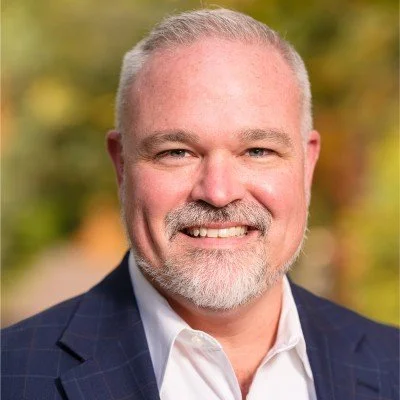
Brett A Loftis, J.D., is a human rights attorney, child advocate, and national expert on trauma and resilience. He has more than two decades of experience leading successful nonprofits, including the largest children’s law office in the southeast.
In 2013, Brett became the CEO of Crossnore Communities for Children, one of North Carolina’s largest and most innovative child welfare and behavioral health organizations.
In 2018, Brett founded the Center for Trauma Resilient Communities (CTRC). Under Brett’s leadership, CTRC’s co-founders and faculty work across the country to embed and embody the science of trauma recovery and community resilience. Helping children, organizations, and communities heal from trauma is Brett’s passion. Brett speaks and trains nationally in the areas of organizational resilience, trauma-responsive leadership and community building.
Learn more about Crossnore Communities for Children on LinkedIn, Facebook, Instagram, and Twitter.