Why Prevention Should Be Our First Line of Defense
We often focus on addressing problems after they’ve occurred in the nonprofit and social sector, but what if we could intervene earlier?
After 30 years of research in prevention science, the evidence is clear: many behavioral health issues and related challenges can be prevented.
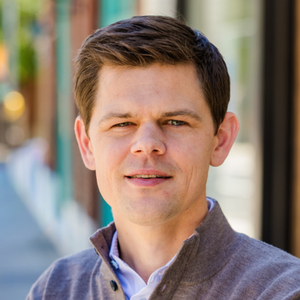
I’m joined by Mitchell Moore, an advanced certified prevention specialist, to discuss the power of early intervention in preventing behavioral health problems—specifically in the context of youth and families.
Skip Ahead:
(01:02) Why Mitchell believes funding should shift from reactive solutions like treatment and incarceration to proactive prevention.
(04:44) The role of data in helping Prevention Training Services reach out and train so many people.
(07:57) What a 9-month community assessment revealed and how it shifted their prevention strategy.
(16:45) How media literacy, a key aspect of prevention work, has made him hyper-aware of product placement in movies and commercials.
-
Drew Reynolds: [00:00:00] So much of our time in the nonprofit sector is working to address problems after they've occurred.
But for us in the nonprofit and social sector who do this important work in health and human services, education and beyond, we have to ask ourselves, what if we had intervened earlier? What if we did something before the person we serve commits a crime that leads to incarceration or loses a job or suffers from abuse and neglect or develops a chronic illness?
And if you're asking this question, today we're going to talk about the power of prevention. There's a large body of scientific evidence, an entire field, even in prevention science with research over 30 years, that shows that many behavioral health problems and related challenges can be prevented.
So we've invited Mitchell Moore who is an advanced certified prevention specialist and licensed chemical dependency counselor who has extensive experience working with youth and families in both prevention and in recovery settings.
[00:01:00]
Mitchell Moore: One of the challenges I see is to get the community to realize the money's there, but we are spending the money after instead of before. And I've often used the analogy of, 9 volt battery in your smoke detector? Instead of rebuilding the house after the house is burnt down. And I'm not opposed or against treatment, or look at our juvenile justice incarceration system, or look at our adult population that's in prison.
But would it be nice if we didn't need all of those services? And one of the things we focus on in prevention is reducing availability and accessibility. So, if there were not fentanyl tablets for kids to have, [00:02:00] if underage drinking was not an issue because everyone followed the law and waited until they were 21, When we start looking at chemicals, and I'm just going to call it substance abuse, substance misuse, you know, drugs have been around before the pyramid, so it's not anything new.
What we've got to deal with is perhaps age appropriate use.
We know the brain is still developing. We know there's a host of other issues with that. And, how do we intervene before that young person gets a disease called alcohol use disorder? Now here's where I'm going with that. Once they've crossed the line into the disorder, the disease never goes away. I mean, if I'm diagnosed with a disease today, I'm not just gonna wake up in the morning and say, Well, I don't think I'll have that disease anymore. And so, I love treatment. I've worked in [00:03:00] recovery. I get it. But would it be nice if we just paid for the 9 volt battery? instead of rebuilding the house after it burned down. I have lots of experience with lots of people in recovery, and it's going to be a lifelong issue. And if we could keep one kid and one family in one community from having to pay for treatment. Now, now, just let me ask this question. If your mom calls you right now and says your niece or nephew needs treatment, first of all, are the resources available? Second of all, who's gonna pay for it? And third of all, what are the success rates? And, and we could look at any disease, not just substance use disorder.
So, prevention. The money's already there, we're just paying for it after the fact. instead of [00:04:00] preventing it.
Roger Suclupe: those are great points. This segues into my next thought, a question for you about training services and the importance of training services, right? We saw on your website that since 2019, you have trained, get this y'all, 1, 150 individuals from 30 states ranging from Washington, D. C. Countries like Guam and Bermuda members of Native American tribes in Oklahoma and Montana.
Mitchell Moore: That's a lot. That's great. Can you talk about your work at Prevention Training Services and how you have been able to reach out and train so many people?
Concerning how we've trained so many, we use the assessment, we use good data, we ask the question, what do you need? And then we listen to our focus population. And our focus population are those new in the field who are working on becoming certified internationally, [00:05:00] Our focus population are the supervisors and managers who are looking at how to onboard new staff, how to develop new staff, how to retain new staff.
Mitchell Moore: Now, Julie Stevens, Dr. Landry and I, we formed this back in 2012 not knowing that 2020 was going to lock us all down, and we've been training in Texas and in the region, Arkansas, Oklahoma, New Mexico, but when we all went virtual, that's one thing that expanded our reach, and the reality is we can offer the continuing education hours to help someone become certified as a prevention professional without all the cost of travel. So as budgets shrink, And some states look at Montana for an example. You'd have to drive six hours to get to a city [00:06:00] big enough to do a training, right? Well, if they can hop on a call, get some quality training from subject matter experts, and receive some practical skills. Let me pause here for just a moment and say, we work with an international credentialing group to help people become certified.
And that certification is good in 48 states, many other countries, and all branches of the military. And the reason I'm saying that is all of the training we do comes right out of the blueprint to help people on their path towards certification. Now, there are a lot of soft skills you need, how to do a presentation, how to introduce yourself, how to create an elevator speech, and, and we do some of those things, but our focus is helping develop the workforce, [00:07:00] become certified, or stay certified.
Drew Reynolds: I love how you talk about starting with the assessment and I talk about this with clients that I work with all the time, some who do work in prevention and some who are in other areas of nonprofit and social sector practice of the importance of engaging in some form of needs assessment.
And I think sometimes when we ask people to think about that or to do that, it can get overwhelming. It can be like, how am I going to do that? I have to put together this complicated survey or do all these focus groups, but you have a really straightforward process. I mean,
it's a form on your website that you share out with the community. So can you talk about, what that process was like and maybe what were some of the insights in some of your most recent assessment data that you have found that has informed your work?
Mitchell Moore: Drew, I want to go back to my community coalition days. We got a five year grant. We hired Dr. Landry, and I said, all right, Dr. Landry, let's go. And he said, go where? And I said, well, our grant's going to be [00:08:00] reducing underage drinking. Let's get after those young people. And he said, well, we're going to spend time asking the community what's going on.
And I said, ain't nobody got time for that. We got to go, go, go. Right. We got our underage drinking problem. We got to get those youth to quit drinking. And he said, Mitchell, what are they drinking? When are they drinking? Where are they drinking? How are they obtaining it? And I said, I don't know. We just got to stop those youth from drinking. You know, we took nine months to do a comprehensive community assessment. And after we brought the data together, we realized that our youth population was no different than the state. So, compared the city to the state, about 30 percent of those we surveyed had drank alcohol within the last 30 days. But our county was twice the rate of the state for those who were [00:09:00] driving after they were drinking. And what we realized was most youth were going to school Monday through Friday, and after the sports game, they were going out in the pasture and drinking. And so, instead of focusing on the youth, our whole program turned to focus on where they were getting it. Guess where they were getting it? From their home. From their friend's home. And had we not taken the time to ask the community what's going on, we would have just been focusing on the just say no to those youth, right? Instead of looking at availability and accessibility. So by collecting the community data like you guys offer services for all these communities, it changed the scope of our program, and now our focus population were the [00:10:00] parents. Drew, I just, I try to simplify it. We got to know three things. We got to know where we're at, where we're going, and how we're going to get there. And without a good assessment, we don't know where we're starting from. Now, we know where we're going. We want a reduction. We want to keep people from crossing the line into chemical dependency. But where are we starting from and who's our focus? Are we going to work with high school? Are we going to work with college? Are we going to work with community? Are we going to work with retailers? Your community data tells you all of that. Now, how do I use that today in training? Listen, we don't have time
to play prevention. If we're going to serve those who serve on the front lines, I want to make sure that what we're providing is relevant and beneficial for them. So we do lots of [00:11:00] surveys.
We, we just did a training the other day, how to build a presentation. Where the audience leaves with knowledge or skill, they can immediately apply. And we evaluated that through pre post test. We found a 62 percent knowledge gain in from when we started the training until we ended, but here's the thing I'm leading to. I asked 50 pre test questions. About 20 of the questions, most of the people already knew before the training started. What did that tell me? Don't spend time on what they already know. Some of the questions, only 18 percent of the audience knew. What does that tell me? That's where I want to focus. Because I want to make sure what we're delivering matters.
Roger Suclupe: Teaching in a social work program we talk to students about the importance of the [00:12:00] assessment.
The assessment is the portal into what does the individual need? It is something related to drug use or alcohol use yeah, get to the root of it. And the root may be where are they obtaining this? Look at all sectors of the possibilities of where they may be obtaining something, so I love that perspective.
Real quick though, I think
that y'all touched on something really key here and important is that nonprofit leaders and just folks in general there is some anxiety and fear when it comes to evaluation and data, right? So one evaluation doesn't mean we're going to pick apart everything that you're doing wrong.
I think that's this fear, misconception about evaluation, right? And no, that's not true. We're looking at this from a very, objective perspective to see what are the strengths that this, organization or program what does it have that works and what are the areas that we can strengthen?
What are gaps and barriers? You take this reflection, you reflect on the things [00:13:00] that you're doing well, but you're also real about the things that aren't working. And what are some things that we need to let go? And that's okay. And it goes to Drew's point about, it's okay to ask for help.
There's nothing wrong with saying we need support with this. It doesn't mean that we don't know what we're doing. We're just, we just need somebody's perspective who comes in from a different angle, right? I think that's totally fine. And I think to your point earlier Mitch data drives. The data doesn't lie.
It's there. And if you ask the right questions, if you get in front of the right people who need to be answering these questions, you're going to get results. And so I just appreciate the conversation on that. And with that, we will shift gears now a little bit to my famous or infamous eighties nineties pop culture type of question.
We're going to keep the theme though, just music. Because as y'all were, as we were having this really wonderful discussion about, substance use and data, and then, mentioned that Just Say No, and then it [00:14:00] took me back to that vintage store that I visited, and I saw the Just Say No t shirt.
Yeah, I grew up in the eighties in nineties. And so I do remember just say no campaign. And I do remember watching TV shows and they were gearing some of you would have special episodes right on, on today's special episode of fill in the blank. And one of the ones one of the shows that I loved to watch family ties.
And there was an episode where Alex B Keaton was taking, I can't remember fully enough, but it was, amphetamines. And so he was just taking amphetamines and it was morphing into this addiction. And I'm just trying to think back to shows or movies that Hollywood doesn't get it right all the time.
Obviously, with TV productions, there's a lot of spinning that goes on, but there, for me, it was awareness. Wow, that was probably one of the first times that I saw something like that on TV and family times was a. Prime spot show and to air it was, I remember thinking like, wow, what is that?
That happens. Oh my goodness. And [00:15:00] then a movie that I remember that, took this really deep look at how the infrastructure play against marginalized communities is New Jack City and New Jack City. I'm not sure if y'all have seen it or heard, but it is it's a wild movie, but it is there's a lot of what Nino Brown, who's Wesley Snipes plays Nino Brown.
Talks about Hey this is a life we are given to live. We're going to do this. Anyway, so that, that's my pop. My question is what eighties and nineties shows or movies can you think back and reflect on that put drug use or alcohol use in this way of awareness or knowledge or.
But put it on the spotlight.
Mitchell Moore: One of the areas of being a certified prevention specialist is looking at media literacy. And so I'm going to say that my profession has ruined me. I cannot go to the movies. Or watch a commercial without seeing the ad [00:16:00] placement. So how come that red and white can of beer is sitting there or that red and white pack of cigarettes is there?
Why do they have that commercial on the tv? And also i'm saying with that is it was probably worse in the 50s with everybody drinking and smoking on tv And it got a little bit better in the 70s But I think the 80s and 90s we saw more commercialization and normalization of just everyday use, marijuana, alcohol, tobacco, etc.
Drew Reynolds: Yeah, indeed. It's it's interesting. You know, I was I, one of the movies that I love from my childhood is a movie called The Sandlot, which is great story about just baseball and having fun as kids. And when we had watched it, what we used to do as kids. In my family, like we would like watch it on TV and sometimes you try to record it if you could, like get a copy of it.
And I found when I watched that [00:17:00] movie later on that the recorded version that I had had as a kid had taken out a scene when they, when they use tobacco products that the group that are there, so that they wasn't played on national TV, but was actually in the movie, which I thought was just like an interesting, you know, reflection on like, what are.
Those like how do we think about media representation around substance use and how it is important for young people? Like at my time, I didn't know that part was a part of the movie when I was a young kid, which I think was an important thing. And then like, how do we make sense of that as it comes out in the media and that particular scene came to mind when you had mentioned, mentioned that but Sandlot's a great movie.
I love you know, being able to, to watch that and, and think of all the times, and I had lots of fun playing. Baseball and other games with my friends and my brothers when I was growing up. So it brings back some good memories.
Roger Suclupe: Great movie. Excellent choice. That's a great movie. I might go watch it later.
Drew Reynolds: Yeah.
Mitchell Moore: Let me date myself, if I might. Growing up in the [00:18:00] 60s and 70s, we only had three channels. The news came on at 6 p. m. and all the channels went off at midnight. And we could care less about what was on the screen. We wanted to get outside and play. And so we're not that many years later where we're just consumed with media coming at us from all directions.
But there was a time, and I represent the time, when we could care less about what was on the screen. We wanted to go outside, build relationships, play with our friends, make forks, throw dirt clods, you know, just whatever kids wanted to do. So, y'all take me back to a different time as well. Thank
Drew Reynolds: No, that's awesome. I mean, and it's so important, you know, I, I encourage my own kids to get out and play whenever we can. And the importance of play and spending time outside and building relationships with youth is so [00:19:00] important for their development and certainly for prevention. Michelle Moore, thank you so much for joining us today on, on the podcast to talk a little bit about your work.
For folks who want to learn more about you, where can they find more information about you?
Mitchell Moore: Well, just jump on PreventionTrainingServices. com. We've got it all there. They can look at our training schedule and happy to customize anything that their agency or their staff or their community may need.
Our Guest
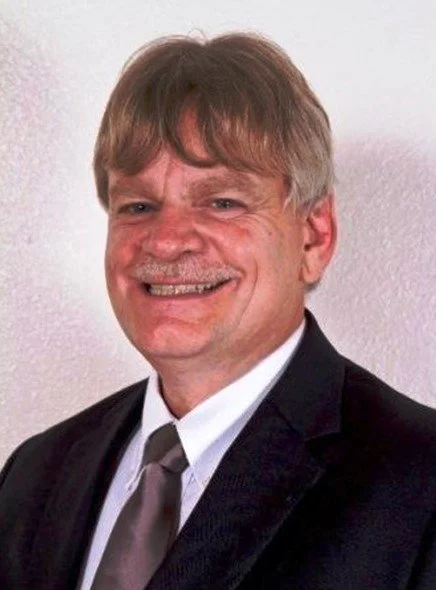
Mitchell Moore, BAT, LCDC, ACPS, ADC, is a dynamic educator who has a passion for training people and serves those who serve by designing and delivering training and across America.
He is an advanced certified prevention specialist and licensed chemical dependency counselor who has extensive experience working with youth and families in both prevention and recovery settings.
He has served as a counselor, prevention specialist, a grant writer and executive director of a charitable organization.
In 2019, he was awarded the Texas Prevention Specialist of the Year.
He is currently an independent contractor, a beekeeper and volunteers his time for Prevention Training Services and the Texas Certification Board.
Learn more about Prevention Training Services.