The Common Good Data Podcast
The podcast for nonprofit and public sector leaders looking to use data and evaluation strategies to build effective and sustainable programs in the areas of prevention, mental health, human services, and education.
Subscribe on:

Telling the story of the impact of your organization is critical to gaining support—from volunteers to donors to multi-year grants. But using data to show your impact can be challenging.
Learn how the best organizations build a culture of data that impresses funders, wins competitive grants, and changes the lives of individuals and communities.
-
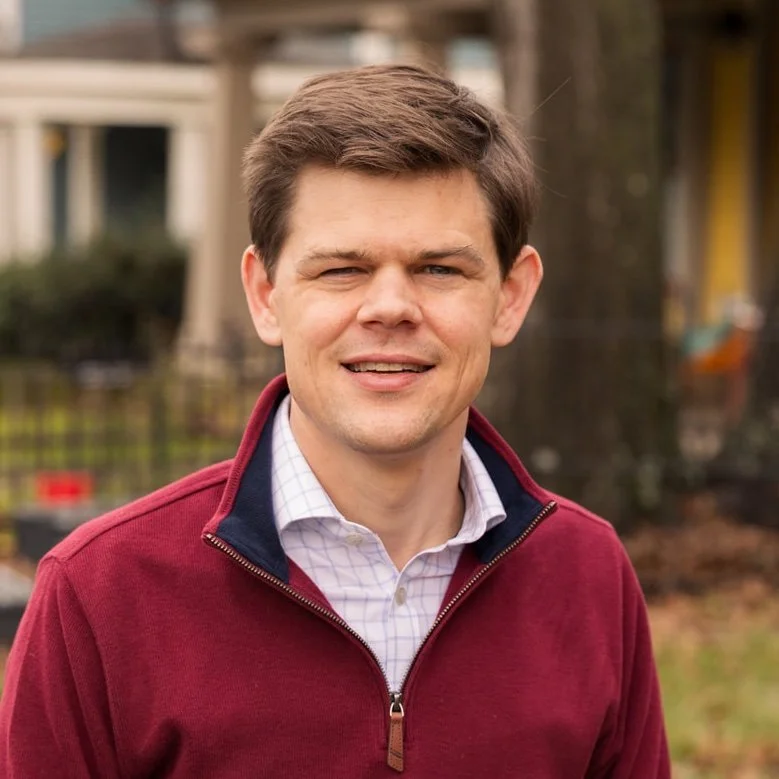
Drew Reynolds
Cohost
-

Roger Suclupe
Cohost
Become a guest.
Book Drew as a guest.

Search for a topic or guest:
Listen to past renditions of the podcast:
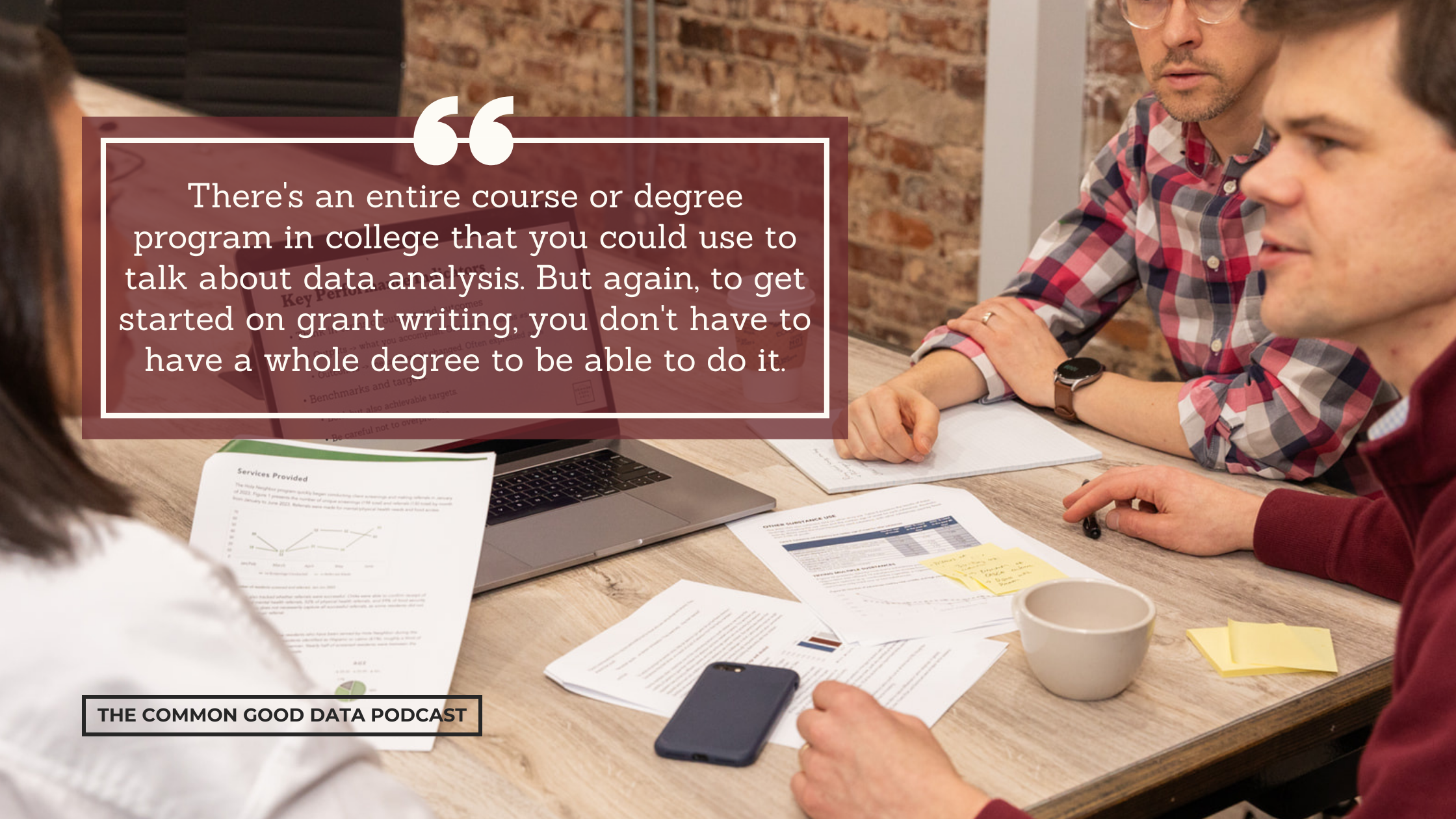
How to Write About Data Analysis in Grant Proposals
Strong grant proposals use data to convincingly illustrate the potential impact and effectiveness of proposed programs. Yet, for many grant writers—whether applying for federal, state, or local funding—the evaluation section poses a significant challenge.
In the third installment of the Evaluation series, Drew discusses how to write about conducting data analysis when drafting successful grant proposals. He discusses:
How to align your proposed data analysis with grant requirements and your own goals and objectives
How to write about quantitative data analysis as a non-data expert
How to write about using qualitative and mixed-methods approaches in grant writing.
What grant makers are looking for you to demonstrate with respect to your proposed approach to data analysis
This episode is for those writing the evaluation section of grant proposals but aren’t necessarily experts when it comes to data and evaluation. Check out our recent blog post related to this podcast topic, The Evaluation Section Part #3: Data Analysis for Grant Proposals.

Making Sports Dreams Come True with Elizabeth Lindsey
Many children and young adults face the immense challenge of living with life-altering conditions, which can range from life-threatening illnesses to severe physical or intellectual disabilities. These conditions may lead to a sense of isolation and a loss of hope, making it difficult for these individuals to envision a positive future.
To discuss these challenges and the work being done to address them, we invited Elizabeth Lindsey, co-founder of Dream On 3, an organization dedicated to bringing hope and encouragement to children and young adults with life-altering conditions through unique sports experiences. Dream On 3 aims to inspire these individuals by connecting them with their favorite athletes and teams, helping them to see that dreams can still come true despite their circumstances.

How Nonprofit Leaders Develop an Impact Mindset
Sometimes it’s not about doing something new, it’s about doing what you do - even better.
This podcast episode focuses on the importance of maintaining an impact mindset as a nonprofit leader. Drew discusses why it’s important to avoid the temptation of novelty for novelty’s sake and make sure that impact drives the work of nonprofit and public-sector organizations. Drew identifies three traits of impactful nonprofit leaders and shares examples of how these leaders can apply an impact mindset into planning and decision-making.
In this episode, listeners will learn about three traits of highly impactful nonprofit leaders:
Impactful leaders know: It’s not about them.
Impactful leaders have a north star.
Impactful leaders align what they’re good at with what the community needs.
Check out our recent blog post related to this podcast topic, 3 Traits of impactful nonprofit leaders.

Culturally Responsive Practice with Immigrant Families - Sil Ganzó of ourBRIDGE for Kids
Charlotte, NC is an “immigrant gateway” that has one of the fastest growing immigrant communities in the country. Over 30,000 students in Charlotte-Mecklenburg Schools speak a language other than English at home. Immigrant students and their parents encounter all kinds of challenges at school, and immigrant youth often lag behind their peers in a variety of academic and social indicators.
To talk about the challenges immigrant families face, we invited Sil Ganzó of ourBRIDGE for Kids to talk about her work in providing services for immigrant and newcomer families to Charlotte, NC. On the episode, she discusses the importance of meeting families where they are, how to truly be community-centered and culturally-responsive, and ultimately how to help immigrant youth feel welcome in a place that can feel very unfamiliar - and at times uninviting - to them. Sil also shares great examples of how ourBRIDGE uses survey and focus group data to gather insights into the immigrant family experience, and how they used empirical data to show how youth and their families enrolled in their programs were able to develop an increased sense of cultural identity and pride. We also discuss the importance of ethical storytelling, building a team for evaluation, and share exciting news about the opening of the new Charlotte is Home Center.

Planning for Successful Grant Writing
This podcast episode focuses on planning for successful grant writing in prevention, with an emphasis on factors outside the proposal narrative that are critical to success. This podcast was generated following a workshop given by Drew in collaboration with the Southeast PTTC. Though the examples focus specifically on substance use prevention, many elements of this presentation are relevant for grant writing in any field.
Download the Prevention Grant Writing Toolkit which provides a step-by-step guide to winning your next 6- or 7- figure federal, state, or local grant.
In this episode, listeners will learn how to:
Identify and select grant opportunities that are a strong fit for their organization. Participants will know where to go to find grants and opportunities for their organization.
Develop a year-long timeline for grant writing and reports to funders.
Describe standard components of a grant proposal.
Prepare pre-written materials that can be modified to meet grant requirements.
Build a team to write the grant.
Identify common frameworks, including SAMHSA’s Strategic Prevention Framework, to reference when writing prevention grants.
Organize their work to meet grant requirements.
Identify community engagement strategies to demonstrate your commitment to the problem and your relationships with existing partners engaging in similar work.
Build effective partnership agreements to accomplish grant goals and document these through letters of support or memoranda of understanding.

Supporting Mental Wellness and Reducing Stigma with Juliana Lozano of Despierta
Roughly 1 in 3 Latino adults do not have access to health insurance in Charlotte, NC - a rate much higher than other cultural groups. Lack of access to health insurance coupled with mental health stigma lead to significant barriers for Latino families in accessing mental health services and programs. As we celebrate May as maternal and mental health awareness month, we’ve invited Juliana Lozano of Despierta CLT to talk about her work providing culturally responsive mental health services and reducing stigma. We talk about the importance of community partnerships, use of surveys to gather community feedback and how referral processes can help clients get access to care. Juliana also shares two compelling success stories of clients who have been transformed through the work of Despierta. Roger, Juliana, and Drew also reminisce about songs that bring joy.

Race and Ethnicity Data Are Changing. Are You Prepared?
On March 28, 2024, the US Census Bureau published a news release that they have issued updated standards for maintaining, collecting and presenting race and ethnicity data.
Because so many nonprofit and public sector organizations base their collection of race and ethnicity data on US Census standards, these changes will likely have far-reaching effects, particularly for those organizations who receive federal funding to provide programs and services.
In this episode, Drew provides a quick summary of the new US Census updates and how you might implement changes in your data collection processes to be consistent with the new standards.
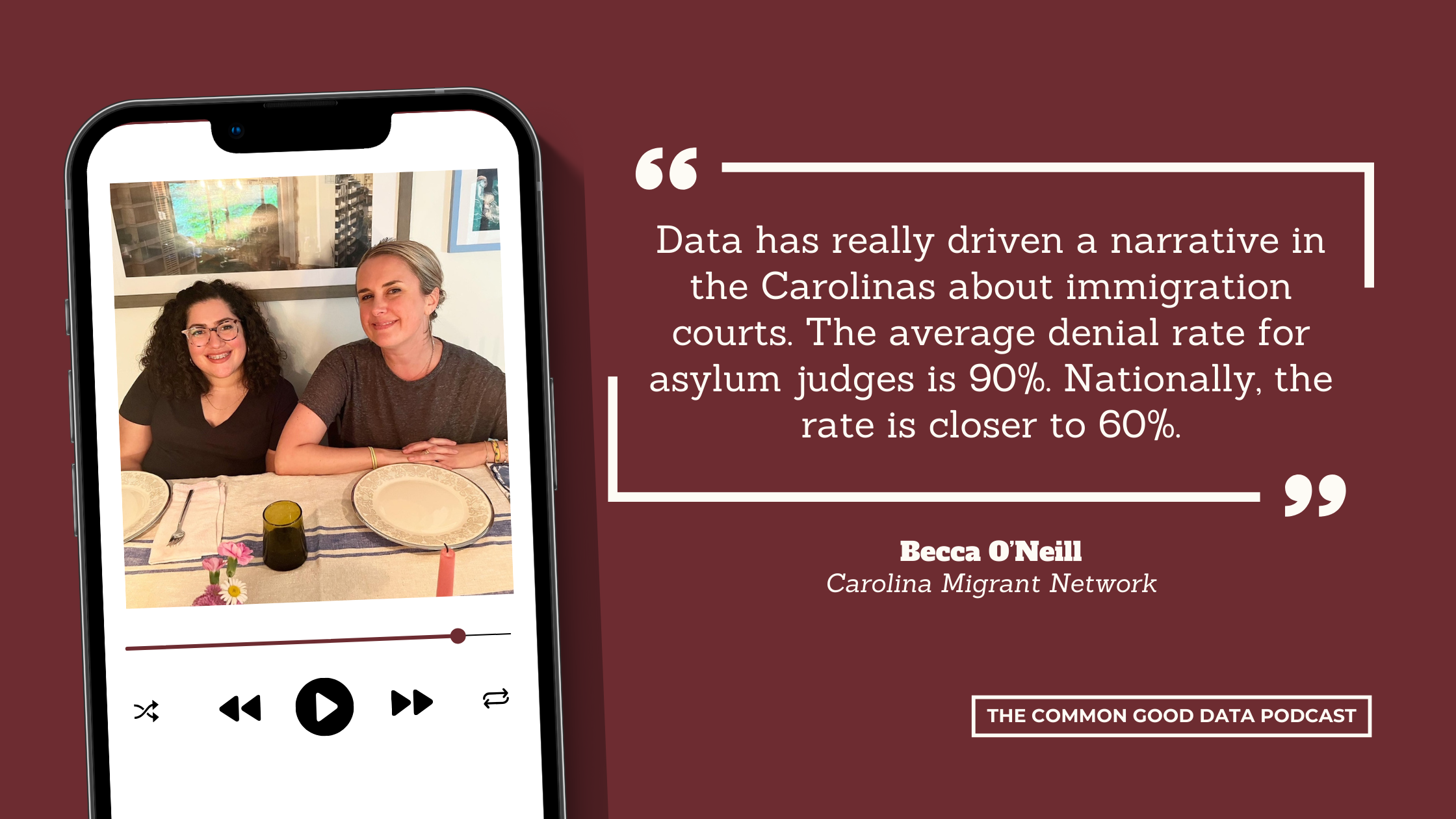
How Data and Storytelling Drive Narratives - Protecting Immigrant Communities with Becca O'Neill and Stefanía Arteaga
How does your organization use data and storytelling to drive positive narratives and engage stakeholders in the “why” of your mission? We are joined today by Becca O'Neill and Stefania Arteaga of Carolina Migrant Network who talk about their work protecting immigrant communities through the provision of legal assistance and organizing/advocacy work. This compelling episode will help you better understand the challenges facing undocumented individuals, including the difficulties of obtaining asylum and the ways that enforcement and detention can dehumanize migrant communities. We also discuss how data can drive narratives - both negative and positive - and the importance of storytelling in communicating an organization’s mission and values.
Data Collection in Federal Grant Proposals
Writing federal grant proposals can be tough - especially when it comes to writing goals, defining outcomes, and showing how you will demonstrate your impact. In this episode, Drew dives into tips and strategies for how to talk about data collection in your federal grant proposals. He talks about performance measures, building a plan for data collection, identifying useful data collection tools, and how to align your data collection procedures across your proposal with a performance measures table. Use tips from this episode to help separate yourself from the field and win that next six- or seven-figure federal grant.

Leading with relationship - Latinx/e in Social Work - with Erica Sandoval
What brigs you joy in your work? How do you find purpose and meaning in your career? This week, we invited award-winning mental health practitioner, speaker, spiritual healer, podcaster, advocate, and author Erica Sandoval to talk meaning, purpose, leadership, and storytelling in social work practice. Erica shares about her experience as President of NASW New York, her career journey in starting Sandoval CoLab, and her book Latinx/e in Social Work. We also talk a lot about the importance of relationships in social work leadership - and not being afraid to take a new courageous step in your career. Keeping with the New York theme, we talk Beastie Boys and A Tribe Called Quest. At the top we listen to U2’s “Angel of Harlem” and close out the episode with “It’s Tricky” by DMC.

Food as medicine with Matt Pieper
What is the relationship between food and health? Can food be medicine? This week, we invited Matt Pieper from Open Hand Atlanta to talk about food, nutrition, and community health. We discuss research showing the effectiveness of medically-tailored nutrition interventions, we examine the ways social enterprise can support nonprofits and other socially conscious missions, and we mix it with great music including “TV Dinners” from ZZ Top and “Peaches” from The Presidents of the United States about food.

Community organizing from the ground up - Redemption Song - with Fred Brooks
“How are we going to win what we want to win?” We’re joined by Fred Brooks of Georgia State School of Social Work this month to talk community organizing. We discuss foundational principles in organizing, including the value that people most affected by an issue should be the agents of social change. Fred shared some strategies in canvassing and campaigning using examples from the field - both while working with ACORN as well as examples from recent labor organizing efforts involving teachers, child care workers, and more. We also talk social change music from Bruce Springsteen to the great Bob Marley, and conclude with a Pearl Jam cover of Neil Young’s “Rockin’ in the Free World”.

Awareness, vulnerability, and courage in Nonprofit Leadership - Hand in My Pocket - with Michele Reiner
What are some of the myths of nonprofit leadership, and what are leadership postures that make for effective leadership? This week, we are joined by Michele Reiner of Storied Awareness to talk about nonprofit leadership with a focus on awareness, vulnerability, and courage. We discuss the myths of nonprofit leaders, why nonprofit leaders are leaving the field and what helps leaders be more effective so they can thrive in their roles. We also talk about the importance of support through coaching and building the relationship between the Executive Director and Board Chair. We start the interview with Alanis Morisette and close out by reliving the memories of The Cure’s “Whisper to a Scream”.

Reducing youth substance use with Nilda Delgado and Ricardo Torres - Hispanic Heritage Month
What are some of the challenges facing youth with respect to substance use? This week, we are joined by Nilda Delgado and Ricardo Torres of the Alianza Coalition who share about their work in reducing substance use among Latino youth. We talk coalitions, reducing access, communications and messaging, and acculturation stress. At the top of the episode, Roger and Drew also each share their top 5 Latin/Spanish language songs of the 80s/90s to celebrate Hispanic Heritage Month. Learn more about this episode and more at www.commongooddata.com/podcast

Community partnerships to address trauma in child welfare - Kind & Generous - with Dr. Deidre Carmichael
How are you building community collaborations in your organization? Who are the mentors and professionals who have guided you in your practice? We discuss these topics and more with Dr. Deidre Carmichael of the Child Welfare Training Collaborative and Project Director at GSU’s Professional Excellence Program. We begin with a conversation on gratitude in professional relationships with Natalie Merchant’s Kind and Generous. We then transition to a great conversation on child welfare, trauma/resilience, community collaborations, and professional development. We then relive the memories of great 80s and 90s songs about family, including Stephanie Mills’s rendition of Home from the musical The Wiz. This is the first of four episodes during our fall season - stay tuned and subscribe!